“A Constitutional Crisis of the American Kind”

What A Constitutional Crisis Really Is
And Why Americans Should Be Careful About Using the Term Too Casually
By Team Thomas
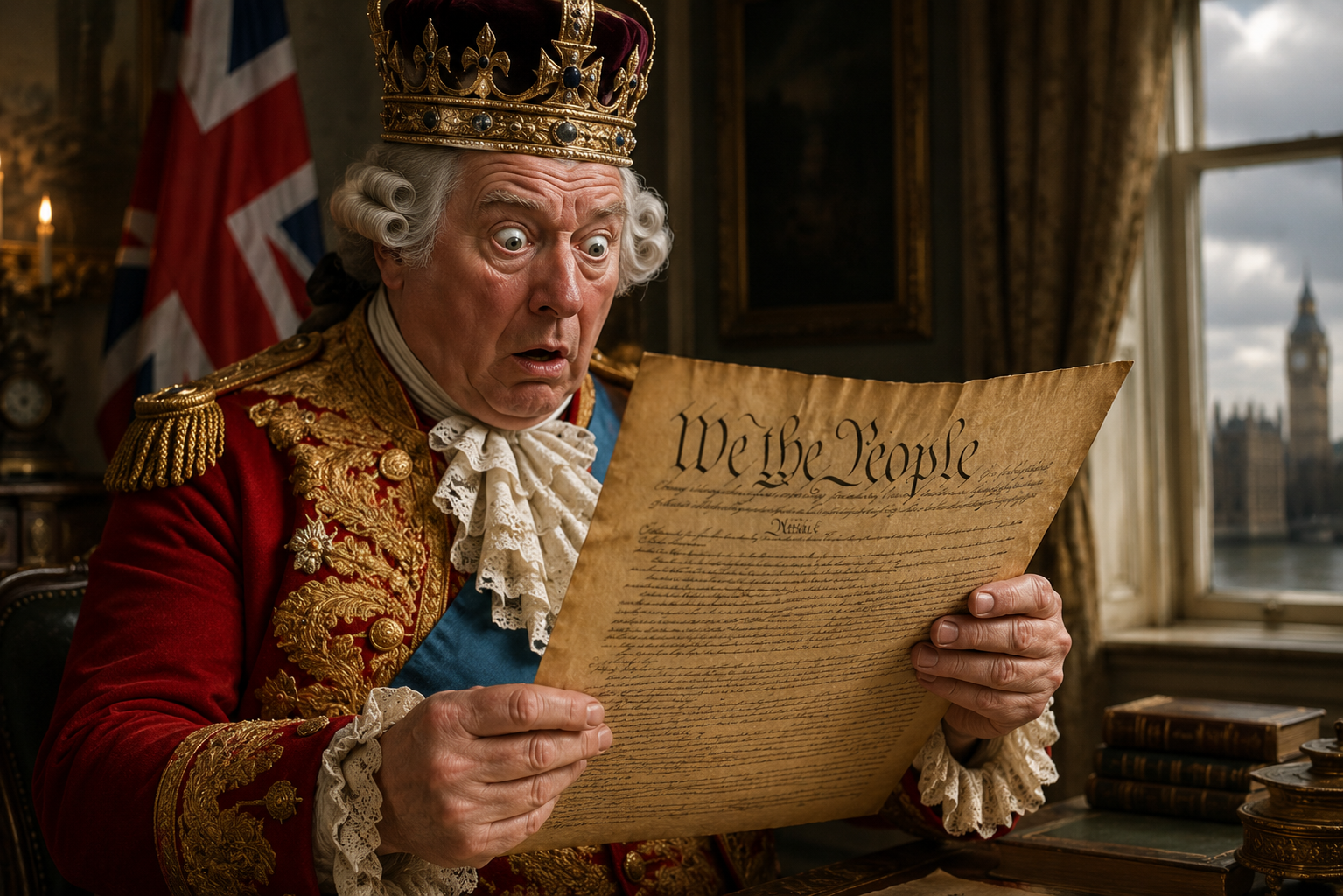
Image: Cannon & Caius generated with AI
America now lives in the age of the “constitutional crisis.”
Presidents are accused of causing one. Congress is accused of enabling one. Courts are accused of creating one. Elections are accused of triggering one.
The phrase appears constantly in cable news, social media, political speeches, and partisan commentary.
But what does it actually mean? And perhaps more importantly, what does it not mean? Because not every political controversy rises to the level of a constitutional crisis, and using the phrase too casually can weaken public understanding of genuinely dangerous moments when they do occur.
A Constitutional Crisis Is More Than Political Conflict
The Constitution was designed to survive disagreement. In fact, the founders expected conflict, faction, ambition, and political rivalry.
Those tensions are normal inside a constitutional republic.
A constitutional crisis occurs not merely when government becomes polarized but when the constitutional system itself becomes unable to resolve a conflict peacefully or legitimately.
In simpler terms, a constitutional crisis happens when the rules no longer clearly function, or when leaders refuse to follow them.
Three Common Elements of a Constitutional Crisis
Most constitutional scholars identify three broad warning signs:
Constitutional Authority Becomes Unclear | This occurs when branches of the government claim competing powers, legal authority becomes disputed, or constitutional language provides no obvious answer. Examples might include disputed elections, succession uncertainty, or unresolved emergency powers. The Constitution sometimes contains ambiguity. Normally, institutions resolve those ambiguities peacefully. A crisis begins when they cannot.
Institutions Refuse to Accept Legitimate Outcomes | The Constitution depends heavily upon voluntary compliance. Courts do not command armies. Congress relies upon norms and procedures. Elections require public trust. A constitutional crisis intensifies when political actors reject lawful outcomes simply because they dislike them. Examples could include refusing to recognize election results, ignoring court rulings, or using government power outside constitutional boundaries.
The Public Loses Confidence in Constitutional Legitimacy | This may be the most dangerous stage. A republic ultimately survives because citizens believe institutions matter, laws matter, and constitutional processes deserve obedience. When large numbers of Americans conclude the rules are unfair, elections are meaningless, or power alone determines outcomes, constitutional stability weakens dramatically.
What a Constitutional Crisis is Not
This is equally important. A constitutional crisis is not simply:
Losing an election.
Disliking a Supreme Court ruling.
Congressional gridlock.
Aggressive political rhetoric.
Controversial legislation.
Those are political disputes, and democracies inevitably have them.
The danger comes when the constitutional mechanisms themselves stop functioning effectively.
Historical American Examples
The United States has faced several moments approaching constitutional crisis:
The Civil War | The ultimate constitutional collapse. States rejected federal legitimacy in its entirety and attempted secession by force. The constitutional system ceased functioning peacefully.
Watergate | Watergate became a constitutional crisis not simply because of criminal behavior, but because it tested whether a president would remain accountable to constitutional law. The system ultimately held because courts acted, Congress investigated, and institutional pressure forced resignation.
The 2000 Election | The Bush-Gore dispute stressed the constitutional system heavily. But importantly, the court's rules were complied with by political leaders, and power transferred peacefully. That prevented escalation into constitutional breakdown.
January 6, 2021 | Violent attack on the United States Capitol by partisans wanting to disrupt or overturn the 2020 presidential election results was seismic in its impact on American politics. The subsequent pardons of convicted participants drove a deeper wedge into our cultural fabric. The outcome, including ongoing election denial, will be subject to the history books at some future date.
Why Americans Feel Constantly Near Crisis Today
Many Americans today feel the republic exists in permanent instability.
Why?
Several conditions now overlap, driven by extreme polarization, declining institutional trust, aggressive executive power, election distrust, social media amplification, weakened congressional functionality, and constant political escalation.
This creates a psychological environment where everything feels existential. Even when the constitutional mechanism technically continues functioning.
The Danger of “Crisis Inflation”
There is another risk. If every controversy becomes labeled “the end of democracy,” citizens eventually become emotionally numb.
That is dangerous because true constitutional crises require public seriousness, institutional clarity, and civic discipline.
Hyperbole weakens all three.
The Founders Understood This Problem
The founders themselves feared constitutional instability deeply.
That is why they built separation of powers, checks and balances, federalism, staggered elections, and independent courts.
The Constitution was intentionally designed to slow political overreaction.
The founders understood something modern America sometimes forgets. Constitutional durability often depends upon restraint.
So, Are We in a Constitutional Crisis Today?
The honest answer is - not fully. But a constitutional crisis is brewing because America is currently experiencing measurable constitutional stress.
That distinction matters.
“The greatest constitutional crises often begin long before institutions collapse. They begin when citizens stop believing constitutional limits deserve respect.”
The system still functions. Elections are occurring. Courts are ruling. Power has transferred constitutionally. And institutions continue operating somewhat.
However, public trust is weakening significantly among a sizeable portion of the American electorate. And trust is one of the invisible foundations of constitutional government.
Without it, constitutional stress can eventually become constitutional instability.
The current occupant of the White House has been intentionally stirring the proverbial tempest in a teapot in ways that are troubling to constitutional stability.
How so?
Credible arguments have been raised about a handful of these key challenges:
Continuing to assert that the 2020 presidential election was stolen and that American elections are not trustworthy despite substantial bipartisan evidence to the contrary.
Engaging in unprecedented congressional district mid-decade gerrymandering to “micromanage” the 2026 midterm elections in favor of Republican candidates.
Threatening to ignore the 22nd Amendment to the Constitution to serve a third term as president despite clear term limits approved by the requisite number of states.
Dismantling or hobbling trusted alliances with key actors such as the United Kingdom, Canada, Mexico, Australia, and NATO-member nations.
Imposing extraordinary unilateral tariffs on vital trading partners, thus undermining once-solid global and regional partnerships and stoking the fires of inflation on a shaky economy.
Packing the courts with federal jurists to overturn previously settled law, such as Roe V. Wade, political figures being above the law, the Voting Rights Act, and more.
Undermining the Federal Reserve by challenging that institution’s congressionally authorized independence in managing U.S. monetary policy.
Weaponizing the U.S. Department of Justice, the Federal Bureau of Investigation, and other agencies of the government to prosecute perceived political opponents.
Ignoring the Emoluments Clause of the U.S. Constitution, which prohibits personal enrichment.
Using the three warning signs we outlined earlier, the red flags of constitutional instability are present:
Warning #1 – Constitutional Authority | Competing powers claims, legal authority is disputed, disputed elections, succession uncertainty, and/or unresolved emergency powers.
Warning #2 – Institutions Refusing Legitimate Outcomes | Political actors rejecting lawful outcomes simply because they dislike them, refusing to recognize election results, ignoring court rulings, and/or using government power outside constitutional boundaries.
Warning #3 – The Public Losing Confidence in Constitutional Legitimacy | Large numbers of Americans concluding the rules are unfair, elections are meaningless, and/or power alone determines outcomes.
What Protects a Republic Most
Ultimately, constitutions alone do not save democracies. People do.
A republic survives when leaders respect limits, institutions defend legitimacy, and citizens value constitutional order more than temporary political victory. That civic culture matters as much as written law itself. Perhaps even more.
The Thomas Take
At Thomas, we believe Americans should take constitutional language seriously, precisely because the Constitution itself remains serious.
The answer to political frustration cannot be abandoning institutions, rejecting elections upheld by the courts, or normalizing permanent civic warfare.
The Constitution was designed to manage disagreement peacefully. Its survival depends on whether Americans still want it.