1776 • 1976 • 2026
Key Milestones for One Republic - What America Has Gained, Lost, and What the 48th President Must Restore
A Thomas Independence Day Special Feature
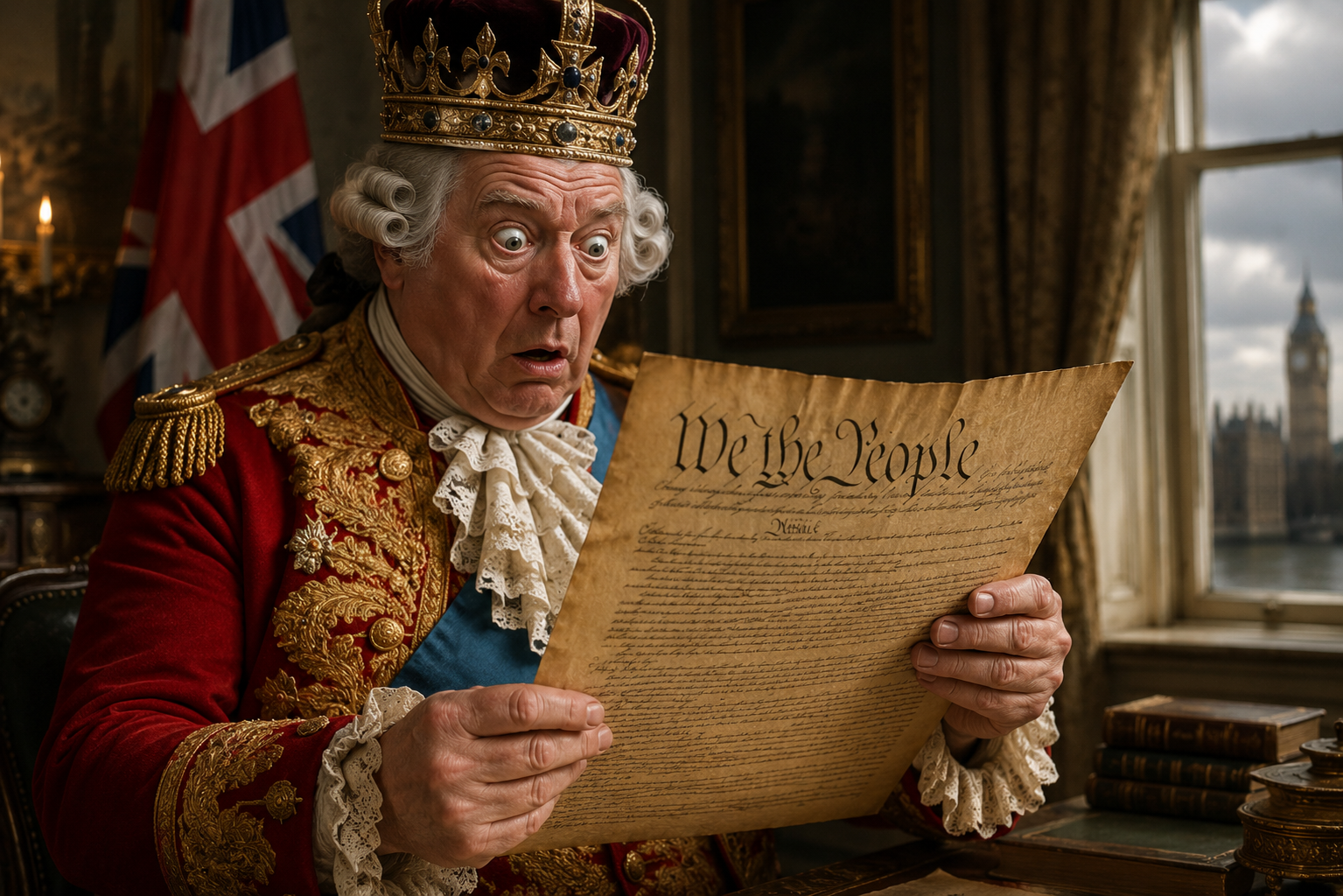
Image: Cannon & Caius generated with AI
A personal reflection, if you will humor me. I graduated from high school in June 1976. America was celebrating its Bicentennial.
The flags were everywhere. The tall ships filled New York Harbor. Schoolchildren were reminded of the founders and their vision for our nation. Neighborhoods hosted parades. Communities painted fire hydrants red, white, and blue.
The country was hardly perfect. In fact, it was deeply troubled.
Watergate still hung over the national psyche. Vietnam remained a painful memory. Inflation was rising at alarming rates - energy shortages frustrated families. The Cold War remained dangerous.
President Gerald R. Ford struggled to restore trust following the Nixon years. Jimmy Carter was coming. Ronald Reagan thereafter.
Nobody knew exactly where America was headed. Yet there was one thing most Americans still seemed to share. They believed the republic itself would survive.
Fifty years later, as America today celebrates its 250th anniversary of independence, I am not as certain that we still share that confidence. And that difference may be the most important story of all.
The America of 1976
The Bicentennial arrived at a difficult moment. Trust in government had measurably declined. Congress and the White House were struggling. Economic uncertainty was growing. Yet the public conversation remained fundamentally optimistic.
Americans, then as now, argued about policies.
They did not generally argue about whether elections, courts, Congress, or the Constitution were legitimate. The argument was largely over performance. Not legitimacy.
The question was how do we make America work better? The question was not whether America can work at all.
The America of 2026
The challenges facing America today are different.
Our economy is larger. Our technology is extraordinary. Our military remains unmatched. Our universities remain the world’s best.
Yet beneath those strengths lies a growing constitutional unease.
Increasingly, Americans are told:
Elections cannot be trusted.
Institutions cannot be trusted.
Journalism cannot be trusted.
Science cannot be trusted.
Political opponents cannot be trusted.
The result is predictable, America.
When trust collapses, especially illegitimately, constitutional governance weakens.
Not because the Constitution fails, but because citizens stop believing in the constitutional system itself.
What Changed?
Many explanations are offered. Technology. Social media. Globalization. Political polarization. Economic inequality.
All play a role.
But perhaps the bigger change is cultural.
In 1976, Americans still largely viewed politics as a means.
Today, many increasingly view politics as identity.
Politics has become tribal, emotional, permanent, and existential.
Every election becomes the most important election in history. No!
Every opponent becomes an enemy. No!
Every disagreement becomes a crisis. No!
The founders would have recognized this danger immediately. They called it faction. Yes!
The Warning JFK Never Delivered
On November 22, 1963, President John F. Kennedy was traveling through Dealey Plaza to the Dallas Trade Mart.
JFK intended to deliver remarks focused on responsibility, citizenship, and national purpose.
He never arrived, but the undelivered speech survives.
When I was a much younger American, Kennedy’s personal photographer, Cecil Stoughton, shared this speech with me on the campaign trail with a young, soon-to-be Congressman who was duking it out with an old Watergate-era figure seeking a comeback, hoping American voters would not remember recent history.
Its message decades later remains relevant.
Kennedy warned that freedom requires vigilance. That democracy requires responsibility. That citizenship demands participation.
In many ways, the speech anticipated challenges we now face.
The danger was complacency. The danger was division. The danger was forgetting what self-government requires.
Today, more than sixty years later, those warnings feel remarkably contemporary.
The Great Difference Between 1976 and 2026
The Bicentennial celebrated America’s past.
The Semi-Quincentennial tests America’s future.
In 1976, Americans worried about inflation. Today, Americans worry about legitimacy.
In 1976, Americans worried about government performance. Today, Americans worry about the survival of democracy.
In 1976, citizens asked whether leaders could solve problems. Today, many ask whether institutions can survive leaders.
That is a far more dangerous question.
What Has Been Gifted to POTUS 48?
The next president will inherit:
A deeply divided electorate.
Declining institutional trust.
Unsustainable debt?
Immigration dysfunction.
Geopolitical instability.
Weakened civic literacy.
Growing political tribalism.
Perhaps most importantly, the next president of the United States will inherit a public increasingly skeptical that constitutional government can still function.
That may be the most dangerous inheritance of all in our 250 years as an independent nation.
What Must Be Restored?
The mission of POTUS 48 should not be to defeat half the country.
It should be to restore confidence in the constitutional system itself.
We should all want to restore trust in our elections. Not blind trust. Earned trust. Transparent trust. Verifiable trust.
We should all want to restore trust in our institutions. Not unquestioning trust. Accountable trust. Constitutional trust.
We should all want to restore trust in citizenship. A renewed understanding that democracy is not a spectator sport.
We should all want to restore trust in one another because constitutional government becomes nearly impossible when fellow citizens are viewed as enemies for purely partisan political reasons.
The Founders’ Question
As America celebrates 250 years, the founders might ask us a simple question. Have you – have we – preserved the republic they entrusted to our care?
Not expanded it. Not modernized it. Not digitized it. Preserved it.
The answer, my friends, remains unwritten.
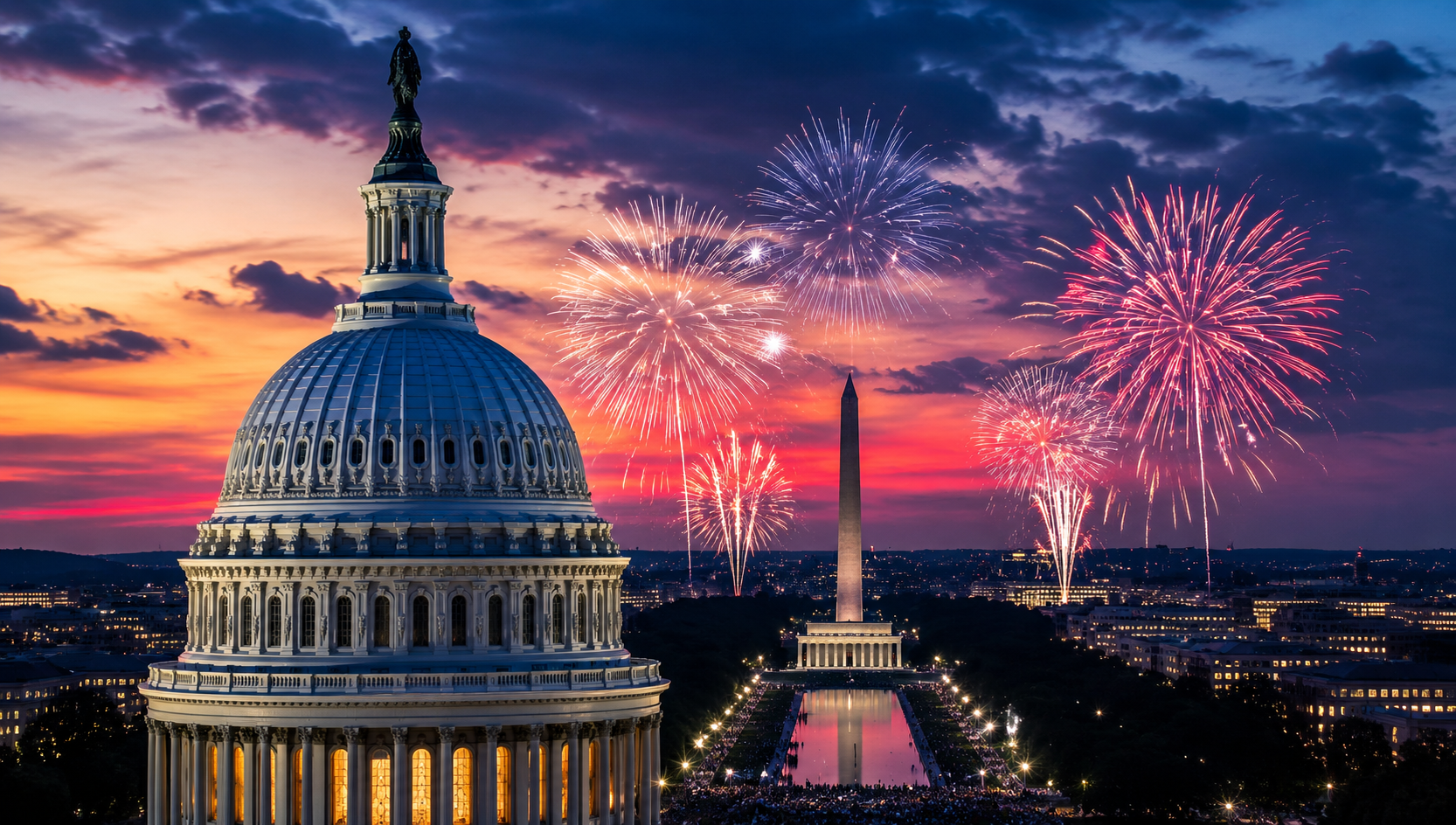
250 Years of Celebrated Independence
In 1976, I watched America celebrate 200 years of independence.
Our country was imperfect. The challenges were real. Yet there remained a quiet confidence that the constitutional experiment would endure.
Today, admittedly, that confidence feels less certain. And that is precisely why the 250th anniversary of our nation’s independence matters.
Anniversaries are not merely celebrations. They are also evaluations.
Moments when nations ask themselves difficult questions.
The most important question facing America in 2026 is not whether we remain wealthy. Or powerful. Or influential.
The question is whether we remain committed to the constitutional principles that made those remarkable achievements possible.
The founders gave us a republic, if, as Benjamin Franklin cogently opined, we can keep it.
The generations of 1776, 1976, and 2026 share a common responsibility. To leave it stronger than we found it.
That is an easy bar for us to meet if we want to.
The challenge now belongs to us. And soon, it will be POTUS 48's turn to lead us through it and set the stage for Independence Day 300.