The "Donroe Doctrine" Truth
Opinion by Ben Everidge for Thomas
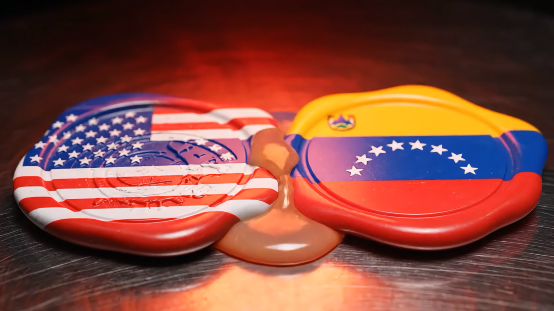
Photo & Video Credit: Adobe Stock with AI by Родион Бондаренко
Venezuela Beyond Drugs and Oil - the Real Map of Power in the Western Hemisphere
Recent foreign policy debate in America has surged around what the Trump White House has been telegraphing as a bold U.S. operation targeting Nicolás Maduro – an action framed at different moments as counter-narcotics, energy security, and finally something more ideological.
While the administration’s public explanations have shifted during this past week’s capture of the Venezuelan dictator, the strategic through-line is becoming clearer: this was never primarily about drugs, and oil alone, which has been the popular theory, does not fully explain it either.
Legitimacy First: Why the Legal Arguments Fall Flat
From the administration’s vantage point, Maduro’s claim to legitimacy has long been suspect. Disputed elections, repression of political opposition, and international non-recognition by large portions of the democratic world weaken the traditional foreign policy objections rooted in sovereignty.
This framing matters. If a regime is viewed as illegitimate, then the usual arguments about non-intervention carry far less moral weight in the eyes of those ordering action. In this logic, the operation was not an invasion of a sovereign democracy, but an enforcement action against a hostile, criminalized state apparatus embedded in disreputable transnational networks.
Whether one agrees or not, this premise explains why many international-law objections have been, or are being, brushed aside rather than rebutted.