The Battle for "Greatness"

Ben Everidge for Thomas
Photo Credit: National Archives
How a Borrowed Slogan Reveals Two Very Different Presidencies
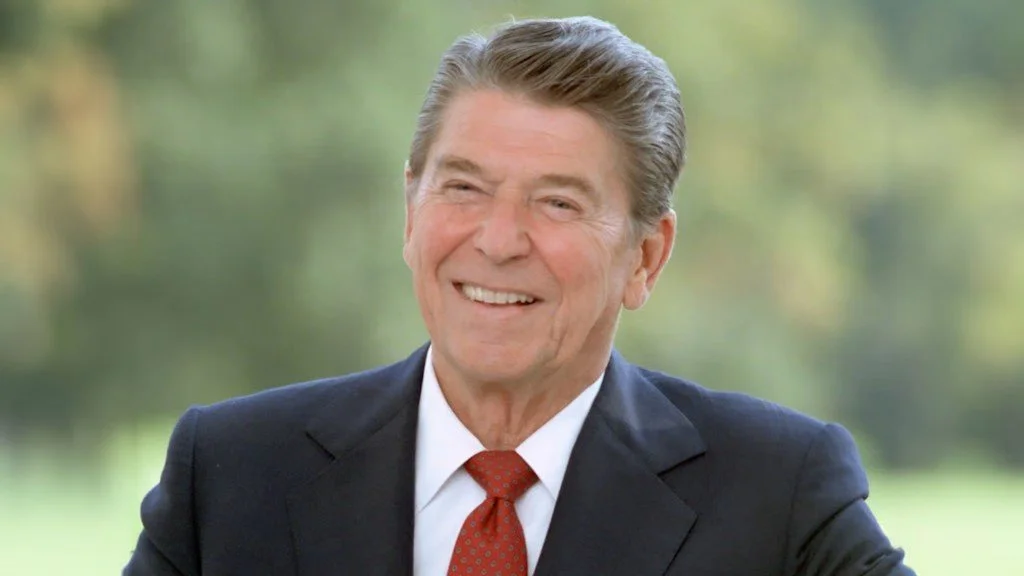
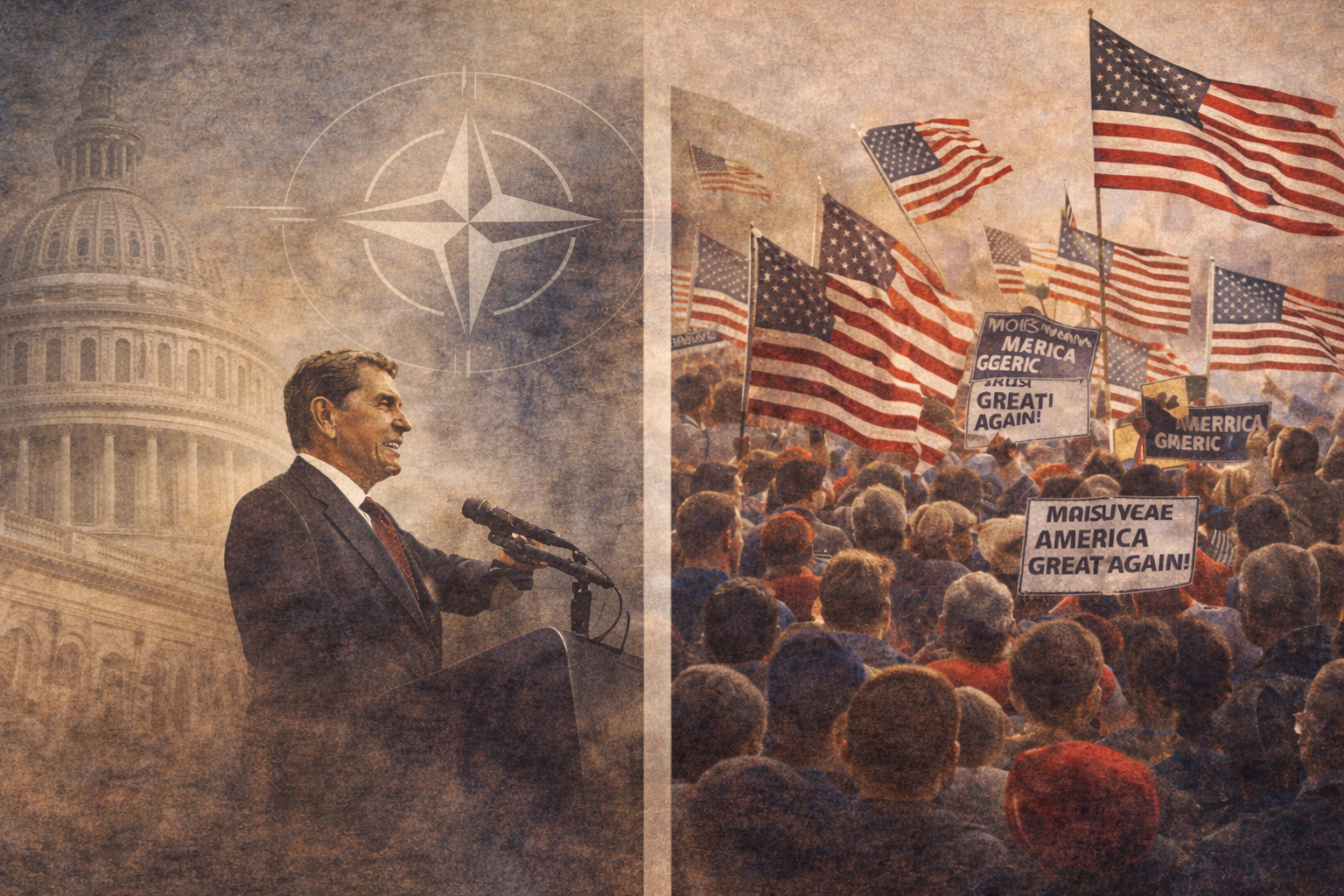
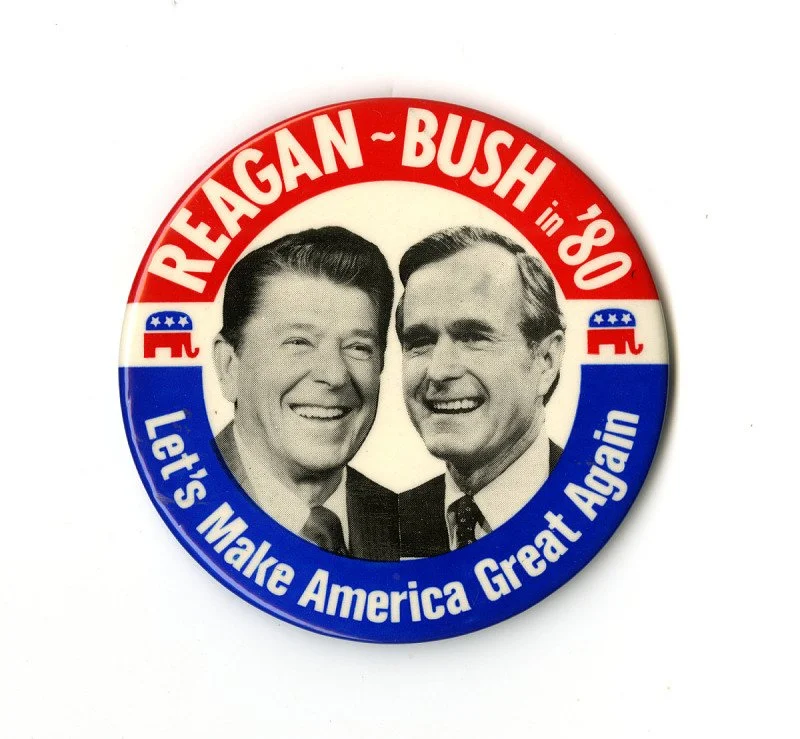
Ronald Reagan first used the line “Let’s Make America Great Again during his 1980 campaign, offering a hopeful, optimistic invitation that fit the post-stagflation mood of the country that escalated under Jimmy Carter’s White House tenure.
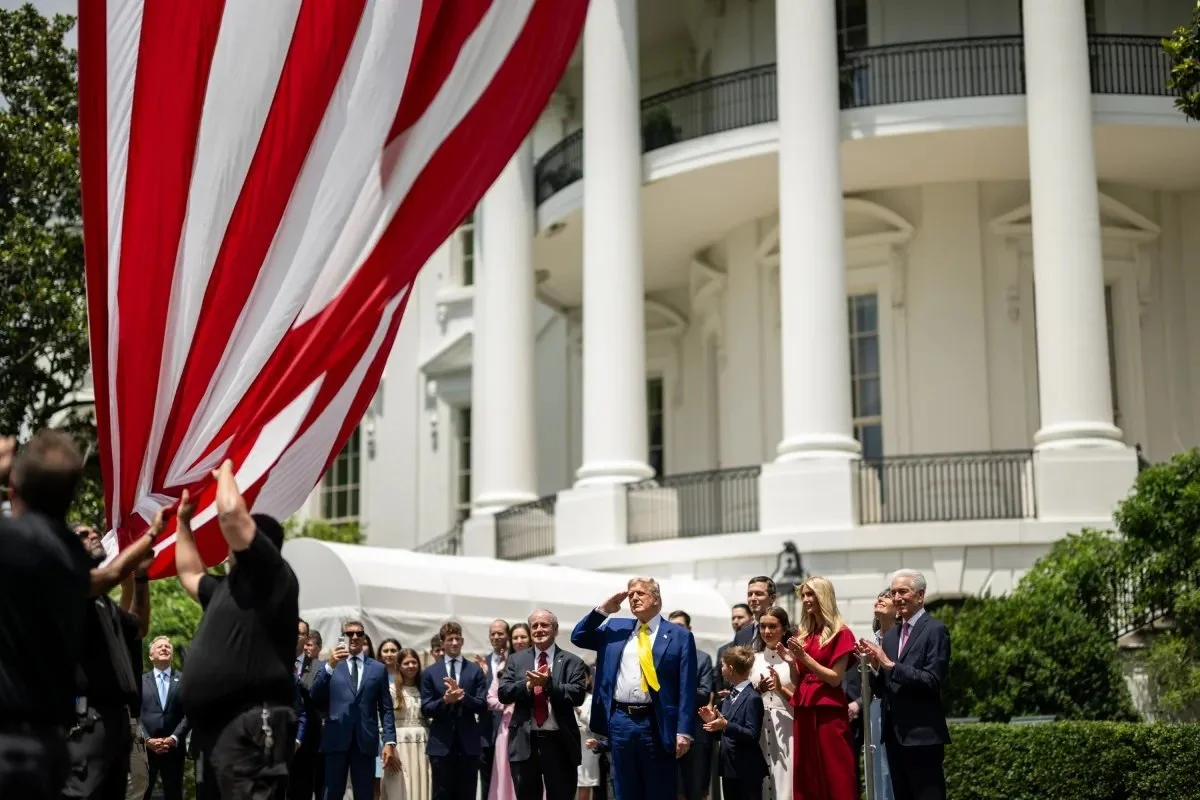
Decades later, Donald Trump revised the Reagan slogan, sharpened it, and weaponized it, turning “Make America Great Again” into one of the most potent political brands of the 21st century.
But the similarities end there.
Trump never did credit Reagan for the origin of the slogan, as he should have, and at times even openly criticized the very coalition that Reagan and his Vice President, George H.W. Bush, built. In fact, Trump’s political rise was anchored in repudiating “establishment Republicans,” which implicitly included the Reagan-Bush-Bush legacy. Yet his movement still draws heavily on Reagan-era emotional notes: grievance, patriotism, and a promise to restore something lost.
What emerges is a tale of two presidencies – both consequential, both controversial, both transformational in their own way – but fundamentally different in methods, tone, ideology, outcomes, and competence.
The Slogan: Inspiration, Adaptation, and Appropriation
Reagan 1980: “Let’s Make America Great Again” was an inspirational message responding to Jimmy Carter-era inflation, the Iran hostage crisis, and doubts about national confidence. Reagan offered a sunny, stabilizing vision grounded in optimism, bipartisanship, and a belief in America’s inherent goodness.
Trump 2016: Trump shortened the phrase, trademarked it, and built a movement around it. But his version was rooted in populist anger, distrust of elites, and grievance politics. It was less about restoring optimism and more about confronting perceived enemies inside and outside government.
The irony: Trump’s core brand – his hat, his rallies, his promises – was constructed on scaffolding Reagan built. But stylistically and philosophically, the two presidents could not be more different.
The Reagan Presidency: Successes, Shortfalls, and Scandals
Successes:
Economic Recovery: Reagan inherited 14% inflation and stagnant growth. By 1984, inflation had collapsed, and GDP surged. Supply-side tax cuts and monetary tightening stabilized the economy, though at the cost of a painful early recession.
Cold War Leadership: Reagan’s military buildup and diplomatic pressure helped accelerate the Soviet decline. His partnership with Mikhail Gorbachev produced landmark arms agreements, including the INF Treaty.
National Confidence: Reagan restored a sense of American optimism. A psychological accomplishment that affected everything from markets to foreign policy.
Shortfalls:
Soaring Deficits: Tax cuts and defense spending resulted in deficits that contradicted the conservative small-government message.
Social Issues Neglect: AIDs, homelessness, and the early drug epidemic received limited attention until political pressure forced action.
Scandals:
Iran-Contra: The most serious scandal of the Reagan era was his secret arms sales to Iran, with proceeds diverted to Nicaraguan rebels in violation of U.S. law. Reagan survived his political scandal, but it led to convictions of senior officials and permanently complicated his legacy.
The Trump Presidency: Successes, Shortfalls, and Scandals
Successes:
Judicial Reshaping: Three Supreme Court appointments and hundreds of federal judges reshaped the American judiciary for a generation or more.
Economic Performance (Pre-COVID): Unemployment hit historic lows for multiple demographic groups. Markets performed strongly through much of his term.
Foreign Policy Realignments: The Abraham Accords in the Middle East remain one of the most substantive achievements of the decade.
Shortfalls:
Governance by Division: Where Reagan sought to build coalitions, Trump consolidated a fractured one. He governed through confrontation, directing anger toward institutions, allies, and critics.
Trade Wars and Tariffs: Trump reversed decades of free-trade orthodoxy with tariffs that raised consumer prices and disrupted supply chains. Reagan, by contrast, sought to expand global markets.
Pandemic Response: COVID-19 exposed weaknesses in coordination, communication, and preparedness. The administration oscillated between expert guidance and poor political messaging, undermining public trust.
Scandals:
Impeachments (Two): Trump became the first president impeached twice. First over Ukraine and later over the January 6th attack on the U.S. Capitol.
Criminal Indictments & Convictions: Post-presidency, Trump has faced multiple criminal charges at the state and federal levels and has been convicted of 34 felonies and found liable for sexual behavior and libel – unprecedented in American history.
Internal Turmoil: Cabinet churn, public feuds, and continuing January 6th fallout defined a presidency marked by substantial instability in and around the White House.
The Republican Party: From Reagan Conservatism to Trump Populism
Ronald Reagan built a coalition of fiscal conservatives, national security hawks, suburban moderates, and rural voters. He believed in immigration reform, free trade, and American leadership abroad.
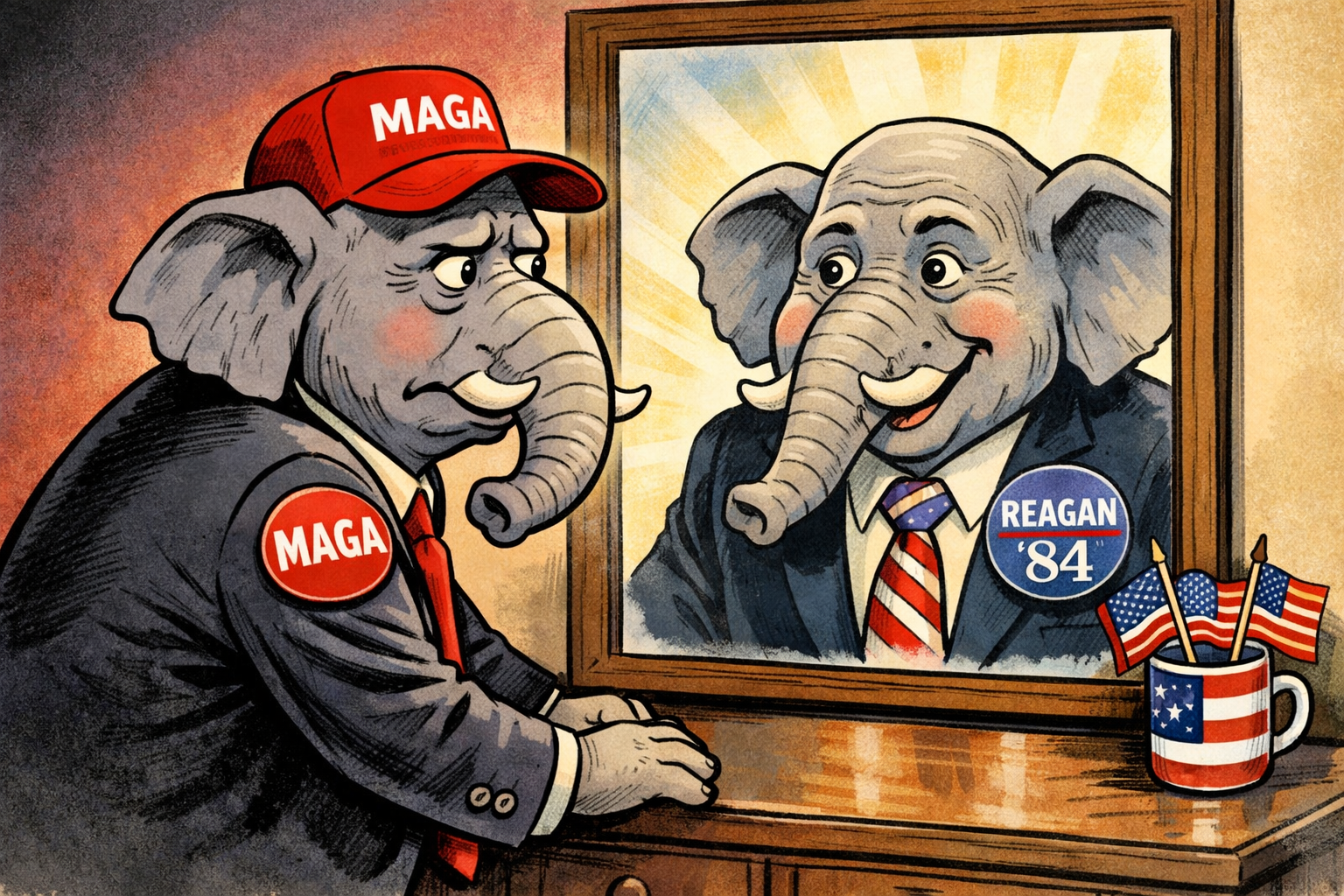
Donald Trump dismantled that coalition and rebuilt the party in his own image: anti-establishment, protectionist, and grievance-plagued. The modern GOP resembles European right-wing populism and dictator-embracing far more than Reagan-era conservatism.
Trump’s criticisms of Reagan and the Bush family reflect this shift:
He called the Iraq War a disaster.
He mocked Jeb Bush as “low energy.”
He dismissed Reagan-era trade policy as naïve globalism.
The party that once revered Reagan now rarely invokes him because Trump supplanted him as the central ideological figure.
Two Presidents, Two Movements, Two Americas
Reagan’s America was aspirational, forward-thinking, and grounded in unity, even when his policies were divisive.
Trump’s America is purposely polarized, consistently angry, and chaotically motivated by distrust of government, media, institutions, and the American Rule of Law.
Both men shaped history.
Both changed the electorate.
Both left legacies that will be debated for generations.
But they did not lead the same movement.
And “Make America Great Again” meant something fundamentally different in each era.
Reagan invited Americans to believe again.
Trump invited Americans to fight again.
The difference between belief and battle explains why one presidency expanded a coalition and the other fractured one.