Conservative, Or?
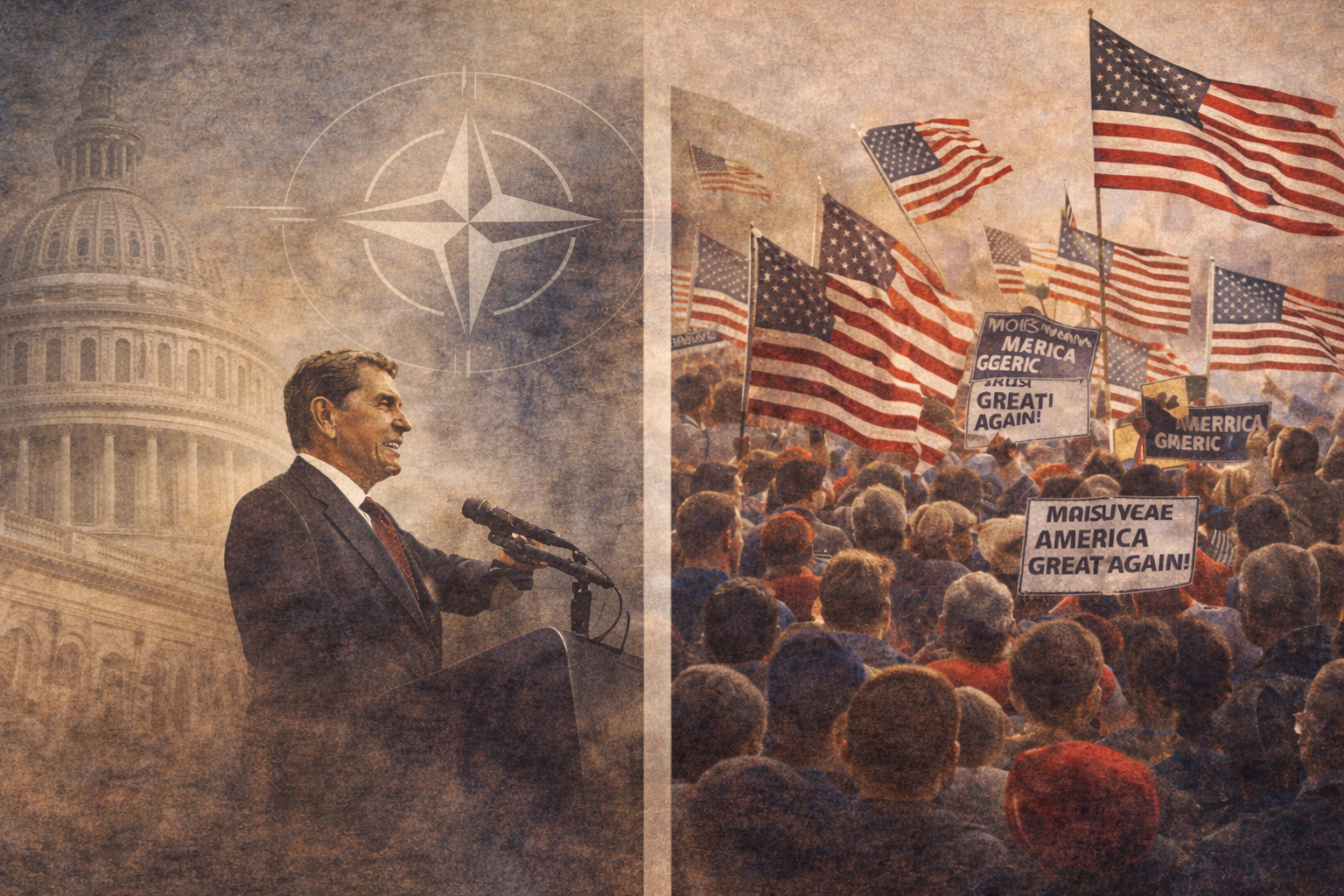
Image: Thomas | Cannon & Caius with AI assist
An Assessment of MAGA, Continuity, and Departure …
(The author earned a graduate degree in American government from Georgetown University, where he was also named a University Fellow after serving for a decade on professional and campaign staff in the United States Senate and U.S. House of Representatives.)
In political science, movements are rarely born from nothing. They emerge from older traditions, reshape them, and often challenge them from within.
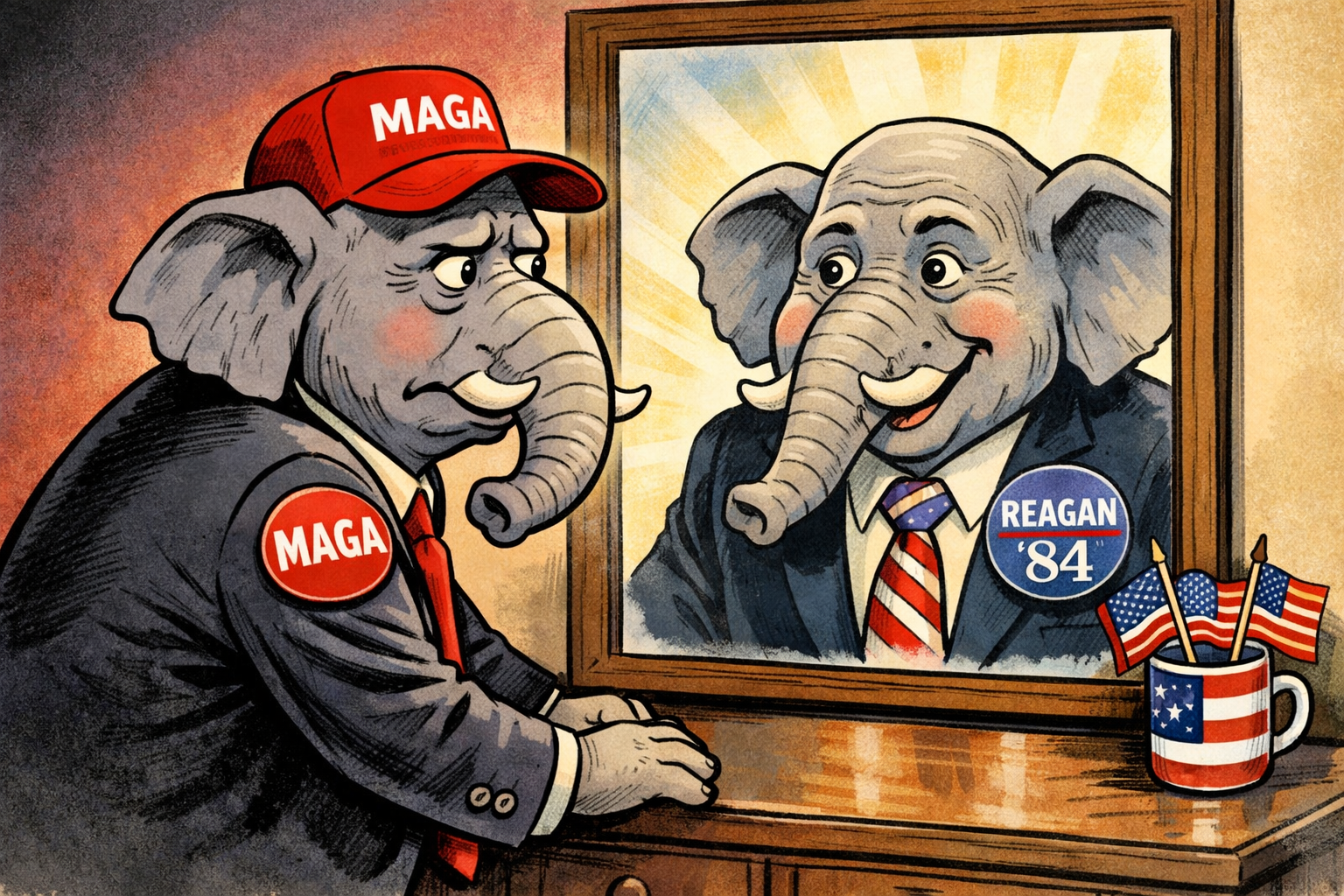
The modern MAGA movement associated with Donald Trump is often described as “conservative.” But compared to late 20th-century American conservatism, roughly the Reagan-Bush era, it represents both continuity and rupture.
To understand where the Republican Party is today, we must understand where it was.
What Late 20th-Century Conservatism Believed
From the 1070s through the early 2000s, American conservatism was built on a relatively stable ideological tripod:
1. Limited Government & Constitutional Restraint
Conservatives emphasized:
Federalism.
Separation of powers.
Judicial restraint.
Respect for institutional continuity.
Even when expanding executive power, as during the War on Terror, leaders framed those actions in constitutional and statutory terms.
2. Free Markets & Global Trade
Reagan-era and post-Reagan conservatives broadly supported:
Free trade agreements (NAFTA, WTO).
Deregulation.
Market globalization.
Low taxation as a growth policy.
Free enterprise was seen as a moral and strategic advantage over communism.
3. Strong Alliances & Anti-Authoritarian Foreign Policy
Cold War conservatism emphasized:
NATO cohesion.
Support for democratic allies.
Skepticism toward Russia.
Opposition to authoritarian expansion.
American leadership abroad was considered stabilizing rather than disruptive.
What MAGA Represents
MAGA retains some conservative language - particularly around deregulation, border enforcement, and judicial appointments – but diverges in key areas.