The Prosperity Priority
How a Nation as Wealthy as America Became an Affordability Nation
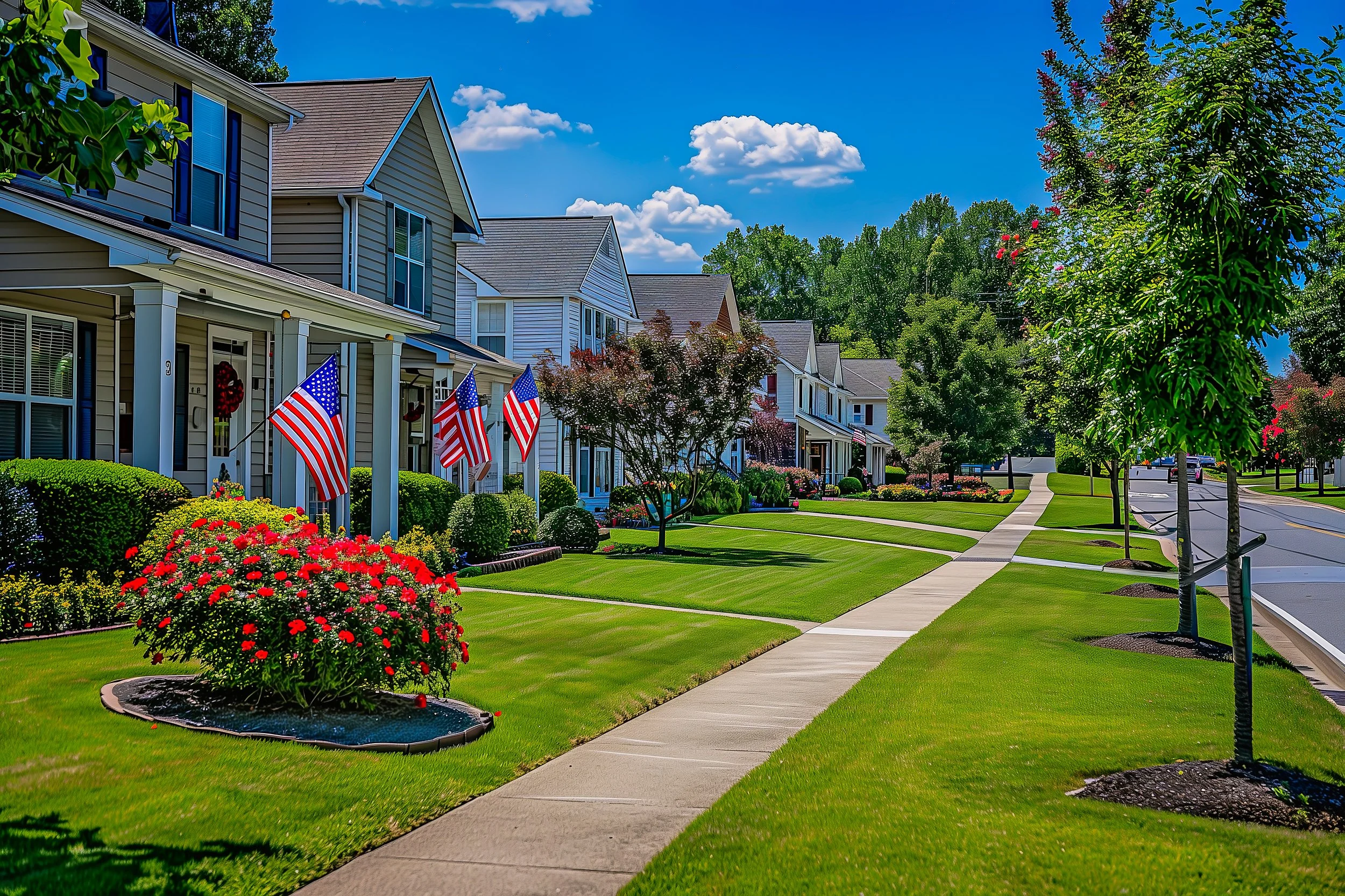
Image: Adobe Stock generated with AI by Carmen K. Sisson
For many Americans, the central political question today is not ideological. It is economic.
Can ordinary citizens still afford to live well in the United States?
Across the country, households are confronting the same pressures:
Rising housing costs.
Higher grocery bills.
Expensive healthcare.
Escalating insurance premiums.
Childcare that rivals college tuition.
These concerns cut across party lines, regions, and generations.
They are what Thomas and I call the Affordability Moment.
To understand this moment, and how the country might move through it, we turn to a framework I call the Prosperity Priority.
What Is the Prosperity Priority?
The Prosperity Priority is a governing principle I designed that asks a simple question: Does public policy make it easier or harder for citizens to live stable, prosperous lives?
This framework does not begin with ideology. It begins with outcomes.
A nation that fails to maintain broad prosperity eventually experiences:
Political instability.
Declining institutional trust.
Populist backlash.
Generational pessimism.
Affordability is therefore not merely an economic issue. It is a democratic stability issue.
The Three Pressures Driving the Affordability Crisis
The Prosperity Priority identifies three overlapping forces reshaping the American economic landscape:
The Cost of Living Surge | In the past decade, core living costs have risen faster than wages in many sectors of the economy. Housing, healthcare, energy, insurance, and education are partially affected. These costs are structural. They cannot be solved through short-term stimulus or temporary price relief. They require long-term policy alignment across federal, state, and local levels.
Policy Complexity | American economic policy has become extraordinarily complex. The typical household interacts with federal tax policy, state tax structures, local zoning regulations, insurance markets, and energy pricing systems. Each layer of policy affects the final price citizens pay. When these systems operate out of alignment, affordability deteriorates. Citizens often sense the results long before policymakers acknowledge them.
Generational Economic Drift | Younger Americans increasingly question whether the economic ladder still functions. Many face record housing entry costs, high student debts, volatile job markets, and delayed family formation. Even older Americans, particularly retirees, now confront rising healthcare and insurance costs that strain fixed incomes. The result is a widening perception that prosperity is becoming harder to reach.
Why Public Opinion Is Growing
A growing number of Americans express dissatisfaction with the nation’s economic direction, not necessarily because they reject markets or growth.
They oppose the current trajectory because it feels increasingly disconnected from daily life. Several dynamics explain this shift:
Visibility of Cost Pressures | Inflation is uniquely political because it is visible. Citizens encounter it daily: grocery receipts, gas stations, housing listings, and insurance renewals. Unlike abstract economic indicators, affordability is experienced directly.
Institutional Trust Decline | When citizens believe economic policy is being managed primarily for financial markets rather than households, trust declines. The perception – fair or not – that institutions are more responsive to large financial actors than ordinary citizens fuels political frustration.
Policy Language vs. Household Reality | Government economic messaging often focuses on macro indicators: GDP growth, employment numbers, and stock market performance. Households, however, measure prosperity differently: rent, mortgage payments, childcare costs, and grocery bills. When these narratives diverge, dissatisfaction grows.
The Prosperity Priority in Practice
The Prosperity Priority argues that economic policy should focus on restoring alignment between national growth and household stability.
This requires focusing on several core areas:
Housing Supply | Housing affordability cannot improve without increasing supply. Zoning reform, infrastructure investment, and innovative development models must expand housing availability in high-demand regions.
Cost Transparency | Healthcare, insurance, and energy markets remain opaque. Improving price transparency and competition can help reduce structural cost pressures.
Regional Economic Balance | The concentration of opportunity in a handful of metropolitan areas places enormous pressure on housing and infrastructure. Encouraging distributed economic growth across regions can help relieve these pressures.
Institutional Simplicity | Complex policy structures often produce unintended costs. Simplifying regulatory and tax frameworks can improve affordability without sacrificing economic dynamism.
Why This Matters for Democracy
Economic stability has always been a foundation of democratic stability.
When citizens believe that hard work no longer produces predictable economic progress, political volatility increases.
This pattern appears repeatedly throughout history.
The Prosperity Priority, therefore, asks policymakers to place household economic stability at the center of policy evaluation. Not as a partisan objective. As a civic one.
The Independent Perspective
Independent voters often approach economic policy with a distinctive posture. They tend to support:
Market-driven growth.
Fiscal discipline.
Practical problem-solving.
But they also expect economic policy to serve the broader public. When affordability declines despite economic expansion, independents are among the first to question whether the system is working as intended.
The skepticism is not ideological. It is practical.
The Thomas Standard
Thomas approaches economic policy through the lens of national durability.
A prosperous country is not defined solely by its wealth. It is defined by how broadly prosperity is shared.
The Prosperity Priority offers a simple test: Does our economic system make it easier for Americans to build stable lives?
If the answer is increasingly uncertain, the policy conversation must change because the long-term strength of the republic depends not only on constitutional institutions. It depends on the everyday prosperity of its citizens.
To read more detail about The Prosperity Priority click here.