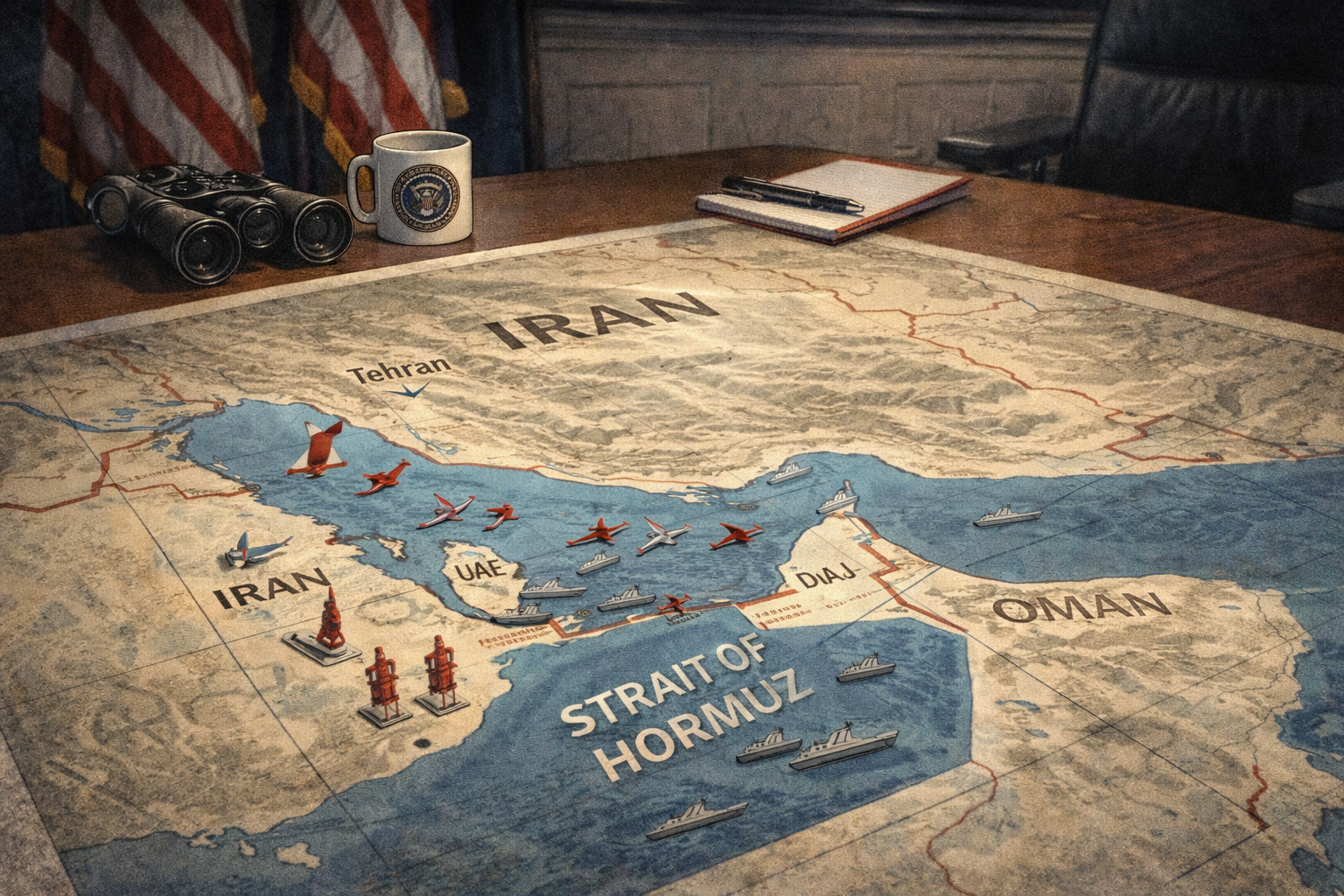
The Three Trinity Doctrine and the Iran War

How Independents Can Think Clearly About Conflict in the Middle East
The United States has again entered a moment of serious conflict in the Middle East.
Military strikes have escalated into a broader confrontation between the United States, Israel, and Iran, with thousands of targets reportedly struck and global oil markets already reacting to the disruption.
For Americans trying to make sense of this conflict, especially independent voters who often sit outside partisan narratives, the challenge is not simply whether to support or oppose the war.
The deeper challenge is how to think about it.
I have previously shared with Thomas a framework called the Three Trinity Doctrine – a way I use to analyze geopolitical conflict through three simultaneous lenses on three levels rather than one each.
The doctrine does not attempt to justify or oppose a particular war. Instead, it asks citizens and leaders to examine three realities simultaneously.
The Three Trinity Doctrine
The doctrine in this case rests on three interlocking questions:
1. The Security Trinity | What are the immediate security threats that triggered the conflict? In the case of Iran, the U.S. government argues the campaign is aimed at destroying missile infrastructure and preventing nuclear weapons development. The security dimension asks:
Is the threat real?
Is military action capable of neutralizing it?
What is the operational objective?
This is the dimension most often emphasized during wartime.
2. The Regional Trinity | What are the regional dynamics that shape the conflict? The Middle East is rarely a simple bilateral war. Iran’s relationships with groups across Lebanon, Iraq, Yemen, and Syria mean that escalation can spread through proxy networks and maritime routes such as the Strait of Hormuz. The regional dimension asks:
Could the conflict expand beyond the initial battlefield?
What are the roles of allies and proxies?
What are the risks of global energy and trade systems?
Already, disruptions to oil shipments in the Gulf have pushed energy prices significantly upward in global markets.
3. The Constitutional Trinity | How is the war being authorized and managed within the American constitutional system? In the United States, the Constitution gives Congress the power to declare war. Yet modern conflicts often begin through executive action followed by congressional debate. The current Iran conflict has already triggered intense war powers debate in Congress about whether the president should have sought explicit authorization. The constitutional dimension asks:
Was Congress meaningfully consulted?
Are the war’s objectives clearly defined?
What mechanism ends the conflict?
Without answers to these questions, wars often drift into open-ended commitments.
Why This Framework Works
Modern political discourse tends to collapse complex wars into one-dimensional arguments.
Supporters focus on national security. Opponents focus on humanitarian or economic costs.
The Three Trinity Doctrine insists that all three realities exist simultaneously:
Security.
Regional stability.
Constitutional legitimacy.
Ignoring any of these pillars leads to distorted judgment.
The Independent Ratio: Two Skeptics, One Supporter
Among independent voters, debates over war often follow a familiar pattern. In many moments of American foreign policy, roughly:
Two independents tend to question or oppose entering the war.
While one independent may support the intervention, often on security grounds.
This ratio is not a formal statistic. It reflects a recurring political instinct.
Independents historically display:
Skepticism toward prolonged foreign conflict.
Caution about executive war powers.
Concern about economic consequences.
At the same time, independents are rarely isolationist. They also recognize that threats to national security sometimes require the use of force.
The result is a political posture that is neither reflexively pro-war nor reflexively anti-war. It is conditional.
How Independents Should React
The Three Trinity Doctrine suggests a disciplined response.
1. Avoid Instant Conclusions | War produces emotional reactions. Citizens should insist on information before judgment.
2. Ask Strategic Questions | Independents should ask: What is the objective? What constitutes success? What ends the conflict?
3. Protect Constitutional Process | Even citizens who support military action should insist that Congress participate meaningfully in decisions that could escalate into prolonged war.
4. Focus on Consequences | Wars reshape energy markets, regional alliances, and domestic politics. Already, disruptions in the Strait of Hormuz have affected global oil supply. These economic consequences often affect American households long before battlefield outcomes become clear.
The Larger Middle East Equation
Iran is not simply a country in conflict with the United States. It is a central node in a larger regional system involving:
Israel.
Gulf Arab states.
Proxy militias.
Global energy markets.
Nuclear deterrence dynamics.
Mid-term elections in the United States.
Strategists increasingly warn that conflicts involving Iran rarely remain geographically contained.
That is why understanding the regional dimension of the Trinity Doctrine is essential.
The Real Test
The success or failure of the Iran war will ultimately not be judged by early battlefield statistics. Three questions will judge it:
1. Did it actually reduce the security threat?
2. Did it stabilize or destabilize the Middle East?
3. Did it respect the constitutional framework of American war powers?
Only when all three questions are answered together can citizens assess the conflict fairly.
The Thomas Standard
Thomas approaches geopolitics with a simple principle: War should always be examined through multiple lenses.
The Three Trinity Doctrine offers a framework for doing exactly that.
Security. Region. Constitution.
Independent citizens should keep all three in mind because wars are rarely won or lost on the battlefield alone.
For more detail on the Three Trinity Doctrine click here.