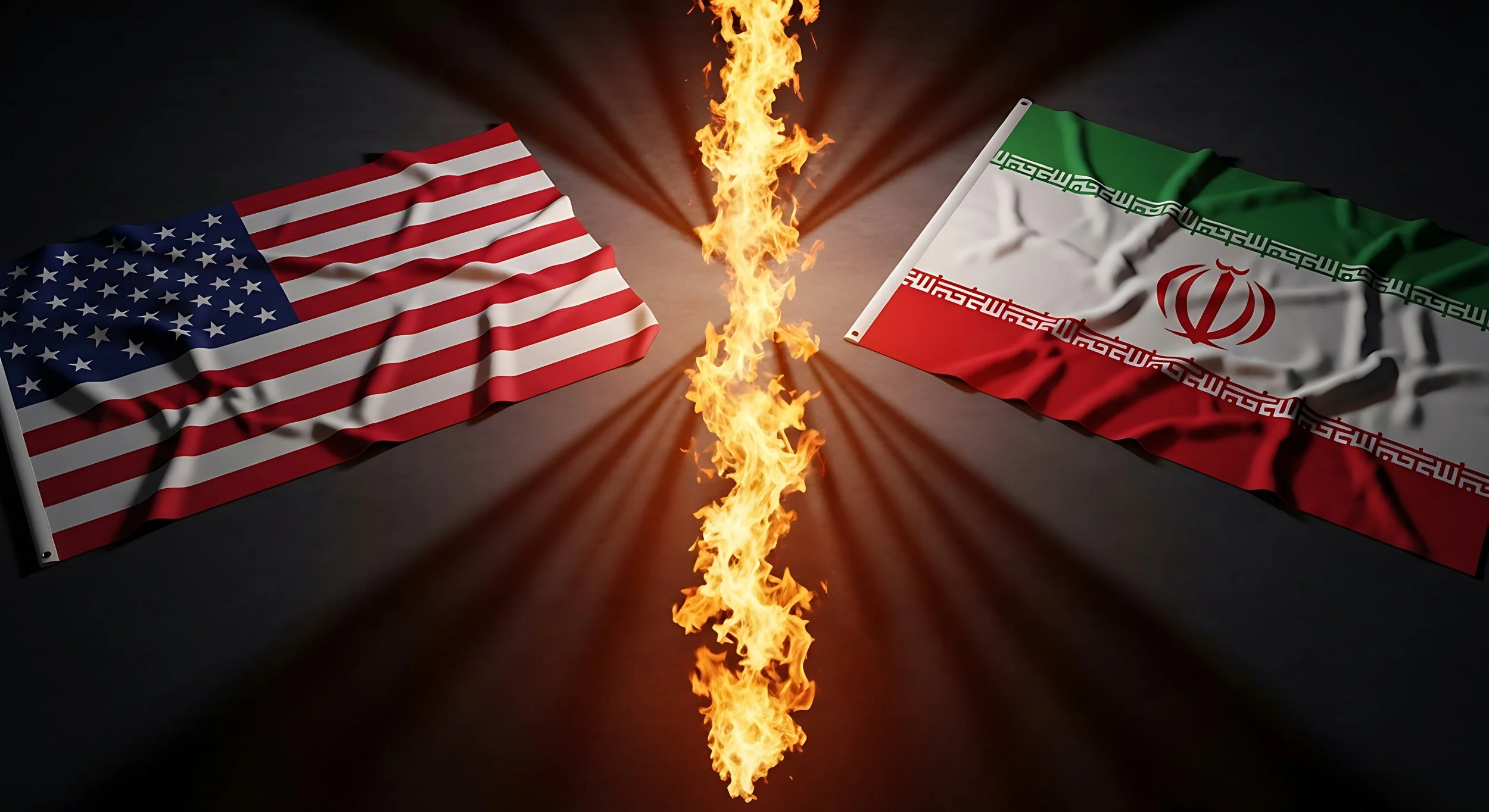
War & Rumors

By Ben Everidge for Thomas
Image: Adobe Stock Generated with AI by Vadym
How Independents Should Think When Headlines Accelerate Faster Than Facts
When a president initiates major military operations and, at the same time, controversy swirls over document disclosures and transparency, the modern media environment does what it always does: It accelerates.
Speculation spreads faster than verification.
Motives are assigned before evidence is weighed.
Political tribes react before institutions deliberate.
As political independents, the question is not whether emotions are justified. The question is whether we respond in ways that strengthen or weaken the constitutional order.
The Two Conversations Happening at Once
Right now, many Americans are discussing two parallel issues:
1. Frustration over the handling and release of files related to Jeffrey Epstein.
2. The decision by Donald Trump to engage in major combat operations involving Iran reportedly relied on authority under the War Powers Resolution rather than a formal declaration of war from Congress.
In some corners of the political spectrum, these conversations have merged into a single speculation: that foreign conflict is being used to displace domestic controversy.
That is where institutional seriousness must reassert itself.
What We Know and What We Don’t
It is fair to ask:
Has Congress formally authorized sustained hostilities?
Has the War Powers Resolution been stretched beyond its intended temporary framework?
Has the administration reconciled campaign rhetoric about avoiding new wars with current action?
Those are legitimate constitutional questions.
It is not fair – absent evidence – to assert that war was initiated to distract from unrelated domestic issues.
Major combat operations require:
Intelligence assessment.
Pentagon planning.
Diplomatic coordination.
Notification of congressional leadership.
They are not impulse-level news cycle maneuvers.
To suggest otherwise without proof moves the critique from constitutional analysis into motive attribution, and that weakens credibility.
The Institutional Question That Matters
The real constitutional tension lies here: The Founders gave Congress the power to declare war. They gave the president authority to conduct it.
The War Powers Resolution was designed as a limiting mechanism – a temporary bridge in emergencies – not a substitute for congressional authorization in prolonged conflict.
If hostilities become sustained, the institutional burden shifts to Congress.
That is where independent scrutiny belongs. Not in guessing motives. In demanding process clarity.
The MAGA Coalition Question
There is also an internal political dimension worth analyzing carefully.
The modern MAGA coalition contains overlapping but distinct elements:
Nationalist sovereignty voters are skeptical of foreign entanglements.
Evangelical and pro-Israel constituencies.
Jacksonian populists who favor decisive retaliation when threats arise.
Institutional conservatives aligned with traditional security doctrine.
Those groups do not always move in perfect alignment.
If military engagement is framed as defensive and limited, the coalition is likely to consolidate.
If it evolves into a prolonged regional war with visible costs, internal tensions could surface, especially among voters who embraced anti- “endless war” rhetoric in 2016 and 2024.
That is political analysis. It is not a partisan attack.
Movements built around strong personalities often face stress tests when policy diverges from campaign tone. Whether that stress becomes a fracture depends less on rhetoric and more on outcomes: casualties, economic strain, and clarity of mission.
Why Independents Must Be Careful
There is a temptation in moments like this to mirror partisan behavior:
Assume hidden motives.
Amplify unverified narratives.
Collapse complex events into simple explanations.
But institutional erosion does not begin with dramatic acts. It begins with degraded standards of evidence.
If independents become reactive rather than disciplined, we lose the very lane that gives us influence.
Our strength lies in:
Defending the separation of powers.
Demanding congressional accountability.
Insisting on defined objectives and exit strategies.
Holding campaign promises up against governing actions.
Rejecting conspiratorial shortcuts.
The republic requires critics. It does not require rumor.
The Constitutional Order Is the Anchor
If Congress has not debated or authorized sustained war, that is where pressure belongs.
If the War Powers Resolution framework is being treated as sufficient for extended conflict, that deserves scrutiny.
If promises of transparency were made and not fulfilled, that deserves questioning.
But linking those issues without evidence of causation risks undermining the seriousness of each.
The Constitution is not strengthened by speculation. The process strengthens it.
The Thomas Standard
Thomas exists to defend institutional guardrails, not partisan advantage.
That means:
Critiquing executive overreach without caricature.
Analyzing coalition dynamics without hostility.
Warning against procedural shortcuts without inventing motives.
Keeping focus on constitutional design.
War tests armies. But it also tests whether citizens can think clearly under pressure.
Independents have a unique role in that test.
We must defend constitutional order.
Avoid speculation about secret motives.
Resist the urge to be pulled into reactive partisan framing.
If we lose those disciplines, the republic loses something more durable than any election cycle.