The Imperative
Seven Signs America’s Two-Party System is Failing the Republic
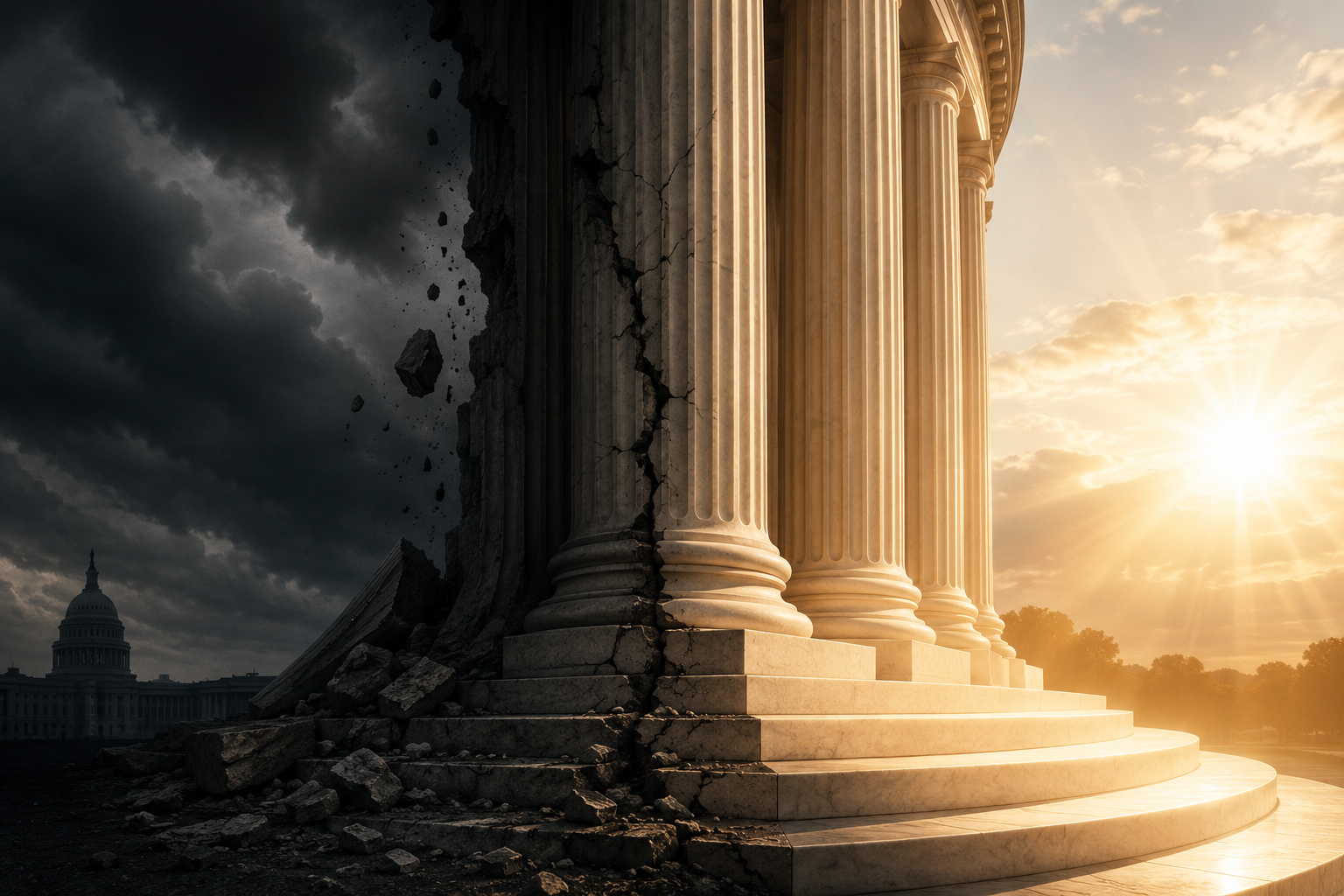
Image: Cannon & Caius generated with AI
Americans increasingly distrust both major political parties, and it is becoming harder to argue otherwise.
Yet Democrats and Republicans continue dominating nearly every level of government.
This paradox now sits at the center of the republic’s political crisis.
Poll after poll shows growing voter frustration, collapsing institutional trust, dissatisfaction with Congress, anger over affordability, and exhaustion with performative politics.
And yet the political structure itself remains remarkably unchanged.
Why?
Because modern American politics has become extraordinarily effective at protecting party power even while public confidence deteriorates.
From a political science perspective, this matters enormously.
Democracies weaken not only through authoritarianism. They also weaken through institutional stagnation, declining legitimacy, and citizen disengagement.
That is why independents now face a historic question. If the existing political system is no longer functioning effectively, who is responsible for reforming it?
Sign #1: Permanent Campaigning Has Replaced Governing
Both parties increasingly operate in perpetual campaign mode. Fundraising, outrage, messaging, and partisan positioning now dominate political behavior.
The result? Short-term politics overwhelms long-term policy. Compromise becomes politically dangerous. Governing becomes secondary to narrative management.
Congress increasingly appears designed not to solve problems but to sustain partisan mobilization.
Americans notice this, and they are growing tired of it.
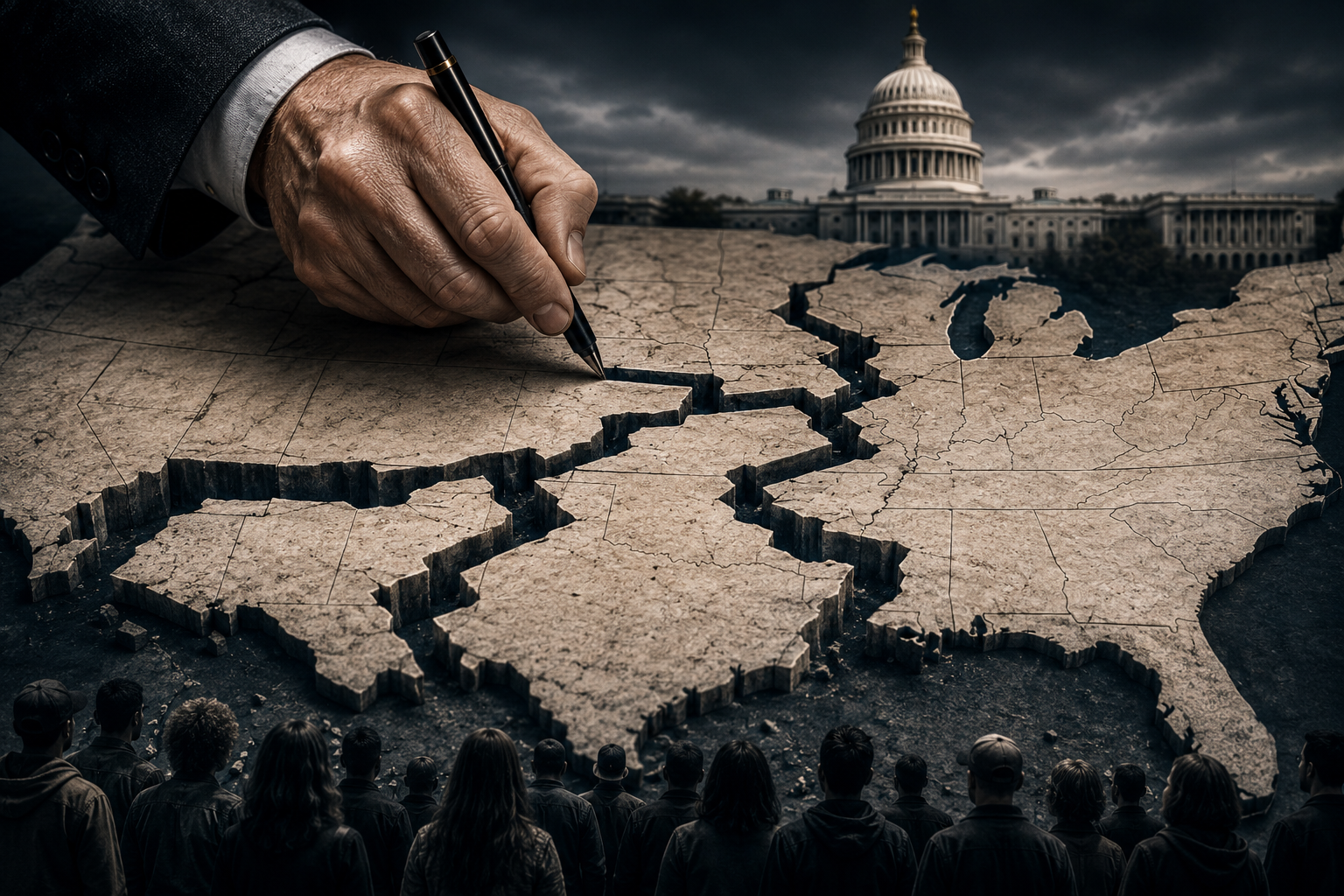
Sign #2: Gerrymandering Protects Parties More Than Voters
Both Democrats and Republicans aggressively manipulate congressional district maps when it is politically advantageous. Each condemns the practice publicly while often benefiting from it privately.
The result is a system where many elections become structurally uncompetitive, moderation becomes risky, and ideological extremes gain disproportionate influence.
From a democratic theory perspective, this is deeply corrosive.
Competitive elections are essential to political accountability. Safe districts weaken accountability itself.
Sign #3: Constitutional Oversight Has Become Selective
The founders envisioned Congress as a co-equal branch of government. Today, oversight often depends heavily upon partisan alignment.
When presidents share party affiliations with congressional leadership, investigations frequently weaken, institutional scrutiny softens, and constitutional accountability becomes inconsistent.
This occurs under both parties.
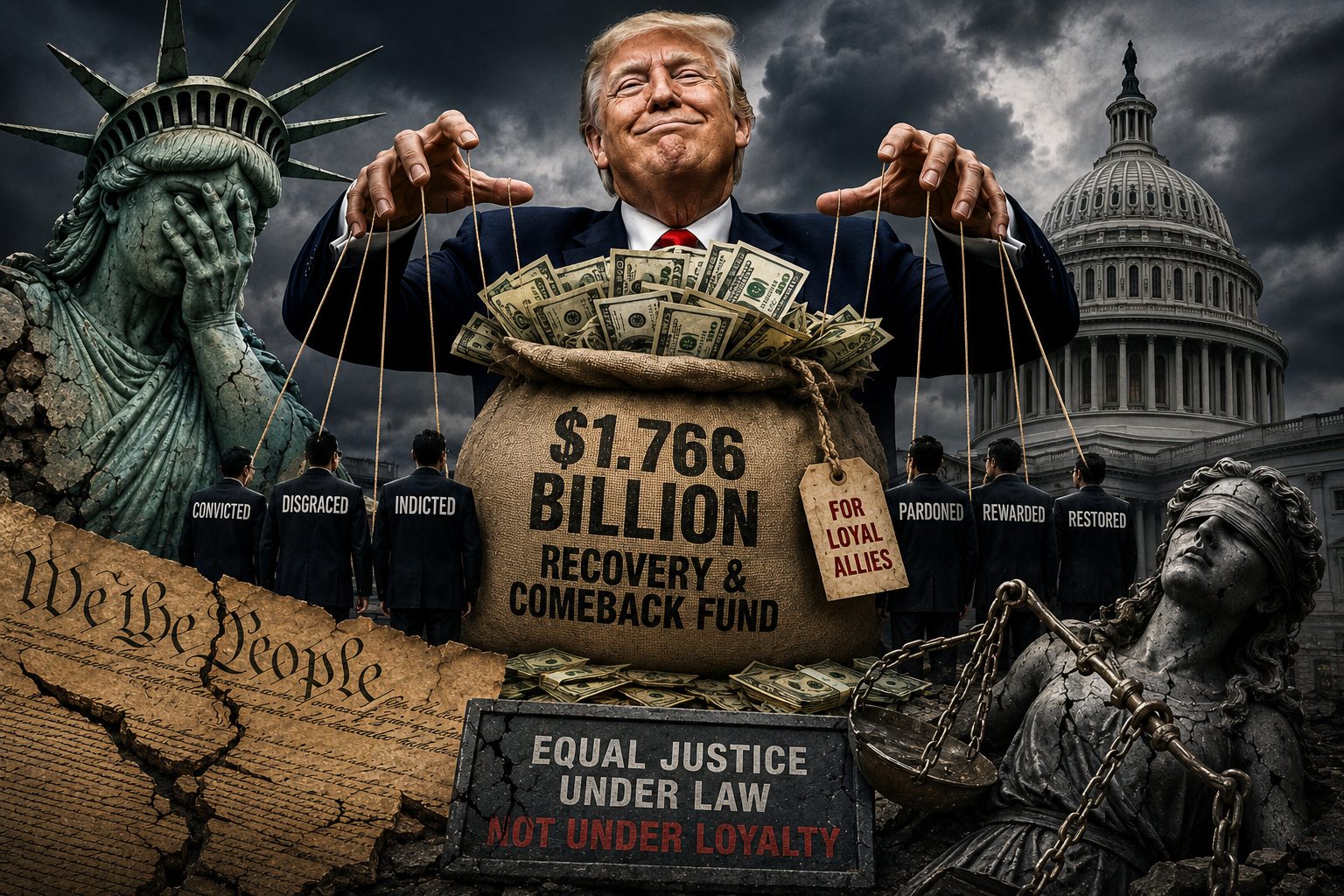
Americans increasingly perceive one standard for allies and another for opponents.
That perception alone damages democratic legitimacy.
Sign #4: Political Tribalism Now Frequently Overrides Principle
One of the clearest indicators of democratic stress is the decline of internal party restraint.
Political parties historically moderated extreme behavior within their own coalitions.
Today, party loyalty increasingly overrides ethical consistency, institutional concern, and constitutional seriousness.
This creates a dangerous environment where criticism becomes betrayal, disagreement becomes disloyalty, and independent thinking becomes politically punished.
Healthy democracies require internal correction mechanisms.
America’s are weakening.
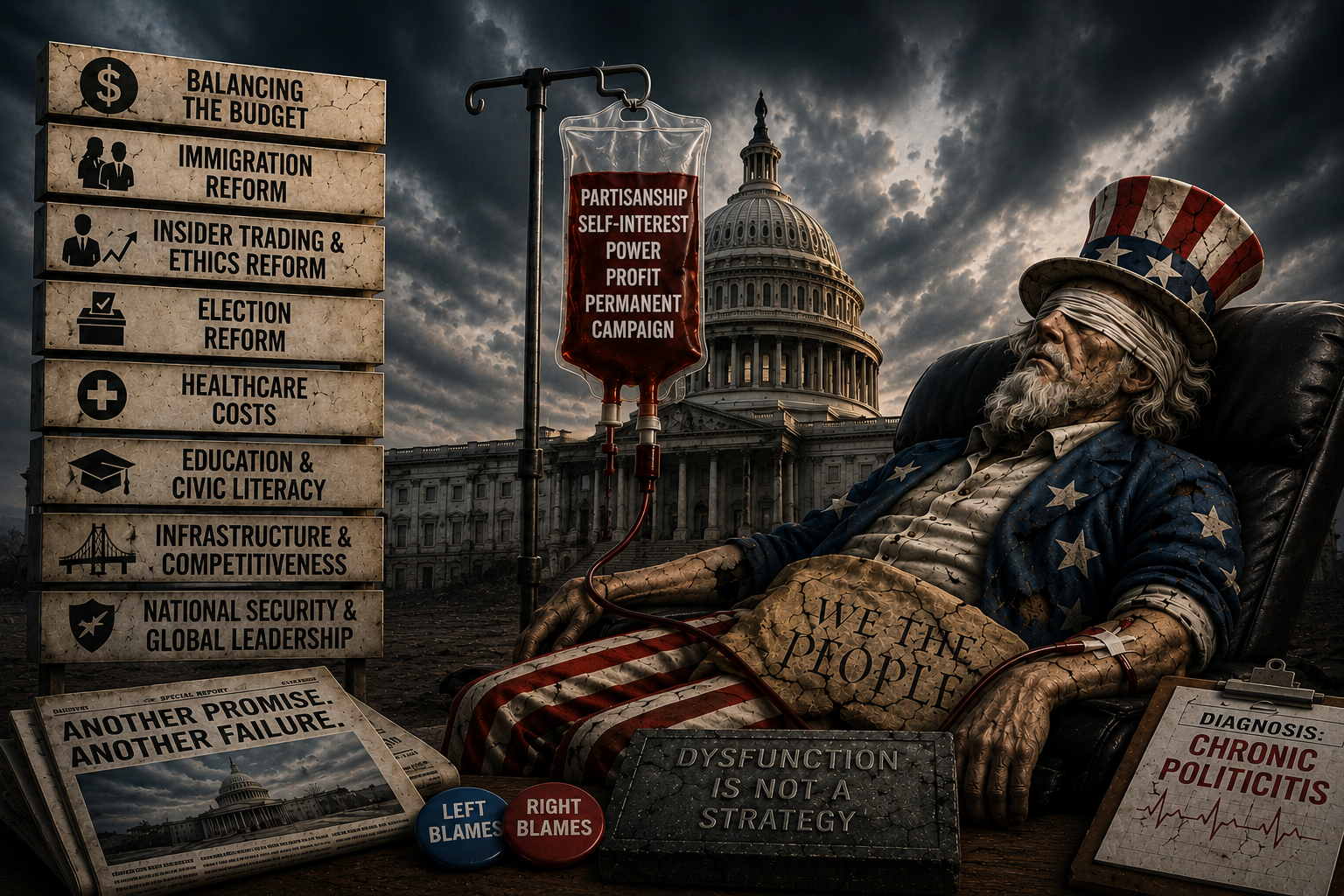
Sign #5: Affordability Continues to Deteriorate Despite Constant Political Promises
Perhaps the most practical failure involves economics.
Despite decades of promises from both parties, housing costs continue rising, debt burdens expand, healthcare remains expensive, deficits balloon, and younger generations increasingly question whether middle-class stability remains attainable.
Meanwhile, partisan conflict intensifies while structural economic reform stagnates.
Citizens increasingly feel heavily governed but poorly served.
That perception fuels independent political growth, as we have been witnessing.
Sign #6: Public Trust in Institutions is Collapsing
Trust in Congress, the media, the courts, federal agencies, elections, and political leadership has deteriorated dramatically.
This distrust is bipartisan, and importantly, much of it has been amplified by politicians themselves.
Both parties increasingly weaponize institutional distrust when politically convenient.
But republics cannot function indefinitely when every election becomes illegitimate, every institution becomes corrupt, and every opponent becomes existential.
Eventually, citizens stop believing the system deserves defense at all.
Sign #7: Independent Voters Exist, But Independent Infrastructure Does Not
This may be the most revealing sign of all. Independents now represent one of the largest political groups in America.
Yet, ballot access laws remain difficult and receding; media coverage remains heavily partisan; debate structures favor the two parties; donor systems reinforce party dominance; and independent candidates frequently lack organizational support.
The system increasingly protects itself institutionally.
This creates a democracy paradox where Americans are politically diversifying faster than the political structure itself.
Why This Matters Politically
Political science teaches an important lesson: Stable democracies require legitimacy.
Not unanimous agreement. Not ideological uniformity. Legitimacy.
Citizens must believe that the system is fundamentally fair, that accountability exists, that elections matter, and that reform remains possible within constitutional structures.
When those beliefs weaken, polarization intensifies. And when polarization intensifies long enough, institutional stability suffers.
The Independent Challenge
Independents now face a serious strategic decision.
Complaining about the two-party system is no longer sufficient.
If independents truly believe the republic needs balance, constitutional seriousness, and less tribal governance, then independents must organize, recruit candidates, develop infrastructure, build donor networks, and compete seriously for office.
Because political vacuums do not remain empty.
“When parties become more committed to defeating one another than strengthening the republic itself, citizens must decide whether the system still reflects them or merely manages them.”
What Independents Could Offer
At their best, independents could potentially provide constitutional balance, coalition-building, institutional reform, fiscal seriousness, and less ideological rigidity.
Not because independents are morally superior, but because they are structurally positioned outside permanent partisan warfare. That alone may become increasingly valuable in the years ahead.
The Thomas Take
At Thomas, we believe the greatest danger to the republic is not disagreement.
The founders expected disagreement. The greater danger is institutional exhaustion when citizens stop believing the system is capable of self-correction.
Democracy survives through participation, accountability, reform, and civic seriousness. Not passive frustration.
If Americans want a healthier republic, they may eventually need to build it more independently than they have in generations.