Anxiety in America

Affordability and the Fear That Politics Is No Longer Fair
Image: Adobe Stock by Jeff Bergen/peopleimages.com
Americans are tired.
Not simply politically tired. Not merely economically frustrated. But deeply, emotionally exhausted.
You can feel it at the grocery store, at the gas pump, during nightly news broadcasts, in conversations around dinner tables, and increasingly in the quiet moments when people wonder what kind of country they are handing to the children and grandchildren.
The anxiety is not coming from one issue alone. It is cumulative, and Americans know it.
Affordability is Breaking Our Confidence
For years, Americans were told the economy was strong. Yet millions continue asking a very basic question: If things are so good, why does life feel so expensive?
Housing costs are rising uncontrollably. Insurance costs are rising, too, as are food prices and energy prices.
Debt is expanding relentlessly.
And now there is another pandemic-like virus making the rounds that brings PTSD to those of us who lived through COVID-19 while our elected officials denied or ignored its existence, its reach, and its deadliness.
Middle-class Americans particularly feel increasingly financially exposed.
Young families postpone buying homes, having children, saving for retirement, or pursuing stability itself.
This is not abstract economics. This is emotional economics.
When citizens no longer feel secure in ordinary life, confidence in institutions begins to weaken.
The Weight of Constant Crisis
Americans are also living beneath a permanent cloud of geopolitical tension.
Wars are expanding. Threats are escalating. Deadlines come and go. Markets react. Seemingly senseless military deployments are revealed.
Consequently, citizens are left asking, "Are we truly safer? Is there a strategy we just are not seeing? Is anyone fully in control?”
The modern news cycle compounds the pressure. Every crisis arrives instantly. Every fear becomes amplified.
The republic feels perpetually on edge.
Politics Has Become a Trust Problem
Perhaps most damaging of all is the growing belief that politics itself is no longer functioning honestly.
Many Americans now realize:
The system is manipulated.
Elections are gamed.
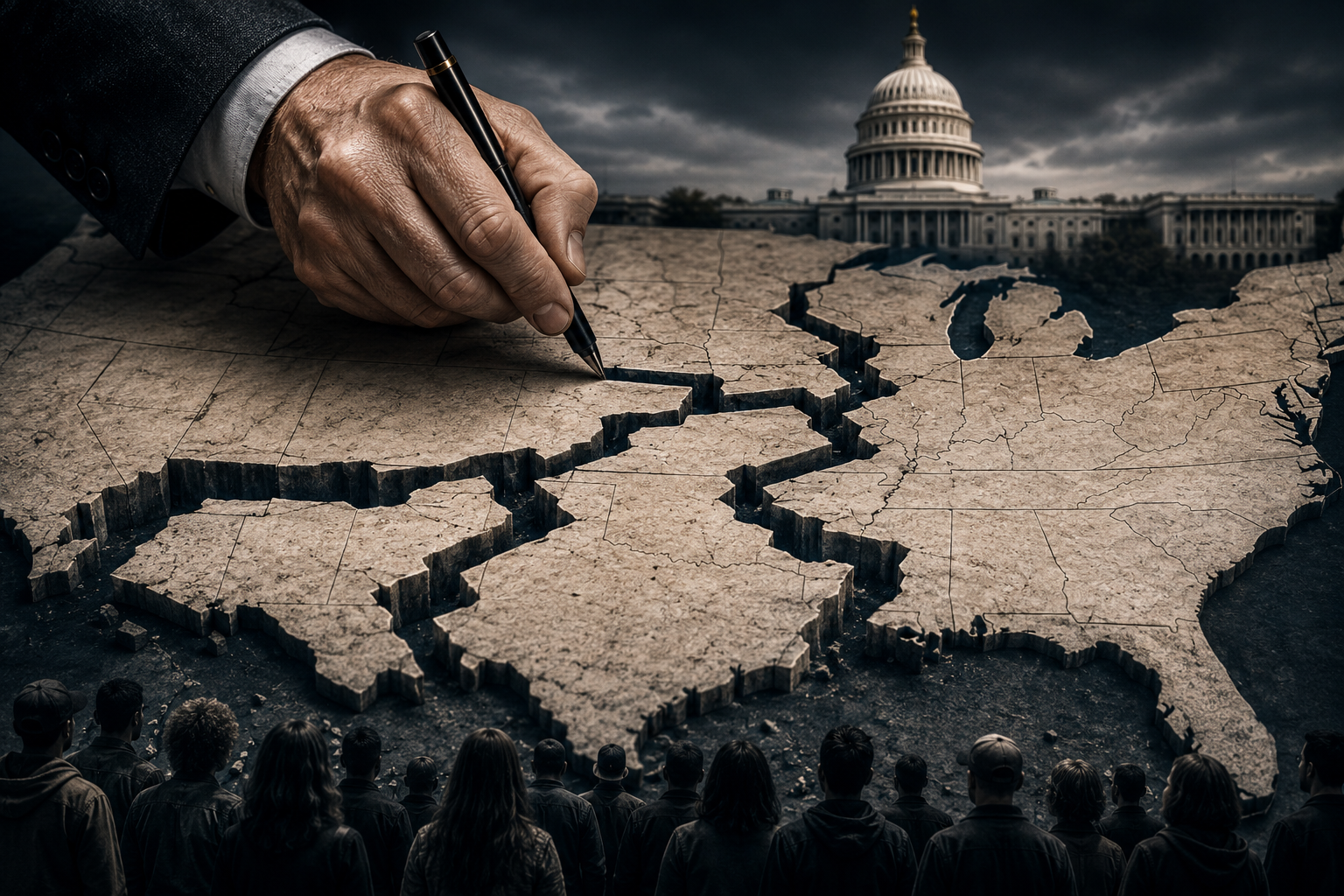
District maps are engineered.
Rules are selectively applied.
Political actors from both major parties care more about victory than legitimacy.
Democrats accuse Republicans, Republicans accuse Democrats, and Independents can’t get organized to oppose either, thus ordinary citizens increasingly distrust everyone.
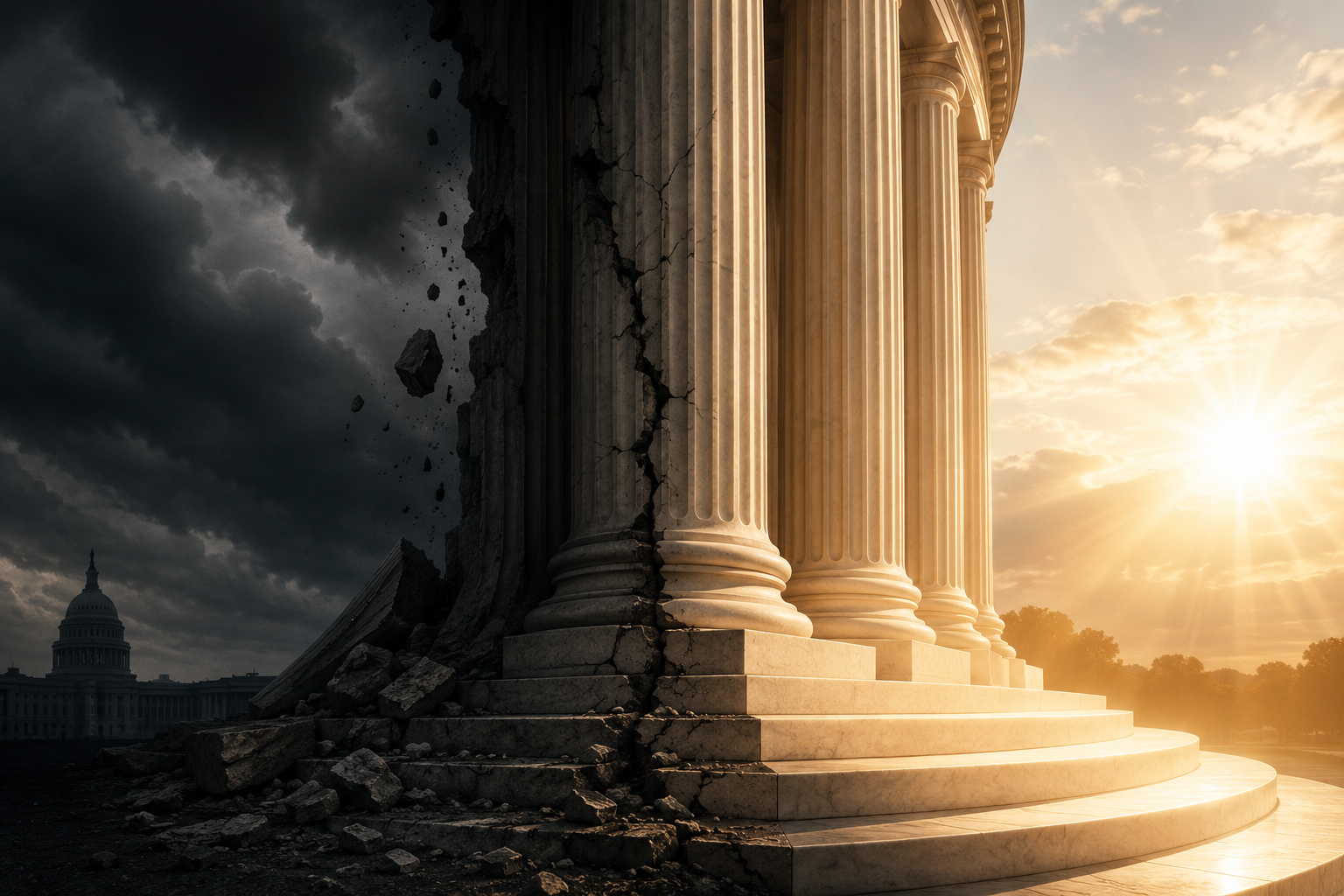
This is dangerous territory for a constitutional republic because democracy does not survive on laws alone.
Democracy survives on public confidence that the rules are fundamentally fair – or will be so again soon.
Gerrymandering and the Evidence of Manipulation
One of the clearest examples of what troubles us is the current cycle of congressional redistricting.
Both parties have aggressively pursued district maps designed to maximize advantage.
The result is a system where many elections feel predetermined, moderation becomes politically risky, and compromise becomes electorally dangerous.
Citizens have noticed this, and when voters believe or realize that outcomes are engineered before ballots are cast, trust erodes further.
The Permanent Campaign
Modern American politics no longer feels seasonal. It feels constant.
The country moves from election to election, outrage to outrage, and fundraising cycle to fundraising cycle.
Governance increasingly appears secondary to political positioning.
That perpetual combat damages the public psyche.
Citizens begin to experience politics not as civic participation, but as national instability.
Younger Americans Are Watching Carefully
Younger generations are especially sensitive to this environment.
Many are inheriting high debt, expensive housing, weakened institutional trust, and endless political conflict.
At the same time, they are being told democracy is sacred, institutions matter, and citizenship matters.
Yet what they often witness instead is obvious manipulation, dysfunction, and performative outrage.
That contradiction is unsustainable in the long term.
Americans Are Not Asking for Perfection
This is important. Most Americans are not demanding ideological purity.
They are asking for something simpler – honesty, stability, affordability, competence, and fairness.
They want leaders who solve problems, explain decisions early and transparently, respect constitutional boundaries, and place the country ahead of performance politics.
That should not be an impossible standard to live by.
“The health of a republic is measured not only by its elections, but by whether its people still believe the system deserves their trust.”
-Ben Everidge
The Independent Center is Growing
One reason political independents continue to gain as a political force is that millions of Americans no longer feel fully represented by either major party’s behavior.
They are exhausted by absolutism, tribal politics, and constant escalation.
They want seriousness, practicality, and constitutional maturity. Not ideological warfare disguised as governance.
The Thomas Take
At Thomas, we believe Americans are not losing faith in democracy itself. They are losing faith in how democracy is currently being practiced.
That distinction matters enormously.
The answer is not cynicism. Nor is it unquestioning loyalty to one side or another.
The answer is rebuilding trust, accountability, transparency, and civic seriousness before exhaustion hardens into disengagement.
The Need for Better Democratic Behavior
A republic can survive disagreement.
It cannot indefinitely survive institutional distrust, permanent instability, and a citizenry that no longer believes its leaders are acting honestly.
America does not need less democracy. It needs better democratic behavior. And citizens have every right to demand it.