When Congress Looks Away

Opinion by Ben Everidge for Thomas
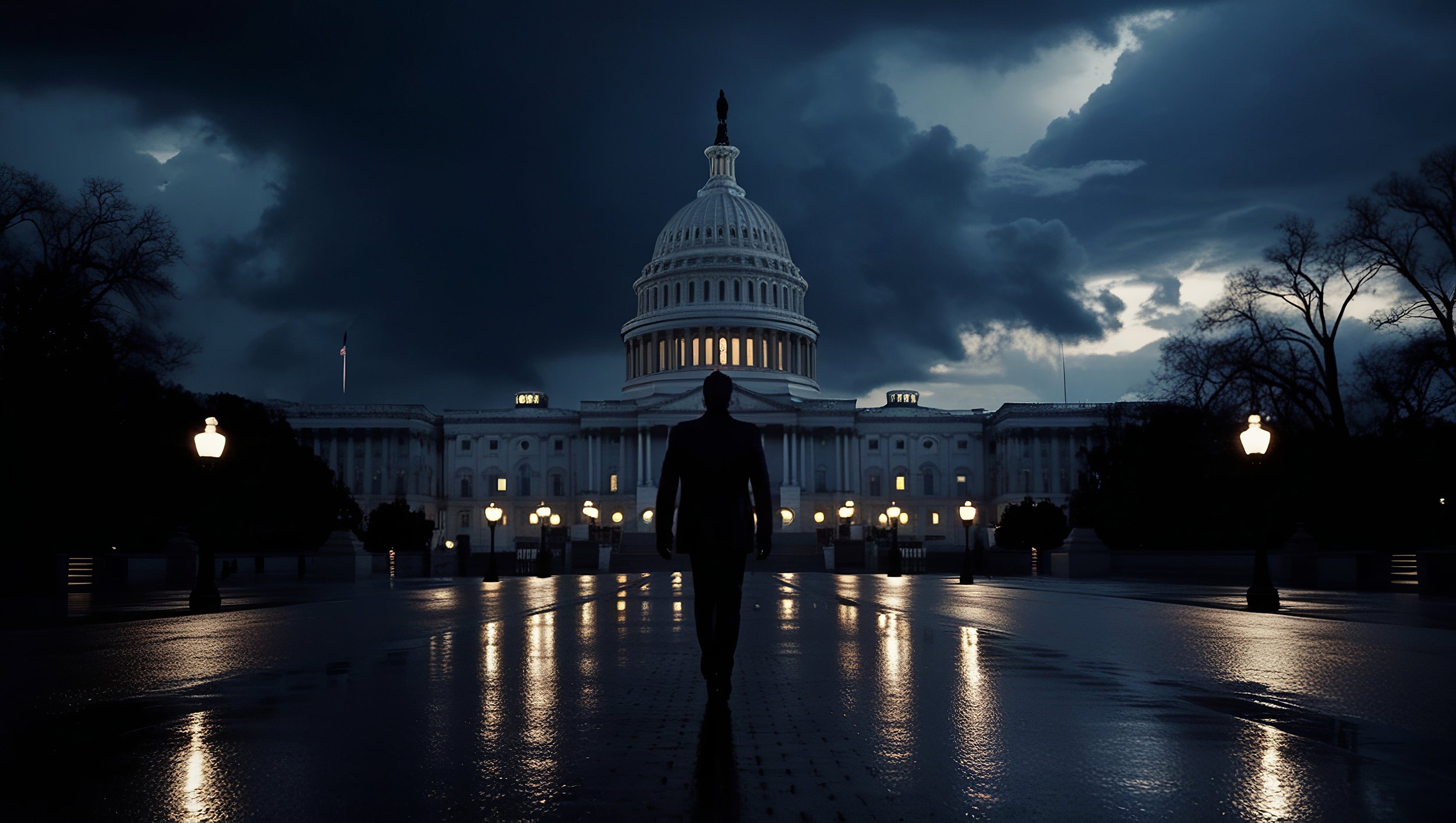
Photo Credit: Adobe Stock by Sirinporn using AI
How the House and Senate Are Failing Their Constitutional Duty and Why Americans Are Paying the Price…
I spent a decade on senior congressional staff, working in both the U.S. House and the U.S. Senate. I also studied American government as a university fellow at Georgetown University, immersed in the Constitution, its history, and the fragile balance it was designed to protect. From that vantage point, one truth is unmistakable: Congress knows how oversight is supposed to work.
It simply is not doing it, however.
The Founders did not design the presidency to be unchecked. They did not create Congress as a spectator. And they did not imagine a republic where oversight would be optional, episodic, or subordinate to party loyalty.
Yet today, the U.S. House of Representatives and the United States Senate are failing at one of their most basic constitutional responsibilities: overseeing the executive branch, especially the White House.
The consequences are no longer theoretical. They manifest as higher prices, greater instability, diminished national credibility, and a growing sense among Americans that government operates beyond the reach of the people it serves.
This is not a partisan failure. It is an institutional one.
The Constitutional Role Congress Has Abandoned
Article I of the Constitution gives Congress – not the president – the power to:
Regulate commerce, including tariffs
Declare war
Control the federal purse
Oversee executive conduct
And safeguard against corruption and abuse of power
Oversight is not harassment. It is not an obstruction. It is not political theater. It is how a republic functions.
During my years on Capitol Hill, oversight was understood – at least in theory – as a solemn obligation. Committees led by opposing political parties during my time held real hearings. Subpoenas mattered. Budget authority was treated as a serious responsibility. Presidents were expected to undergo scrutiny, even from their own party.
That expectation has collapsed.
When Congress fails to exercise its authority, executive power naturally expands. When that expansion goes unchallenged, the system tilts toward unilateral rule, no matter who occupies the Oval Office.
That is precisely what we are witnessing today.
Unchecked Executive Power: What Congress Has Allowed
The list of unchecked executive power is growing at an alarming rate.
1. Tariffs by Decree – Without Congressional Review
The Constitution assigns trade authority to Congress. Yet successive administrations, and especially the current Trump Administration, have relied on emergency statutes to impose tariffs unilaterally, thereby bypassing legislative review.
The result has been:
Higher consumer prices
Retaliatory trade measures
Supply-chain instability
Inflation pressure on working families
Congress knows this is its jurisdiction. It has the tools to intervene. It has primarily chosen not to, ceding its authority in exchange for political convenience.
For Americans, this means hidden taxes without representation.
2. War Rhetoric Without Authorization
Threats of military action against Venezuela and other unilateral posturing highlight a dangerous erosion of Congress’s war powers.
Presidents may command forces. But only Congress may authorize war.
Yet Congress has failed to:
Reassert the War Powers Resolution
Require explicit authorization for prolonged military engagement
Conduct serious oversight hearings on the strategic, humanitarian, and economic consequences of such threats
From inside Congress, I saw how easily silence becomes complicity. The cost is a nation perpetually on edge, governed by impulse rather than deliberation.
3. Budgetary Chaos and Fiscal Misdirection
Congress controls the federal purse. In practice, it has allowed:
Executive budget embargoes
Fund reprogramming with minimal oversight
Shutdown threats to become routine political weapons
This dysfunction translates directly into:
Missed paychecks
Halted services
Contractor layoffs
Market uncertainty
And eroding public trust
For ordinary Americans, budget failure is not ideological. It is deeply personal.
4. Personal Financial Gain and Conflicts of Interest
Perhaps most corrosive has been Congress’s reluctance to investigate fully:
Personal and family financial gains tied to policy decisions
Domestic and foreign investments connected to the presidential orbit
Blurred lines between public office and private enrichment
Congress has apparent authority to:
Subpoena financial records
Enforce emoluments restrictions
Protect inspectors general
Demand transparency as a condition of public service
Its failure to do so sends a dangerous signal: power can be profitable without consequence.
No republic survives that message or reality for long.
Why This Matters to the Average American
When Congress abandons oversight, Americans pay the price:
Higher prices from unreviewed tariffs
Increased risk of foreign entanglements
Instability in federal services
Eroding ethical standards
Declining faith in democratic accountability
Unchecked power does not remain abstract.
It shows up at the grocery store, the gas pump, the doctor’s office, and the kitchen table.
A government without oversight eventually governs against the people, not because it intends to, but because no one is preventing it from doing otherwise.
What Congress Must Do Now to Restore Its Constitutional Role
From experience, I can say this plainly: restoring oversight does not require drama. It requires seriousness.
Here is what Congress should do immediately, in my opinion:
1. Reclaim Trade Authority
Require congressional approval for tariffs lasting longer than 90 days.
Sunset emergency trade powers unless affirmatively renewed.
Hold public hearings on consumer and inflationary impacts.
2. Enforce War Powers
Require explicit authorization for extended military engagement.
Conduct regular classified and public briefings.
Reassert Congress’s constitutional role in matters of war and peace.
3. Restore Budget Discipline
End shutdown brinkmanship with automatic continuing resolutions.
Prohibit unilateral fund reprogramming without approval.
Reinforce appropriations oversight as a core function, not a bargaining chip.
4. Investigate Conflicts of Interest Without Fear or Favor
Subpoena records where credible concerns exist.
Enforce ethics laws consistently.
Protect inspectors general from political retaliation.
Treat transparency as non-negotiable.
5. Strengthen Oversight Institutions
Fully fund the Government Accountability Office.
Restore committee independence.
Insulate professional oversight staff from partisan pressure.
Oversight is not anti-president.
It is pro-Constitution.
The Independent Question Congress Must Answer
Independents across the country are asking a simple question: If Congress will not oversee a president, especially one of its own party, then who is left to protect the public interest?
The answer cannot be “the next election.”
Democracy requires daily accountability, not periodic regret.
The Thomas Take
Congress was never meant to be a supporting actor.
It was meant to be a counterweight.
This failure is not born of ignorance. It is born of avoidance – of choosing party safety over constitutional duty.
If Congress continues to look away, the executive power will continue to grow, accountability will continue to shrink, and Americans will continue to feel that government no longer belongs to them.
The remedy is not radical.
It is constitutional.
Congress must remember who it works for and what it was created to do.
The health of the republic depends on it.