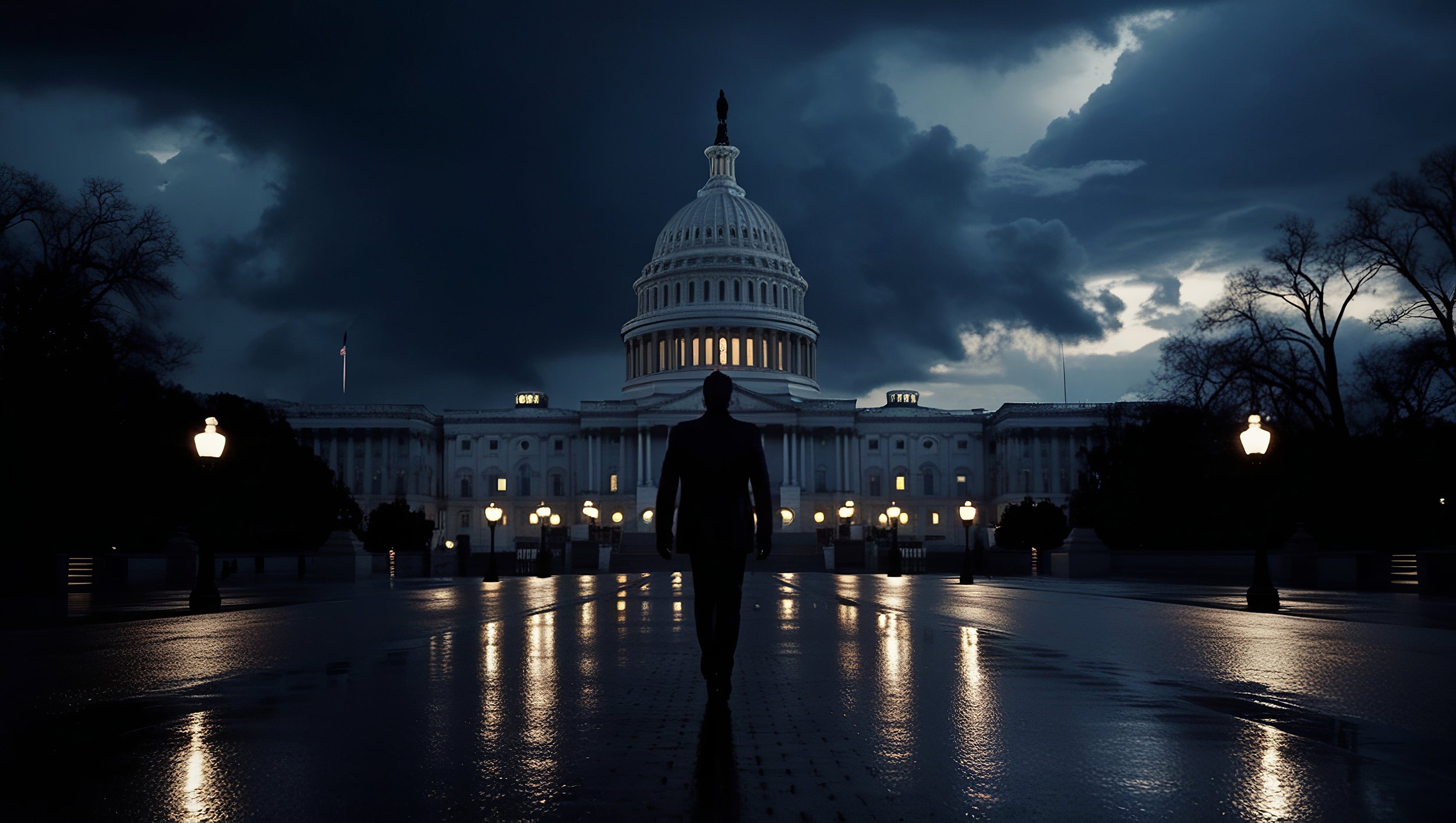
The Gang of Eight is Not Congress
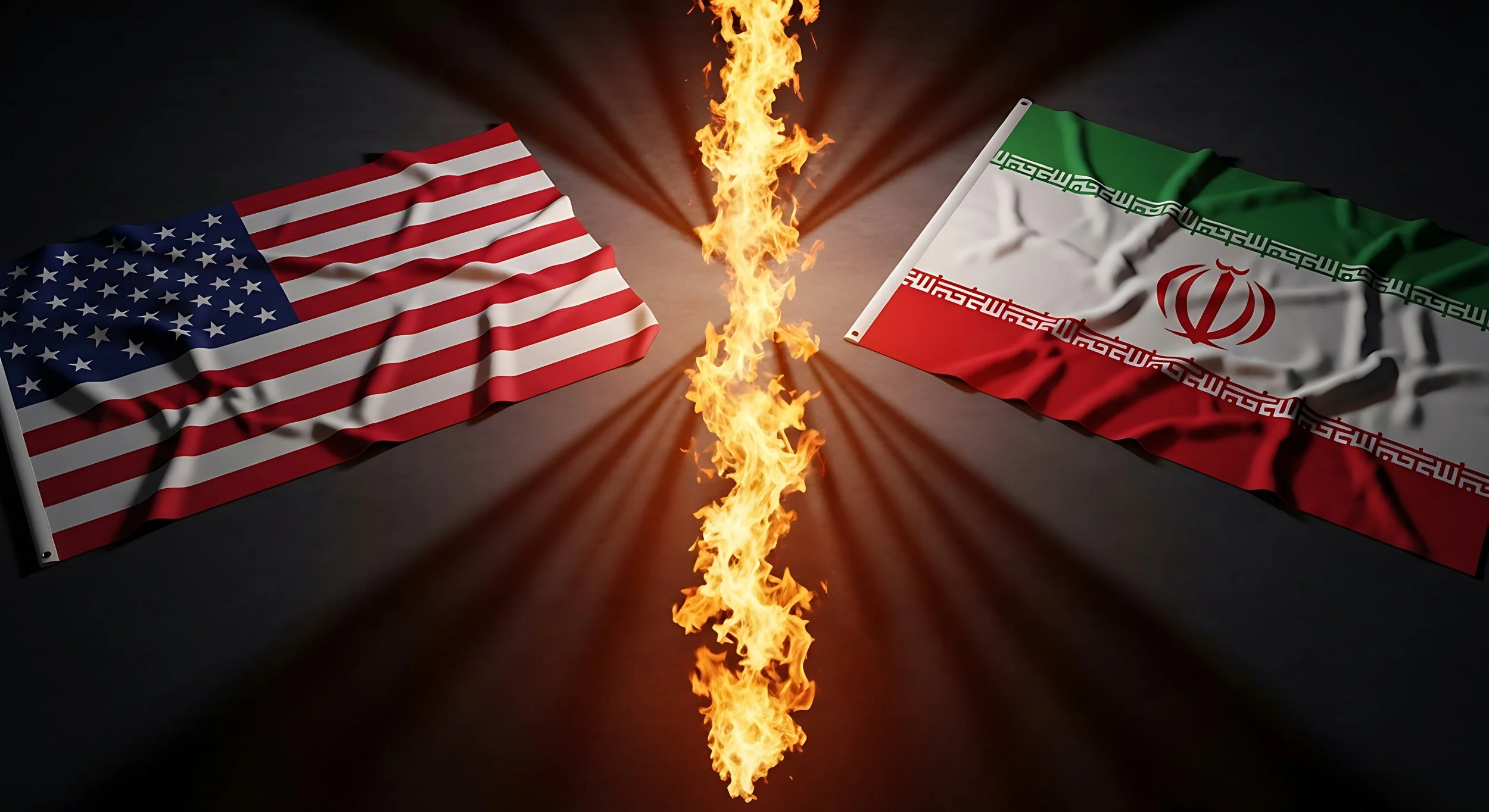
Analysis by Ben Everidge for Thomas
Image: Adobe Stock generated with AI By Rahat Pro Designer
Presidential Power, Iran, and the Constitutional Line
When a president order “major combat operations” against a sovereign nation – not matter how vile that sovereign nation might be – the constitutional question is not partisan. It is structural.
If President Donald Trump has initiated sustained military action against Iran, notified the Gang of Eight, and relied on the War Powers Resolution without requesting a declaration of war from Congress, then we are back at the fault line that has troubled American democracy for half a century:
Who decides when America goes to war?
What the Constitution Actually Says
Article I, Section 8 of the U.S. Constitution grants Congress the power “to declare War.”
Article II names the president Commander-in-Chief of the armed forces.
That division was deliberate.
The Framers wanted:
Congress to decide whether to initiate war.
The president decides how to conduct it.
The design was meant to prevent exactly what the Founders feared: unilateral war-making by a single executive.
What The War Powers Resolution Actually Does
Passed in 1973 after Vietnam, the War Powers Resolution was intended to limit presidential war-making, not expand it.
It allows a president to:
1. Deploy U.S. forces without prior authorization in cases of:
A declaration of war.
Specific statutory authorization
A national emergency created by an attack.
2. Continue military action for 60 days (plus a 30-day withdrawal window) without congressional approval.
3. Notify Congress within 48 hours of introducing forces into hostilities.
It does not grant a blank check to initiate prolonged or large-scale war.
Presidents of both parties have stretched their language. But legally and historically, it was designed as a reporting and restraint mechanism, not an affirmative grant of unilateral war authority.
If combat operations against Iran rise to the level of sustained warfare rather than limited, defensive action, relying solely on the War Powers Resolution becomes constitutionally thin ice.
The Campaign Promise Problem
In the 2024 campaign, President Trump repeatedly framed himself as the president who:
“Started no new wars.”
Would avoid “endless wars.”
Would prioritize American strength without foreign entanglements.
In now launching major combat operations without congressional authorization, that action has created both:
A political contradiction.
A constitutional escalation.
Campaign rhetoric is not binding law.
But it is binding to voter trust.
Process Matters, Especially in War
I’ve often written in Thomas and on my Substack newsletter, The Independent Quill, that institutions fail not only through ideology, but through procedural erosion. That concept applies here.
Even if one believes:
Iran posed a threat.
Action was strategically justified.
Force was necessary.
Skipping Congress in favor of executive interpretation weakens the separation of powers.
The constitutional architecture exists precisely to slow the rush to war.
The deeper issue is not simply whether military action was justified. It is whether the constitutional order was respected.
The Gang of Eight Is Not Congress
Briefing the Gang of Eight” (the bipartisan intelligence leadership group) is standard in classified operations.
Bit notification is not authorization.
The Constitution does not say: “The President shall notify eight members of Congress and proceed.”
It says Congress declares war.
That distinction matters in a republic.
Democratic Ramifications
If presidents increasingly treat the War Powers Resolution as sufficient authority for offensive combat operations:
1. Congress becomes performative
War authority shifts permanently toward the executive branch.
2. Precedent compounds
Each president builds on the last. What one party tolerates today, the other will use tomorrow.
3. Public accountability erodes
Declarations of war force debate, recorded votes, and political ownership. Executive action avoids that deliberative burden.
4. Institutional normalization occurs
Extraordinary action becomes routine.
And the republic quietly recalibrates.
The Broader Pattern
This critique – that process flaws are what trouble most – reflects something many independents feel.
Independents generally:
Prefer limited government.
Distrust bureaucratic overreach.
But still expect constitutional guardrails to hold.
When presidents, of any party, bypass Congress in matters of war, it feeds the perception that:
Institutions are optional.
Process is inconvenient.
Power accumulates in one branch.
That is not conservative.
That is not progressive.
It is executive-centric.
And history shows that executive-centric systems rarely contract voluntarily.
So, Does the War Powers Act Give the President That Authority
The short answer: It provides temporary authority in emergencies.
It does not provide open-ended authority for sustained war absent congressional authorization.
If this becomes prolonged or escalates materially, Congress would need to:
Issue an Authorization for Use of Military Force (AUMF), or
Declare war.
Anything less rests on increasingly strained constitutional ground.
The Thomas Question
The real question is not: “Is Trump right or wrong on Iran?”
It is:
Does America still require Congress to decide when we are at war?
If the answer becomes “not really,” then we have drifted further from Madison’s design than many Americans realize.
War tests not just armies.
It tests constitutional systems.
And in that arena, process is substance.
What Law Did Congress Pass After 9/11?
After the terrorist attacks on September 11, 2001, Congress passed a joint resolution, commonly called the Authorization for Use of Military Force (AUMF) of 2001. It became law on September 18, 2001.
What the 2001 AUMF Did
The statute authorized the president to: Use “all necessary and appropriate force” against the nation’s organizations, or persons that the president determines planned, authorized, committed, or aided the 9/11 terrorist attacks or harbored those responsible.
This resolution was meant to give statutory authority – short of a formal declaration of war – for the United States to respond militarily to those directly involved or who provided support to the September 11 plotters.
Key Points About the 2001 AUMF:
It is not a traditional declaration of war.
It does provide statutory authorization for the use of force in specific circumstances tied to the 9/11 attacks.
Successive administrations have cited it to justify a wide range of military operations, especially in the global war on terror.
How This Might Be Cited in the Iranian Context
Some administrations (e.g., in actions such as the January 2020 strike that killed Qassem Soleimani) have cited older AUMFs, including the 2001 AUMF or the 2002 Iraq AUMF, as partial legal authority for force in regions outside their original geographic focus, asserting connections to terrorism or threats to U.S. troops.
But legally, two things are important:
1. Original Scope: The 2001 AUMF was narrowly framed and focused on entities tied to 9/11. It does not explicitly authorize open-ended war against unrelated states such as Iran.
2. Contemporary Legal Debate: Scholars, court analysts, and members of both parties continue to question whether the AUMF should be used to justify military action against countries that were not connected to the 9/11 attacks, and whether new, specific congressional authorization should be required.
How Federal Authorities Typically Distinguish These Laws
When presidents cite the AUMF in contexts like Iran, their legal teams often argue one of two things:
That the country in question is linked in some way to “terrorist threats” covered by the 2001 AUMF.
Or that another AUMF (like the 2002 Iraq resolution) can serve as a springboard because of activities in nearby regions.
However, this interpretation is controversial, and many legal experts and members of Congress argue that the Constitution requires explicit congressional authorization for sustained hostilities against a nation not tied to the original scope of an existing AUMF.
Relationship to the War Powers Act
Even when a president uses an AUMF as statutory authorization, the War Powers Resolution (1973) still applies. That law, as we have been outlining, requires:
Notification to Congress within 48 hours of introducing U.S. forces into hostilities.
Termination of hostilities after 60 days (plus the 30-day withdrawal period we discussed) if Congress has not authorized continuing force through an AUMF or formal declaration of war.
So, even with an AUMF on the books, many in Congress argue that full, case-specific authorization should be obtained for new or expanded major military campaigns, both as a constitutional check and to clarify legal footing.
The Bottom Line
The 2001 AUMF does give presidents authority to use military force against those responsible for or tied to the 9/11 attacks, and it has been used to justify various counterterror operations.
Its original scope was narrow and specifically tied to terrorism linked to 9/11, not a broad war against unrelated states like Iran.
Using it to justify action against Iran remains legally and politically debatable, especially since the Constitution vests the declaration of war power in Congress.
Requests for new AUMFs or explicit congressional votes aim to clarify and modernize this authorization, reflecting continuing concern over executive overreach in war powers.
In any case, notifying the Gang of Eight does nothing to fulfill the White House’s constitutional obligation when it comes to the attack on Iran.