After the Founder

Analysis by Ben Everidge for Thomas
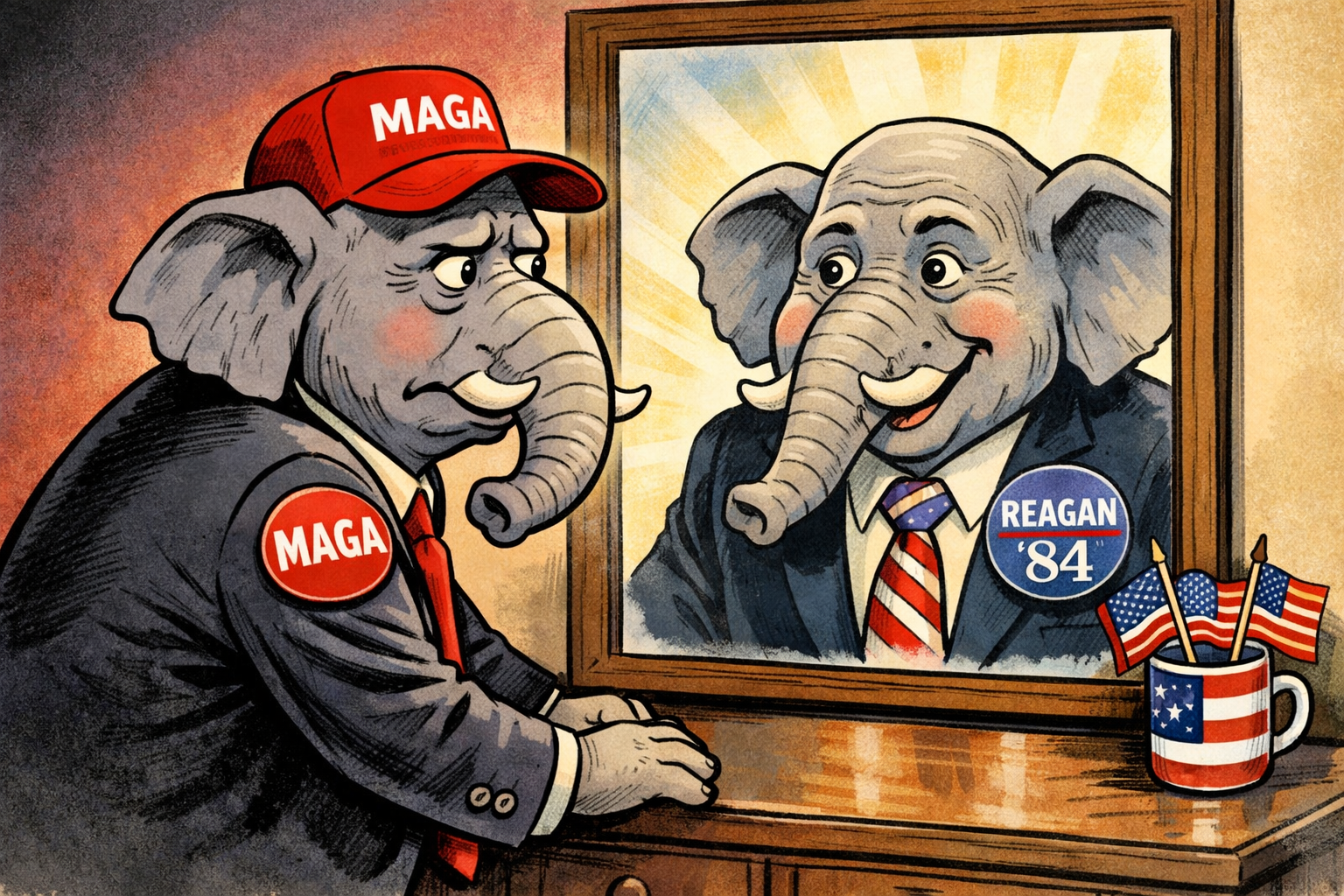
Image: Adobe Stock generated with AI by arhendrix modified by Thomas
What Happens to Personality-Driven Political Movements When the Central Figure Exists?
Political movements built around a single, dominant personality face a structural question that ideology alone cannot answer: What happens when the founder is no longer at the center?
This is not a partisan inquiry. It is both constitutional and electoral. Whether the movement is aligned with Donald Trump or any other political figure in American history, personality-driven coalitions behave differently than institution-driven ones.
As 2028 approaches without an obvious successor who commands the same gravitational pull, this question becomes less theoretical.
The Three Stages of Founder Movements
Historically, founder-led movements pass through three possible stages:
1. Consolidation
The founder fuses diverse factions through personal authority rather than institutional coherence. In Trump’s case, that coalition has included:
Nationalist sovereignty voters.
Anti-globalist populists.
Evangelical conservatives.
Traditional Republicans.
Disaffected independents.
The glue is not perfect ideological alignment. It is personal legitimacy.
2. Stress Test
Policy decisions that appear to diverge from campaign identity, whether on war, trade, or transparency, introduce internal friction. Movements built on personality absorb friction differently than party machines. Supporters often:
Reinterpret decisions through loyalty.
Compartmentalize disagreements.
But repeated stress tests create cumulative tension.
3. Succession or Fragmentation
This is the decisive phase. Without a clear heir who commands equal emotional authority, coalitions tend to:
Fragment into sub-factions.
Revert to traditional party structures.
Compete internally for ideological ownership.
Lessons from History
American political history offers instructive examples:
The Reform Party, after Ross Perot, faded once its founder exited the stage.
The Tea Party era reshaped the Republican Party but eventually institutionalized rather than remaining a standalone movement.
Progressive insurgencies have often dissipated when their figureheads lost momentum.
Movements endure when they transform from personality to platform, from charisma to doctrine.
If they fail to institutionalize, they dissolve.
The Structural Question for 2028
If there is no clear successor with comparable pull, three outcomes are plausible.
1. Institutional Absorption | The movement’s theme becomes fully integrated into the Republican Party structure. The personality fades, yet the policy brand remains.
2. Intra-Coalition Contest | Multiple figures compete to inherit the mantle. This often exposes ideological fault lines previously masked by founder dominance.
3. Electoral Viability| If voters feel the core identity has been diluted, particularly around anti-interventionism or institutional reform, independent lanes may widen.
The direction depends less on rhetoric and more on performance outcomes:
Economic stability.
Foreign policy trajectory.
Perceived integrity.
Institutional consistency.
Why War Decisions Matter in Founder Movements
Founder-led coalitions are identity-driven.
If a founder’s governing actions appear to conflict with campaign identity, for example, promises to avoid “endless wars,” the coalition experiences cognitive strain.
But strain does not equal collapse.
It depends on framing:
If military action is perceived as defensive and decisive, loyalty may consolidate.
If it evolves into a prolonged conflict with visible costs, factions inside the coalition may recalibrate.
The independent observer’s task is not to predict fracture, but to monitor stress indicators.
Electoral Ramifications for the Republic
When personality-driven movements reach succession points:
Parties re-evaluate their internal balance of power.
Independent voters reassess alignment.
Institutional norms are either restored or further personalized.
The danger for American democracy is not the existence of strong personalities. It is when institutional processes become secondary to personal authority.
If a movement institutionalizes constitutional guardrails, it strengthens the republic.
If it bypasses them, it accelerates executive-centric governance.
That distinction matters more than partisan labels.
The Independent Standard
For political independents, the responsibility is discipline:
Evaluate policy consistency, not personality loyalty.
Defend the separation of powers regardless of party.
Resist premature predictions of collapse.
Avoid assigning hidden motives without evidence.
Movements built around individuals are neither inherently dangerous nor inherently durable. They are transitional by nature.
The constitutional system outlasts the founders when citizens insist that it does.
The Thomas Question
The real issue is not whether a particular movement survives 2028. It is whether American politics remains anchored to:
Congressional war authority.
Transparent executive action.
Predictable institutional processes.
Peaceful transfer of political leadership.
Founders come and go. The republic must remain.