Choices
Morning in America vs. Make America Great Again - Reagan Republicanism or Trump Republicanism in 2026 and 2028
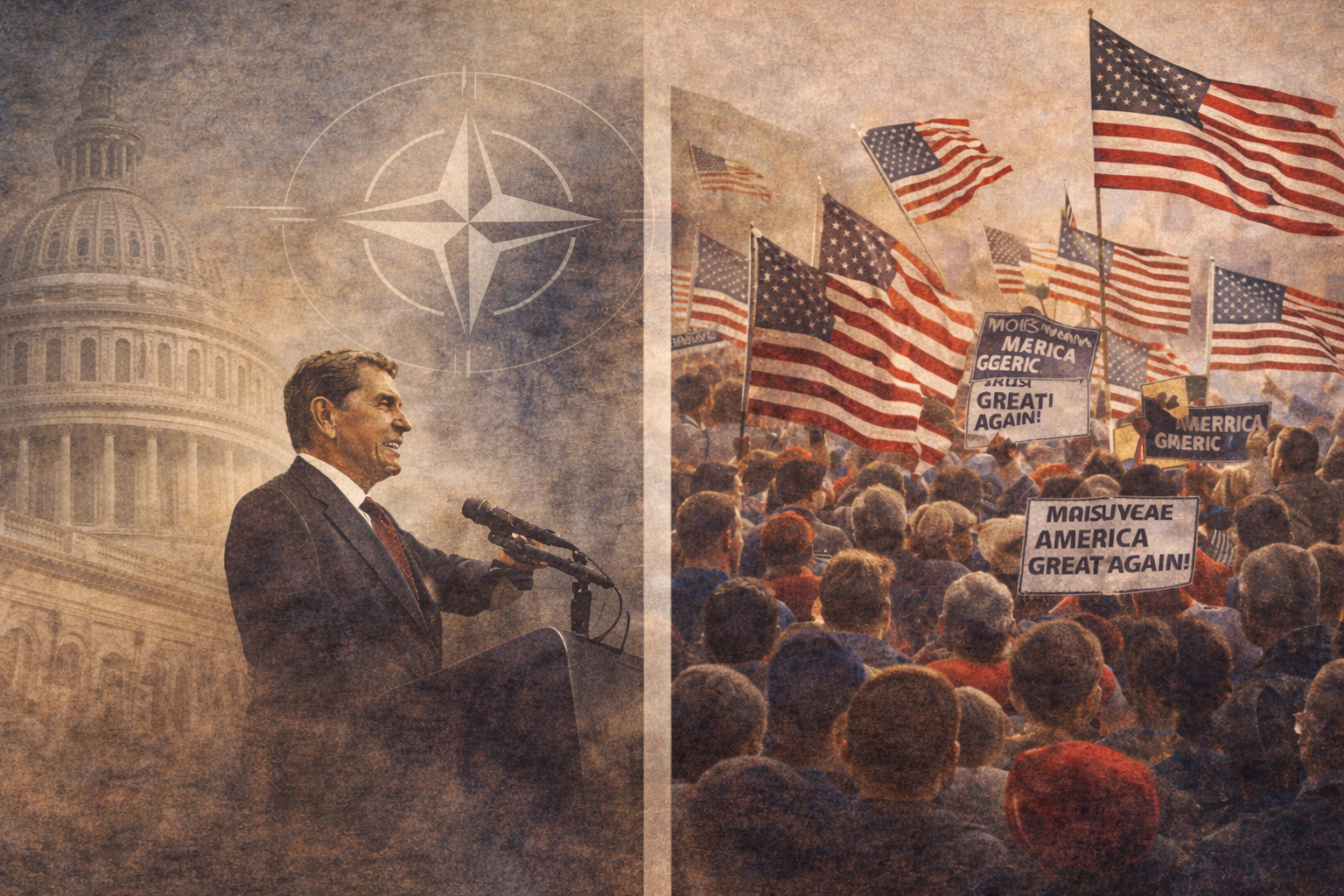
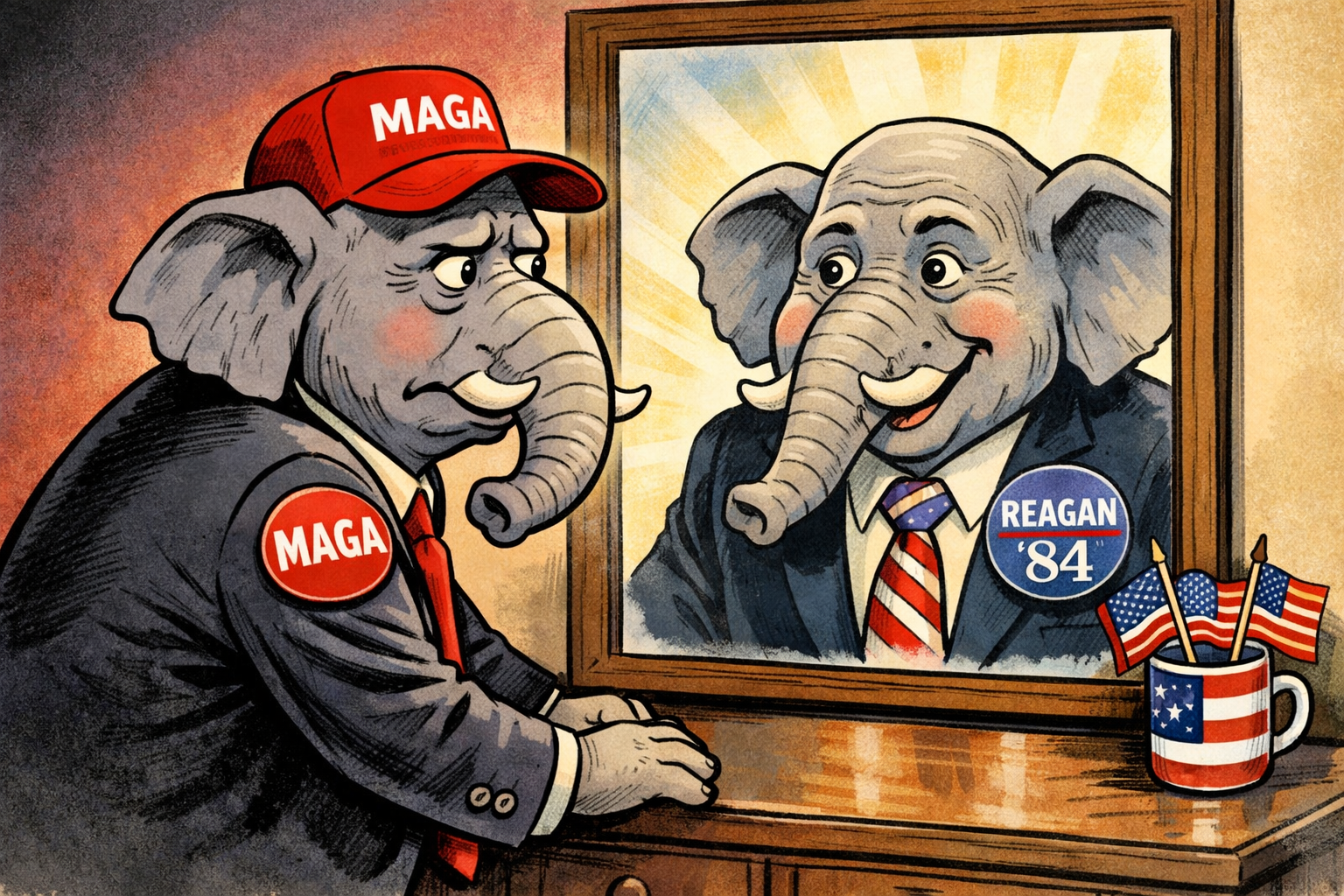
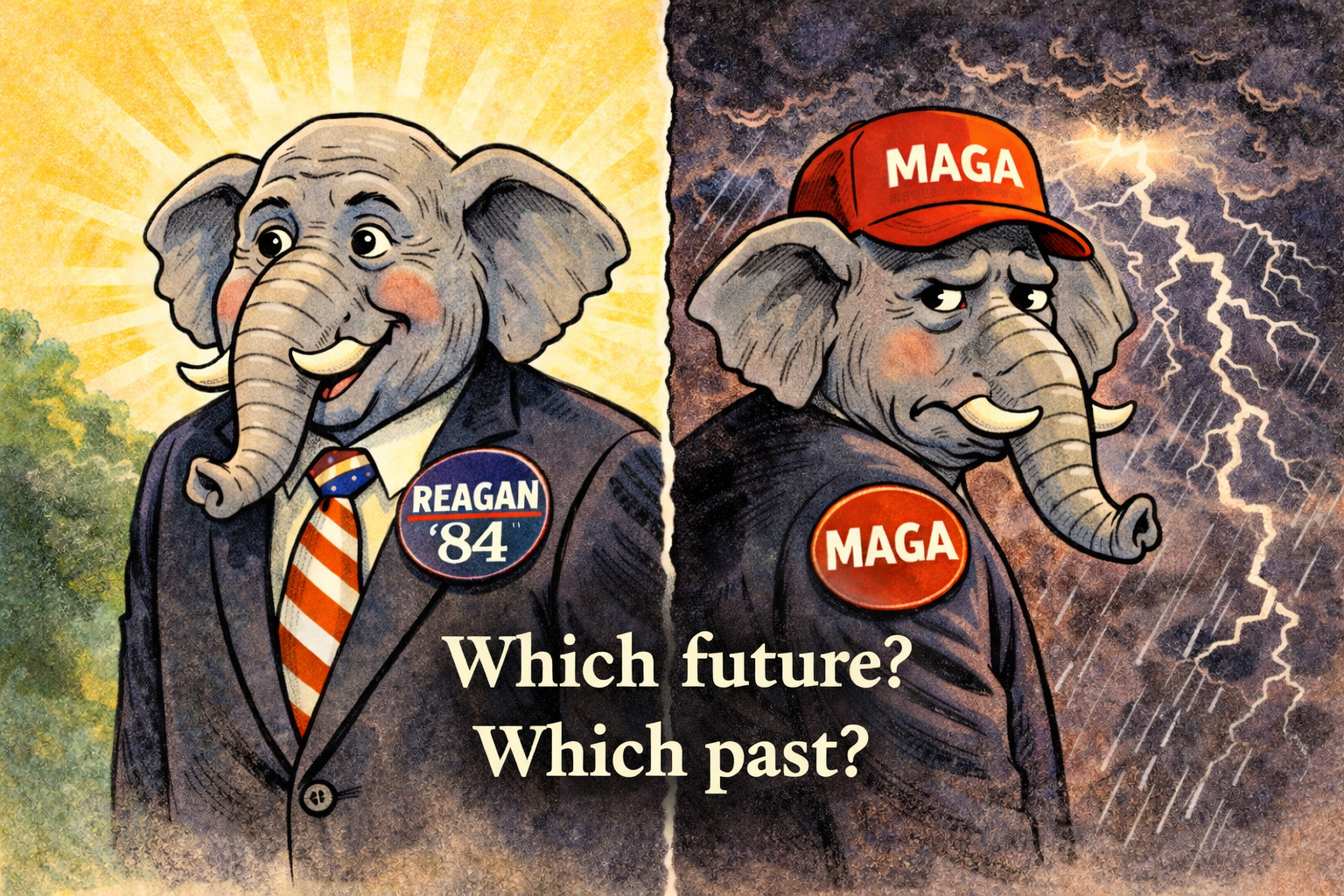
Images: Cannon & Caius generated with AI
Ronald Reagan and Donald Trump are often spoken of as if they belong to the same Republican tradition. They do not.
They share some language, some policy instincts, and a common ability to dominate the political imagination of their era. But Reagan’s “Morning in America” and Trump’s MAGA / America First represent two different emotional and governing theories of the Republican Party.
Reagan’s 1984 message was explicitly optimistic – “It’s morning again in America” – and presented the country as prouder, stronger, and better. Trump’s 2024 Republican platform and White House messaging center instead focus on “Make America Great Again” and “America First,” emphasizing border security, tariffs, national assertion, and a return to “common sense” after perceived national decline.
Where the Two Traditions Overlap
The similarity between the two men is real, but narrower than many assume. Both brands of Republicanism champion lower taxes, reduced regulation, and free-market growth, while Trump’s governing and campaign messages have likewise emphasized deregulation, tax relief, and a presidency willing to act aggressively on its agenda.
Both also understand politics as both theater and policy. Reagan’s “Morning in America” was one of the most successful presidential ad campaigns in modern history because it turned a governing record into a national mood.
Trump, in his own very different way, has done something similar: he has turned politics into a permanent public drama in which identity, grievance, and strength are fused into a single message.
The common trait is not ideology alone, but political communication at a very high level.
The Defining Difference: Confidence vs. Correction
But the differences are more important than the similarities.
Reagan sold confidence.
Trump sells correction.
Reagan’s public language was aspirational – a “shining city upon a hill,” renewed prosperity, restored national confidence.
Trump’s language is restorative in a different sense – America has been betrayed, weakened, exploited, or misled, and must be taken back.
Those are not merely stylistic differences. They produce different political coalitions and different relationships between citizens and their government.
On trade, the break is especially sharp. Reagan defended “free and fair trade” and warned that protectionism raises costs, damages the economy, and destroys jobs, even while reserving targeted action for unfair practices. Trump’s recent White House trade policy and the 2024 GOP platform have moved in a far more protectionist direction, explicitly embracing tariffs and trade confrontation as central tools of national policy. That is one of the clearest ideological departures between Reagan-era Republicanism and MAGA Republicanism.
On immigration, the contrast is less philosophical than tonal. Trump’s moderate Republicanism makes border enforcement and immigration restriction central organizing themes. The White House’s current “America First Priorities” places border security at the top of the agenda, and the 2024 platform does the same. Reagan also supported border control and signed the 1986 immigration reform law. Still, his public rhetoric about America’s identity was generally more welcoming and nationally unifying than the sharper, security-first language that defines MAGA.
On foreign policy, the distinction is again substantial. Reagan was a hawk, but an internationalist one. He believed American strength worked through alliances, ideological clarity, and long-term strategic competition with adversaries. Trump’s brand is more transactional and more skeptical of alliances for their own sake; it asks what allies contribute, what deals America gets, and whether international commitments serve immediate national interests. Both stress strength, but they define American leadership differently/
Competing Narratives of America Itself
There is also a difference in how each man relates to the country itself. Reagan often described America as fundamentally good, decent, and exceptional, even when it needed renewal.
Trump’s politics tends to portray the nation as endangered by internal betrayal, elite failure, and institutional decay. Reagan’s conservatism reassured voters that the American project still worked. Trump tells voters the project has been captured and must be wrested back. For some voters, that feels honest. For others, it feels exhausting.
For Republican voters, this matters because it means they are not simply choosing between personalities in 2026 and 2028. They are choosing between two different understandings of what conservatism is for. Is the Republican Party primarily a party of growth, optimism, free enterprise, and national confidence in the Reagan mold? Or is it now primarily a party of border control, protectionism, executive combat, and anti-establishment correction in the Trump mold? The party’s official platform and White House priorities strongly suggest the second model currently dominates.
For independent voters, the choice is slightly different. Many independents like pieces of both traditions. They may prefer Reagan’s optimism, constitutional tone, and international steadiness, while also agreeing with Trump voters that the border matters, that trade dislocation has hurt parts of the country, and that establishment politics often ignored real economic pain. That is why the coming elections may not turn simply on left versus right. They may turn to whichever political force best combines order, prosperity, and legitimacy.
That is the practical implication for 2026 and 2028. Voters will likely be weighing at least four questions:
Which Republicanism is better for household economics?
Which is better for constitutional stability?
Which is better for America’s role in the world?
Which is more likely to lower the political temperature while still governing effectively?
Those are not abstract questions. They go directly to what kind of party can win persuadable voters without losing its base. The answer may vary by issue, but the tension inside the modern GOP is now unmistakable.
There is one final point worth keeping honest. Reagan Republicanism was not a golden age, and Trump Republicanism is not merely an aberration - Reagan governed in a different media environment, a different economic order, and a different global system. Trump rose in response to real failures: deindustrialization, border frustration, endless-war fatigue, institutional distrust, and the sense among voters that polite bipartisan Washington had stopped listening. Reagan’s GOP and Trump’s GOP are therefore not simply opposites. Trumpism is, in part, a reaction to what post-Reagan Republicanism became.
The Choice Ahead
So, what does this mean for American voters?
It means the coming cycle is not just about whether one likes Donald Trump or admires Ronald Reagan. It is about deciding what kind of political language, governing style, and constitutional temperament the country now needs.
Reagan asked Americans to believe that morning had come again. Trump asks them to believe that decline can be reversed by force of will. The 2026 and 2028 elections may tell us which story the country now finds more credible, or whether voters are ready to demand something that borrows from both but is captive to neither.
An independent president, perhaps?