The Independent Paradox
Why Voters Want Independence, but Elections Rarely Deliver It
Opinion by Ben Everidge for Thomas
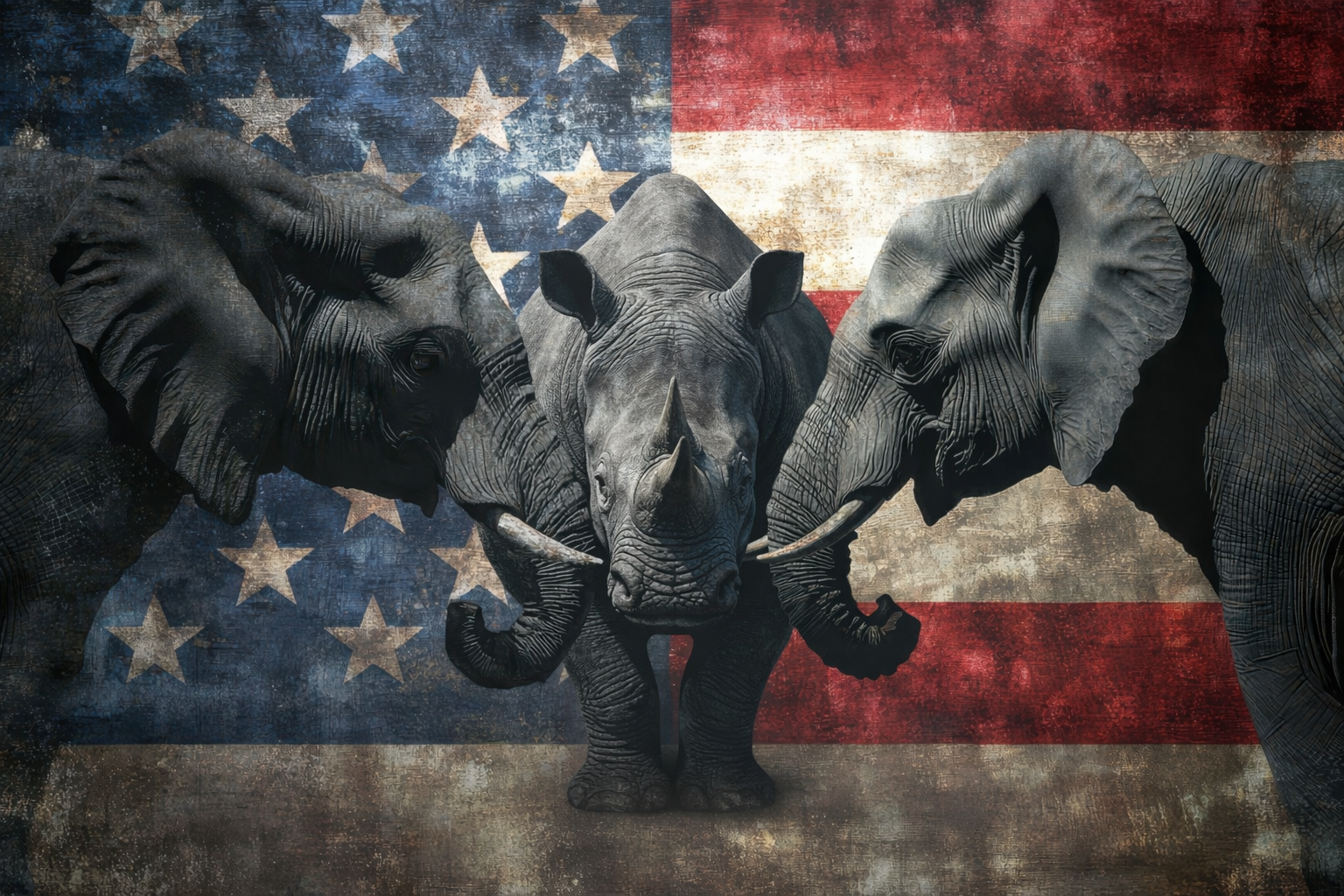
Image: Adobe Stock modified by Cannon & Caius using AI
By every available measure, American voters are moving away from the two-party system. A growing share of Americans identifies as independents. Voter frustration with both parties is persistently high. Trust in institutions continues to decline.
And yet, independent candidates rarely win major offices.
This is the Independent Paradox.
Voters say they want something different. But election outcomes rarely reflect it.
Why?
A First-Hand Case Study
My own experience running as an independent candidate for the United States Senate in Florida in 2024 is not an outlier. It is, in fact, a textbook example of structural reality.
I approached the race as many national candidates would with policy-driven messaging, issue-based positioning, and substantive engagement with media.
But the system did not respond to substance built on decades of national political and academic experience. It responded to traditional party alignment, fundraising, and self-funding capacity, and established narratives. And the result was predictable.
The race became about the two major party candidates, regardless of their flaws, in a state where independents should have potentially prevailed, or at least performed better.
The Media Incentive Structure
One of the most misunderstood barriers to independent success is not voter resistance. It is media structure.
Political media operates on three core incentives:
Audience Familiarity | Voters recognize party labels instantly. “Democrat vs. Republican” is a ready-made narrative. An independent candidate requires explanation. And explanation is costly – in time, space, and attention.
Conflict Simplicity | Two-party races produce clear contrasts, easy headlines, and predictable framing. Three-way races complicate the story. Media, especially under time pressure, tends to simplify.
Financial Gravity | Campaign spending drives advertising, visibility, and perceived viability. Media outlets – whether consciously or not – follow the money. Not because they are corrupt. But because money signals relevance within the system.
The Ballot Reality
Even before media dynamics, the electoral systems themselves present barriers:
First-Past-the-Post Voting | The United States uses a winner-take-all system. This creates a well-known effect. Voters avoid “wasting” votes. They default to perceived viable candidates. Even if they prefer an independent.
Ballot Access Laws | Independent candidates must often gather large numbers of signatures, meet complex filing requirements, and navigate inconsistent state rules. These are not insurmountable. But they are structurally discouraging.
Debate Access | Without inclusion in major debates, visibility collapses, legitimacy suffers, and voter awareness remains low. Debates are gatekeeping mechanisms, and independents are often outside the gate.
The Psychological Barrier
Beyond structure lies something deeper – voter psychology:
Fear of the “Spoiler” Effect | Voters worry that “If I vote independent, I may help elect the candidate I like least.” This is rational under the current system.
Habit and Identity | Party affiliation is not just political. It is social, cultural, and generational. Breaking that identity requires more than dissatisfaction. It requires confidence in an alternative.
Why Frustration Does Not Translate into Votes
My own observation from 2024 is this: Voter frustration was high, but outcomes did not reflect it. This is not a contradiction. It is a system at work.
Frustration alone does not produce change.
It must be paired with organization, funding, narrative, and perceived viability.
Without those, frustration becomes private dissatisfaction rather than public action.
The Trump-Biden Effect
In our race, Donald Trump's presence on the ballot and the broader national environment surrounding Joe Biden created an additional constraint. High-intensity national figures nationalize local races, compress voter choice, and force alignment.
In such environments, independents face an even steeper climb.
The Organizational Gap
Perhaps the most important factor is that independents are not an organized political force. At least not yet. They are numerous, diverse, but fragmented. There is no united platform, coordinated funding network, consistent candidate pipeline, or shared media infrastructure.
In contrast, both major parties possess all four.
What Political Science Tells Us
From a political science perspective, this is not surprising.
The United States exhibits classic characteristics of a two-party equilibrium system. Structural incentives favor two dominant coalitions. Third-party or independent efforts face systemic resistance. Change typically occurs through realignment within parties, not outside them.
But that does not mean change is impossible.
It means change must be intentional, organized, and sustained.
What Would Make Independents Competitive
If independents are to become electorally viable, several shifts are necessary:
Narrative Before Policy | Policy matters. But narrative wins attention. Independents must answer, “Why us?” before “What we propose.”
Concentrated Races | Instead of spreading efforts thinly, independents must focus on select races, favorable demographics, and winnable districts. Independents, in other words, must build a proof of concept.
Funding Infrastructure | Without funding, media coverage remains limited, viability is questioned, and campaigns will inevitably stall. A national independent funding network is essential.
Electoral Reform Advocacy | Long-term success likely requires ranked-choice voting, open primaries, and debate access reform. These changes reduce structural barriers.
Leadership Identity | Independents must define themselves not just as “not Democrat, not Republican,” but as a coherent governing alternative.
The Thomas Take
At Thomas, we see the independent movement not as a protest, but as a potential evolution. But we also recognize that evolution does not happen automatically.
It must be built.
The experience we wrote about above illustrates the gap between voter sentiment and institutional reality.
Bridging that gap is the central challenge.
The independent paradox will not resolve itself.
Voters can want change, but systems do and will resist it.
Until independents develop structure, strategy, and sustained presence, they will remain influential in sentiment but limited in outcomes.
The future of independent politics depends on one question: Can frustration be turned into organization?