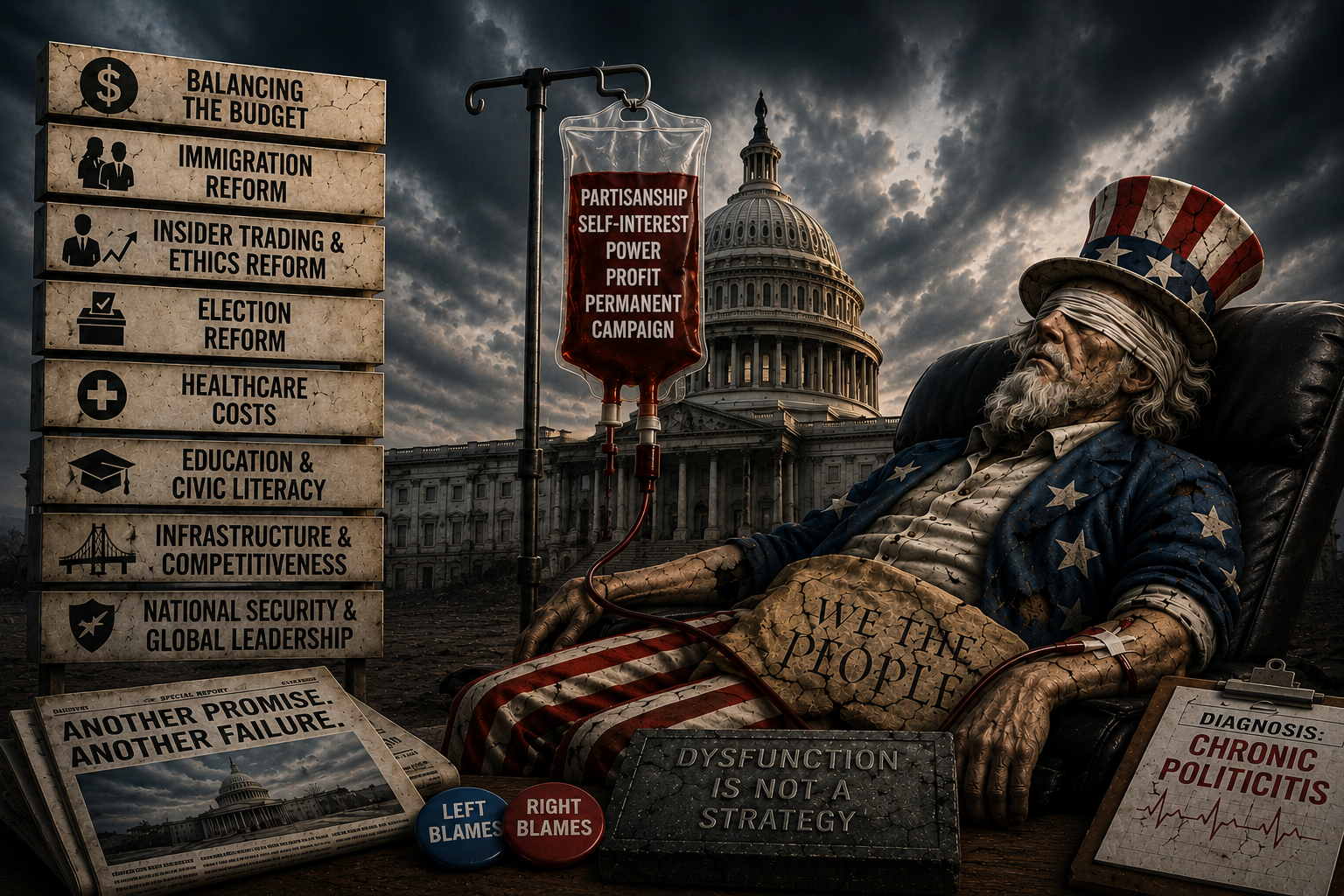
Spectacle Is Loud Political Theater
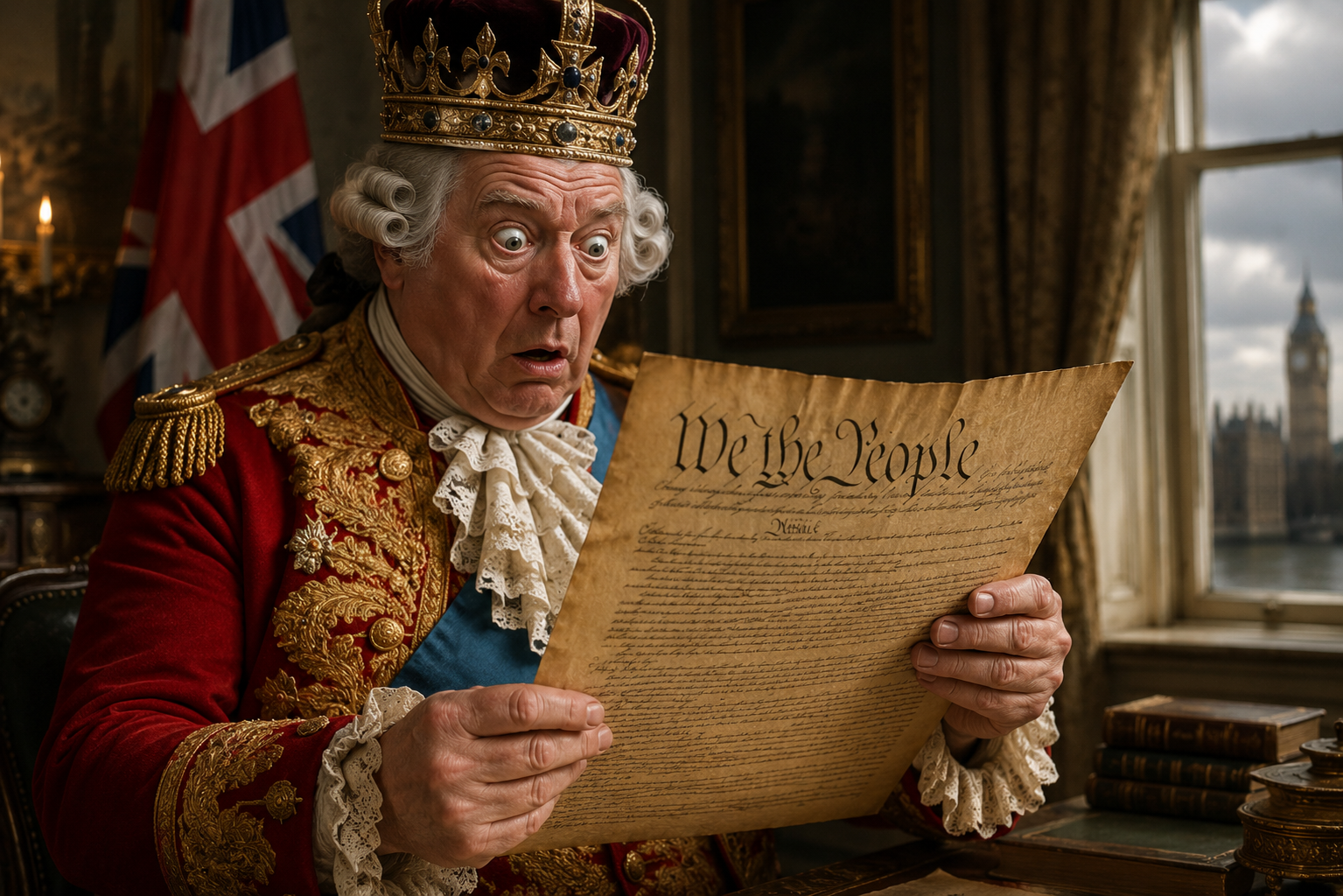
Image: Adobe Stock generated with AI by EyachirArafat
Institutions Are Quiet …
Spectacle commands attention.
It thrives on urgency. It feeds on conflict. It rewards immediacy.
In modern civic life, spectacles often set the tempo. Headlines flash. Feeds scroll. Statements escalate. Outrage travels faster than explanation.
They were not designed to.
The American constitutional system was built for deliberation, not velocity. It assumes friction. It assumes a pause. It assumes that power should move carefully, and often reluctantly.
This contrast is not accidental. It is foundational.
The Architecture of Restraint
Institutions exist to slow us down.
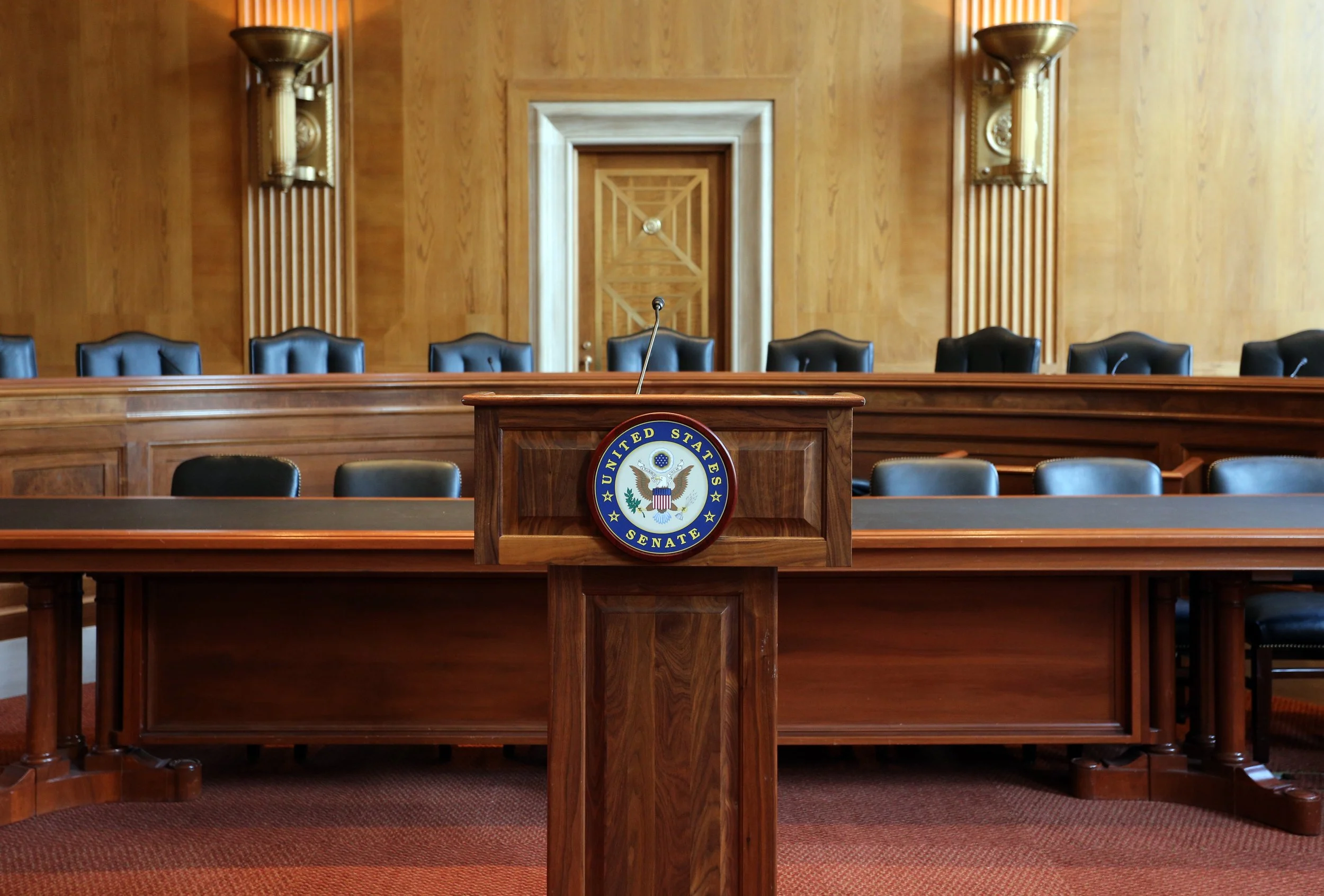
Congress requires debate and voting thresholds.
Courts require briefs, records, and reasoned opinions.
Executive action is subject to review and limitation.
These processes are often criticized as inefficient. But efficiency was never the primary design objective. Restrain was.
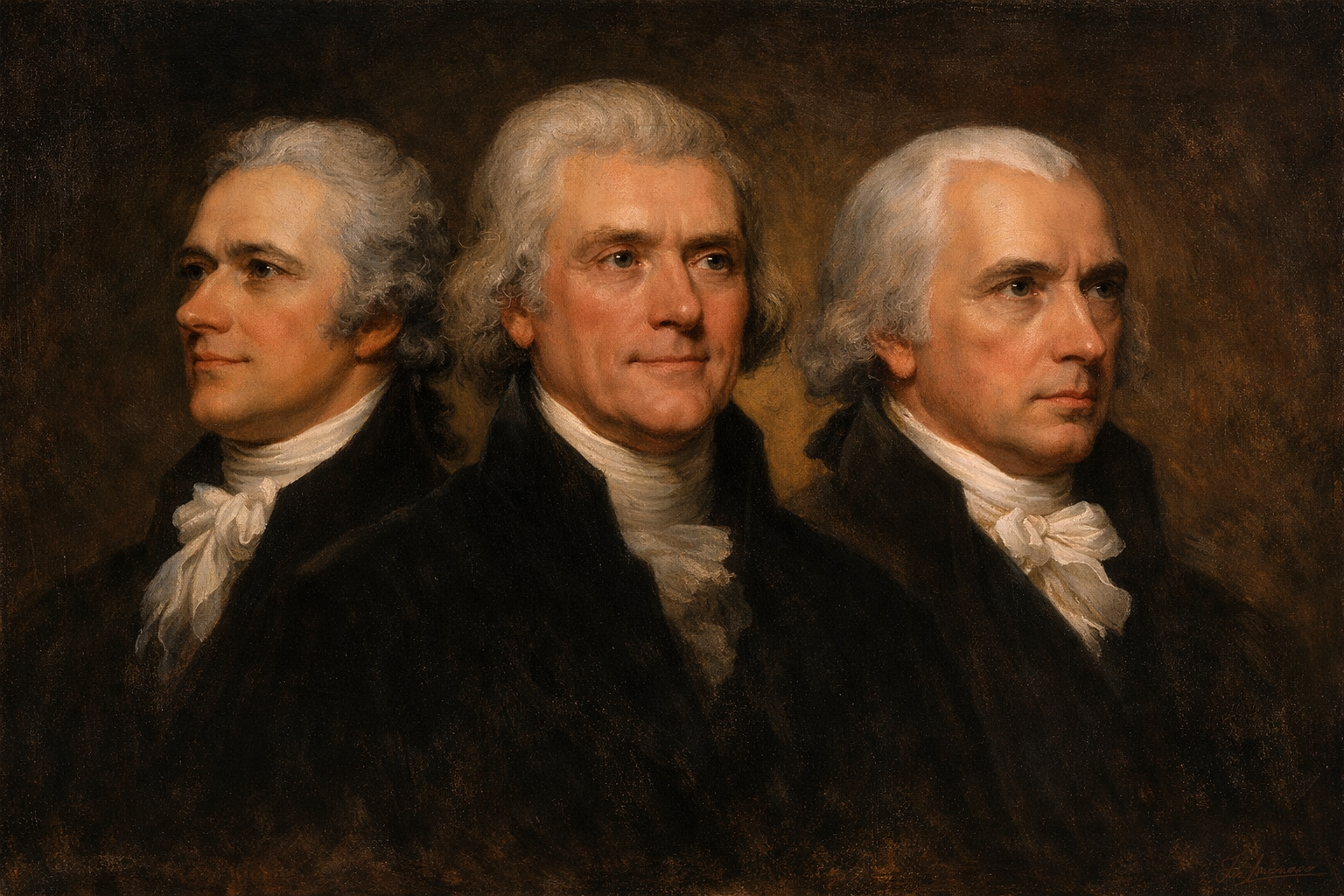
The Framers feared concentrated power more than they feared delay. They assumed that ambition would press forward. Their response was not to eliminate ambition, but to surround it with counterweights.
Institutional design is the quiet answer to human impatience.
The Performance Incentive
Modern communication ecosystems reward performance.
Strong statements outperform measured ones. Conflict outperforms compromise. Acceleration outperforms deliberation.
The incentive structure of digital discourse is misaligned with constitutional design.
When public conversation privileges spectacle, institutional caution appears weak. When compromise is framed as surrender, structural balance is framed as obstruction.
The louder the discourse becomes, the harder it is to hear the steady rhythm of governance. And yet that rhythm is what preserves stability.
Why Institutions Feel Invisible
Institutions do not trend.
A well-functioning committee markup does not capture national attention. A narrowly written judicial opinion rarely sparks applause. A procedural objection grounded in constitutional authority often reads as arcane.
But invisibility is often a sign of health.
When guardrails are functioning, crises are avoided quietly. When precedents are respected, instability does not materialize. When separation of powers holds, no single branch dominates the narrative.
Spectacle thrives on visible conflict. Institutions thrive on quiet continuity.
The Cost of Constant Escalation
When spectacle becomes default – when political theater prevails – escalation becomes habitual.
Each cycle demands greater intensity. Each controversy requires sharper rhetoric. Each response invites a counter-response.
Institutional processes are not built for permanent escalation. They rely on norms. They rely on informal agreements that power will not be pressed to its outermost limit at every opportunity.
When those norms weaken, formal rules strain under pressure.
The Constitution provides structure. But structure alone cannot replace civic discipline.
A republic depends on citizens and leaders willing to value durability over dominance.
The Discipline of Quiet
There is a form of strength that does not announce itself.
It is the legislator who refuses to bypass procedure even when expedient.
It is the judge who narrows a ruling rather than expanding it.
It is the executive who declines authority that could be asserted.
It is the citizen who resists the pull of instant outrage.
These choices rarely generate applause. They rarely make headlines. But they preserve legitimacy. And legitimacy is the currency of constitutional order.
Listening for the Unseen
If spectacle is loud, institutions are quiet. But quiet does not mean weakness.
It means structured. It means bounded. It means deliberate.
The challenge before us is not to eliminate spectacle – public debate will always have energy and urgency.
The challenge is to ensure that spectacle does not drown out structure.
The health of a republic can often be measured not by the volume of its disputes, but by the steadiness of its institutions.
Thomas exists to examine that steadiness.
In the months ahead, we will turn from performance to process – from noise to architecture – and ask a simple question: Are the quiet mechanisms of constitutional restraint still holding?
Because when institutions fail, spectacle does not save us.
It only grows louder.