Unfinished Objectives
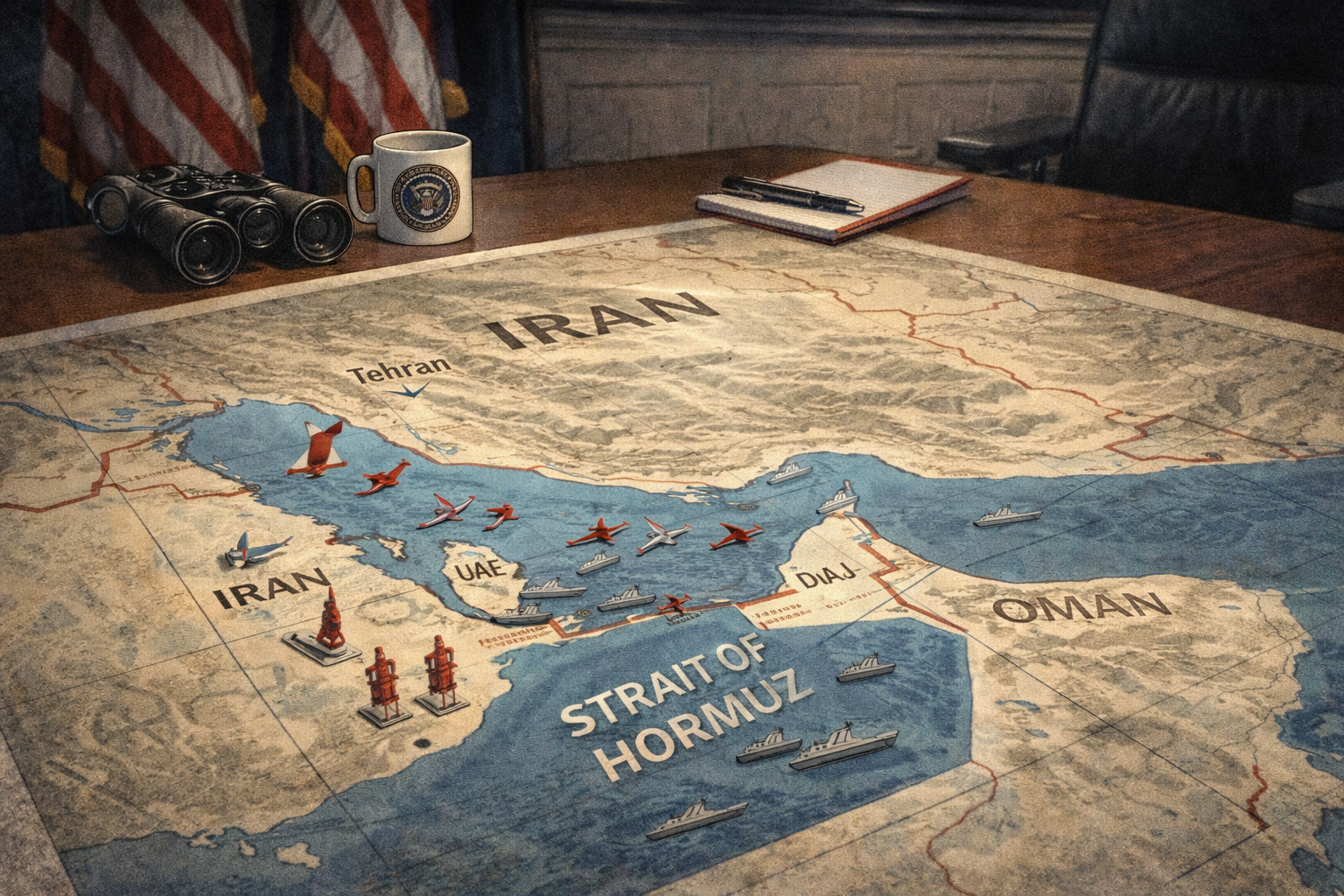
Image: Cannon & Caius generated with AI
Assessing the Iran War Through the Three Trinity Doctrine
President Trump declared on April 8 that the United States had achieved “total and complete victory” in Iran as a fragile two-week ceasefire took hold. The White House, likewise, argued that the war’s objectives had been met, while Reuters and other reporting at the same time described a truce whose terms were ambiguous, whose durability was uncertain, and whose strategic outcomes remained contested.
That is exactly why the Three Trinity Doctrine I have proposed matters. This framework asks three questions at once. First, whether the campaign advanced security, regional stability, and constitutional legitimacy. Second, whether Washington chose the right mix of hard power, soft power, and smart power. And, third, whether the danger was correctly understood as a direct threat, an allied threat, or a case threat to broader American interests.
Used properly, the doctrine is not designed to reward rhetoric. It is designed to measure outcomes – objectively, truthfully, and transparently.
Start with the Stated Objectives
The Trump administration’s own public record is not especially consistent, but its official summaries are clear enough to establish the main yardstick. White House releases and briefings described Operation Epic Fury as aiming to destroy Iran’s ballistic missile and drone capabilities, destroy the Iranian navy, destroy Iran’s defense industrial base so it could not reconstitute power, and ensure Iran’s proxies could no longer attack U.S. forces or destabilize the region, and ensure Iran could never obtain a nuclear weapon.
Reuters also reported that President Trump publicly urged Iranians to rise and “take over” their government, making regime change at least an implied political aspiration even if it was not always framed as a formal military objective.
Measured against that list, the results are mixed at best.
Trinity One: Security, Regional Stability, Constitutional Legitimacy
On security, the administration can fairly claim tactical successes. U.S. and Israeli strikes badly damaged elements of Iran’s military and nuclear infrastructure, and even Iranian officials acknowledged serious damage to nuclear installations. But the White House’s stronger claim that Iran’s nuclear pathway has been permanently closed remains unproven in public evidence; Reuters reporting after the ceasefire emphasized that Iran had not publicly conceded its nuclear position and remained in a position of leverage.
On regional stability, the picture is worse. The war disrupted shipping through the Strait of Hormuz, sent energy markets into turmoil, contributed to higher fuel prices, and left allies and trading partners scrambling for a practical reopening strategy even after the ceasefire announcement. Reuters has reported that Iran emerged from the war bruised but with enhanced leverage over Hormuz, which is not a sign of regional stabilization.
On constitutional legitimacy, the administration’s case is also weak. House Republicans blocked an attempt to force a vote on limiting presidential war powers, and the administration has continued to defend the campaign as falling within the commander-in-chief's authority despite Congress’s constitutional role in war-making. Under the Three Trinity Doctrine, a war that bypasses robust congressional ownership begins with a legitimacy deficit, even before battlefield results are judged.
Trinity Two: Hard Power, Soft Power, Smart Power
On hard power, the United States and Israel clearly demonstrated military superiority. Iran’s navy was degraded, its defense infrastructure was struck, and its command structure suffered major losses. But hard power is only decisive if it produces the political end state sought. Reuters’ reporting and the ceasefire terms suggest that Iran’s missile and drone activity was not fully eliminated, that its regional influence persists, and that its regime philosophy remains intact.
On soft power, the campaign has thus far underperformed. Trump’s repeated rhetorical escalations, reversals, and smart deadlines created confusion among allies, markets, and adversaries alike. Reuters described an abrupt turnaround on April 7-8, with threats of devastating attacks on civilian infrastructure dropped less than two hours before an imposed deadline. That is not how durable diplomatic leverage is normally built.
On smart power, the record is incomplete. Smart power would have synchronized military pressure, allied diplomacy, maritime security, economic stabilization, and a realistic postwar settlement. Instead, the war ended in a tenuous pause while Iran continued to wield economic leverage through Hormuz, oil markets remained volatile, and the broader peace architecture was still undefined. Under the doctrine, that is not integrated statecraft. It is an unfinished campaign.
Trinity Three: Direct Threat, Allied Threat, Case Threat
As a direct threat, Iran’s missile, drone, and proxy capabilities plainly endangered U.S. forces and facilities in the region; that part of the administration’s case was never frivolous. White House and Pentagon messaging consistently emphasized the missile threat and the danger to American troops.
As an allied threat, Iran also posed a danger to Israel and to our Gulf partners, especially through missile attacks, proxy networks, and coercive control over Hormuz. Here again, the threat diagnosis was stronger than the outcome of the war. The threat was real; the settlement remains uncertain.
As a case threat, however, the war has thus far weakened the U.S. position. The case threat asks whether the broader precedent, credibility, and geopolitical outcome serve American interests. Reuters’s post-ceasefire reporting suggests the opposite. Iran retains strategic leverage, U.S. objectives remain only partly achieved, global energy costs rose sharply, and Trump’s repeated deadline-setting, followed by reversals, raised doubts about American resolve and consistency.
A Reader’s Scorecard
Using the Trump administration’s own objectives, the Operation Epic Fury campaign currently looks like this:
No Iranian nuclear weapon | Still incomplete in public proof. Iran’s facilities were heavily damaged, but the President’s “obliterated” claim goes further than the public evidence can currently sustain.
Destroy Iran’s navy | Degraded? Yet. Destroyed? No. Even the most favorable official summaries speak of the destruction of the navy as an objective, but the broader ceasefire context shows Iran still holding coercive maritime leverage through Hormuz.
Obliterate Iran’s missile and drone industry | Incomplete. White House messaging claimed the missile and drone threat had been shattered, yet Reuters reported continued launches and persistent concern over residual capabilities during and after the ceasefire window.
Stop proxies from attacking U.S. troops and destabilizing the region | Incomplete. The administration claimed major progress, but Reuters has continued to report proxy-linked instability and regional uncertainty.
Create conditions for Iranians to oust their government | No evidence of success to date. Trump publicly encouraged Iranians to rise up, but Reuters’ battlefield and ceasefire reporting indicates that the regime’s aligned leadership philosophy and governing structure remain in place.
The Deadline Problem
A presidency that repeatedly sets deadlines and then revises them pays a credibility cost. The public record now includes a concerning number of milestones:
February 19: President Trump warned Iran to make a deal within 10 to 15 days or face severe consequences.
March 31: President Trump said the United States could end the war in two to three weeks.
April 7, 8:00 p.m. EDT: President Trump set a final deadline for Iran to reopen the Strait of Hormuz or face devastating attacks on civilian infrastructure, then reversed course less than two hours before the deadline and accepted a two-week ceasefire.
April 7-8 ceasefire window: President Trump said he expected an agreement to be “finalized and consummated” during the two-week truce. That remains unresolved, though still early.
Under the Three Trinity Doctrine, deadlines are not mere theatrics. They are instruments of coercive diplomacy. If they are repeatedly softened or missed, they stop shaping adversary behavior and start undermining American leverage.
Has the War Strengthened Iran’s Position?
At this stage, yes, at least geopolitically.
Reuters’ postwar analysis found Iran economically battered but strategically empowered through its de facto leverage over Hormuz. That means Tehran can lose tactically yet still retain bargaining power over a chokepoint critical to the Western and global economies. If that condition persists, then the war has imposed costs on Iran without removing one of its greatest advantages.
What Would Make the War “Work”?
If Washington wants the Operation Epic Fury campaign to produce something more durable than a rhetorical victory, five things are now necessary.
First, secure navigation through Hormuz by coalition, not slogan. The U.S., Britain, Gulf partners, and key Asian importers need an enforceable maritime regime that quickly and visibly restores freedom of passage. Downing Street’s call with Trump on April 9 points in that direction, but it needs substance fast.
Second, move from episodic hard power to integrated smart power. Military strikes alone will not solve the missile, proxy, and nuclear problem. Any viable settlement must link sanctions, inspection regimes, missile restrictions, maritime rules, and regional de-escalation. Reuters’ reporting suggests none of that is yet locked in.
Third, define success publicly and honestly. The President should stop oscillating between “obliterated,” “victory,” and “still negotiating.” If the objectives are now narrower than they were on February 28, the American people deserve the truth.
Fourth, bring Congress back into the frame. If the war is consequential enough to reorder energy markets and regional security, it is consequential enough for explicit congressional ownership. That would strengthen the constitutional leg of the Trinity rather than weaken it.
Fifth, protect the economic front as seriously as the military front. Iran has attacked the West not only militarily but also economically through Hormuz. A serious strategy must therefore include energy resilience, coordinated stock releases, shipping security, and visible plans to cushion consumers from oil shocks. Reuters has already documented the inflationary and supply effects of this war.
The Independent Judgment
The independent judgment, using the Three Trinity Doctrine, is straightforward. The threat was real, the military response achieved partial tactical success, but the President’s expansive claims of total victory clearly run ahead of evidence.
Security gains remain incomplete, regional stability has not been restored, constitutional legitimacy remains thin, smart power has lagged hard power, and Iran still holds meaningful geopolitical leverage.
A republic should not confuse damage inflicted with a strategy completed. In war, as in politics, victory is not what one declares. It is what still stands when the deadlines pass.