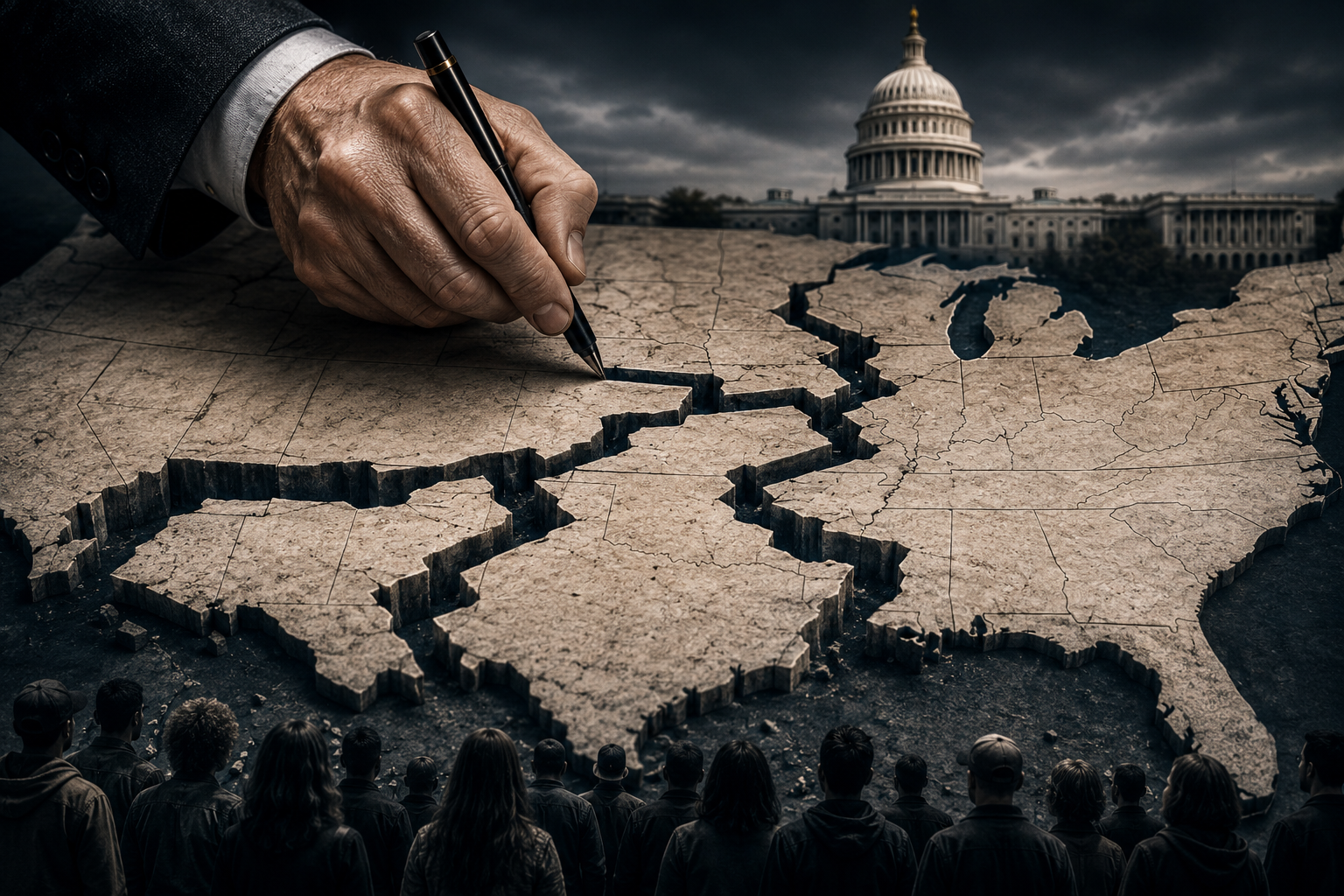
Supreme Expansion?

Reform, Risk, and the Future of Constitutional Balance
Opinion by Ben Everidge for Thomas
Image: Adobe Stock by fotogurme
For most of modern American history, the size of the Supreme Court has not been seriously debated.
Nine justices. A stable institution. A final arbiter of constitutional meaning.
Today, that question has returned. Should the Supreme Court be expanded?
Not as a theoretical exercise, but as a response to a growing perception that the Court has moved from legal judgment toward political decision-making.
Why The Question Has Reemerged
Recent decisions have sharpened public debate about the Court’s role.
The overturning of Roe v. Wade signaled a willingness to revisit long-standing precedent.
More recently, rulings related to presidential authority have raised broader questions about the balance between executive power and accountability.
For some Americans, these decisions reflect legitimate interpretations of the Constitution.
For others, they reflect a Court that appears increasingly aligned with political outcomes rather than neutral legal reasoning.
If the Court is perceived as political, what safeguards remain?
The Case for Expansion
Those who support expanding the Court often advance several arguments:
Restoring Balance | If the Court has become ideologically imbalanced, expansion is seen as a way to restore equilibrium. The idea is not simply to add justices, but to rebalance the institution.
Reflecting a Larger, More Complex Nation | The United States today is far larger and more complex than it was when the Court last changed size. Some argue that a larger Court could incorporate broader perspectives, reduce the influence of any single justice, and improve deliberation.
Reducing the Stakes of Individual Appointments | With only nine justices, each appointment becomes a high-stakes political battle. Expanding the Court could diffuse that pressure.
Opening the Door to Nonpartisan Appointments | An independent or reform-minded president, if elected in 2028, could use expansion as an opportunity to appoint jurists whose reputations are grounded in legal reasoning rather than partisan alignment. In theory, this could also help restore public confidence in the Court.
The Case Against Expansion
The arguments against expansion are equally significant:
The Risk of Escalation | If one administration expands the Court, future administrations may do the same. Nine becomes eleven. Eleven becomes thirteen. The Court risks becoming a political instrument rather than a constitutional one.
Institutional Legitimacy | The Supreme Court’s authority rests not on force, but on perceived legitimacy. If expansion is widely viewed as a political maneuver, it could weaken that legitimacy rather than strengthen it.
Short-Term Gain, Long-Term Instability | Expansion may address immediate concerns, but at the cost of creating a precedent that destabilizes the institution over time.
The Historical Warning: Franklin Roosevelt’s Effort
The most notable attempt to expand the Court occurred under Franklin Delano Roosevelt.
Frustrated by Court rulings that struck down elements of the New Deal, Roosevelt proposed additional justices.
The plan was legally permissible. But politically, it failed.
Why?
Because it was widely perceived as an effort to reshape the Court for policy advantage.
Even members of Roosevelt’s own party resisted.
The episode reinforced an important principle. Reforming the Court is one thing. Appearing to control it is another.
The Real Issue: Law or Politics?
At the heart of today’s debate is not simply the number of justices.
It is a deeper concern. Is the Court deciding cases based on constitutional interpretation, or political preference? Are members of the Court corrupt based on recent ethical lapses?
That perception – whether accurate or not – has profound consequences.
A Court viewed as political invites public skepticism, calls for reform, and reduced compliance with its decisions.
A Different Approach to Reform
If expansion is pursued, it must be done with extraordinary care.
Several principles could guide such an effort:
Preserve Institutional Integrity | Expansion should not be framed as retaliation or correction. It must be presented as a structural reform aimed at strengthening the Court.
Maintain an Odd Number of Justices | Preserving an odd number helps avoid deadlock and ensures decisions can be reached.
Emphasize Qualifications Over Ideology | Appointments should prioritize judicial temperament, constitutional reasoning, and professional reputation.
Consider Broader Reform | Expansion alone may not resolve deeper concerns. Other ideas often discussed include term limits for justices, staggered appointments, and clearer recusal standards.
The Thomas Take
At Thomas, we approach this question not as a partisan issue, but as an institutional one.
The Supreme Court is not merely another branch of government. It is the final interpreter of the United States Constitution.
Its strength depends on trust. And trust depends not only on decisions, but on how those decisions are perceived.
The Central Question
The question is not simply – or only – should the Court be expanded?
It is, will expansion strengthen or weaken the constitutional order?
The founders did not fix the size of the Supreme Court. They understood that institutions would evolve.
But they understood something more fundamental: Power must be exercised with restraint.
If reform becomes a tool of political advantage, the Court risks becoming what it was never intended to be.
If reform is guided by principle, it may help restore confidence in one of the republic's most important institutions.
The choice is not whether to act. It is how and why.
As for me? I favor reform and expansion. Not for political purposes but for democracy’s survival in the political outrage era we now find ourselves navigating.