The Check That No Longer Balances
What Political Science Explains About Congress, the Presidency, and the Modern American System
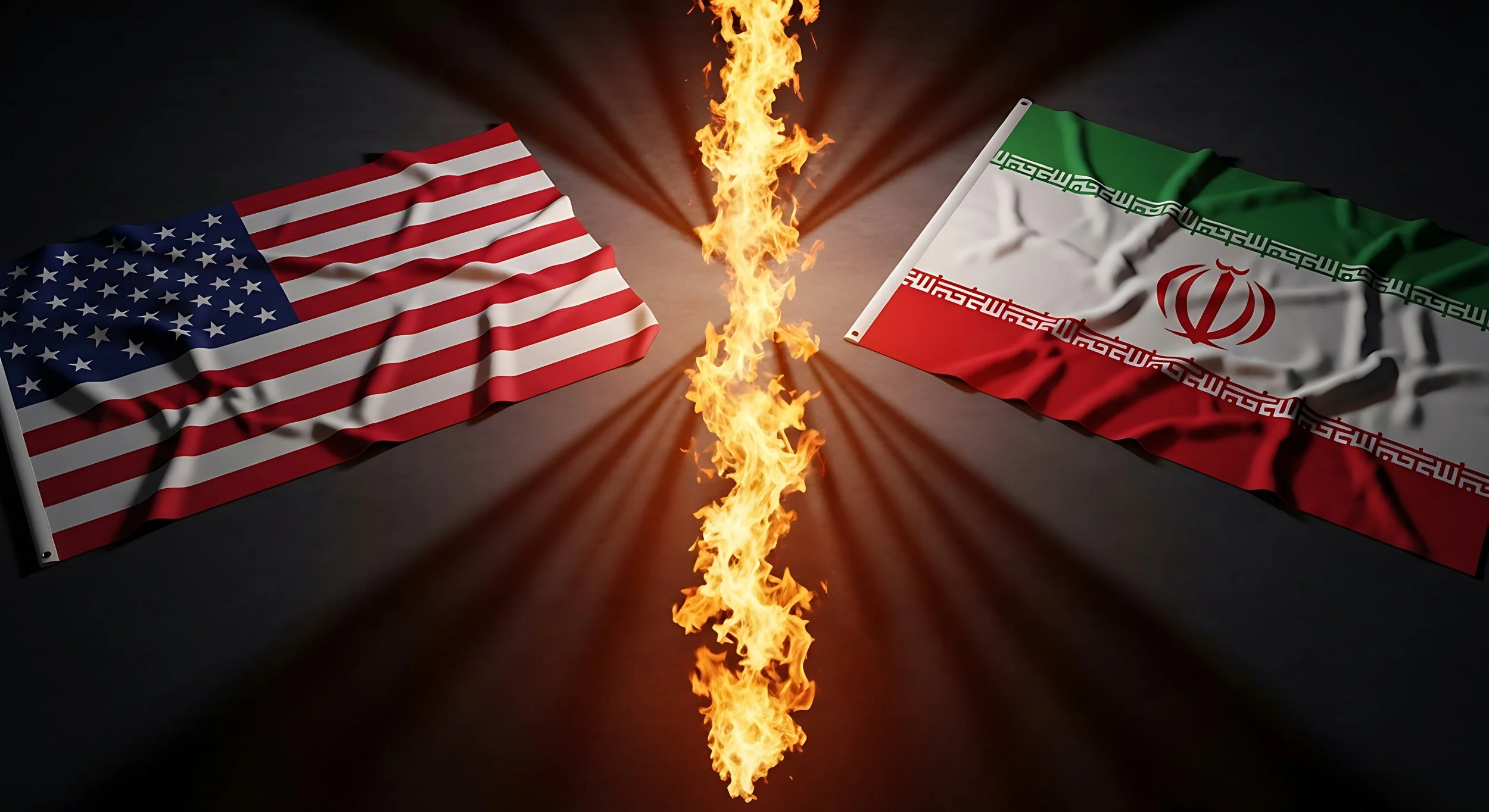
Image: Adobe Stock by Frédéric Prochasson
There is a familiar refrain in American life today. Congress is failing. It is failing to check the President and failing to assert its constitutional authority. Failing to restrain executive action across war powers, spending, regulation, and foreign policy.
Depending on one’s vantage point, the frustration shifts in tone, but not in substance.
Americans on all sides see a legislature that appears increasingly passive in the face of a powerful executive.
But what if this diagnosis is wrong?
What if Congress is not failing at all?
What if, instead, it is behaving exactly as modern political science predicts it would?
This is an uncomfortable proposition because it shifts the conversation away from personalities and toward structure. It suggests that the imbalance Americans perceive is not the product of a single administration, a single party, or a single moment, but the culmination of institutional incentives, party evolution, and executive strategy that scholars have been documenting for decades.
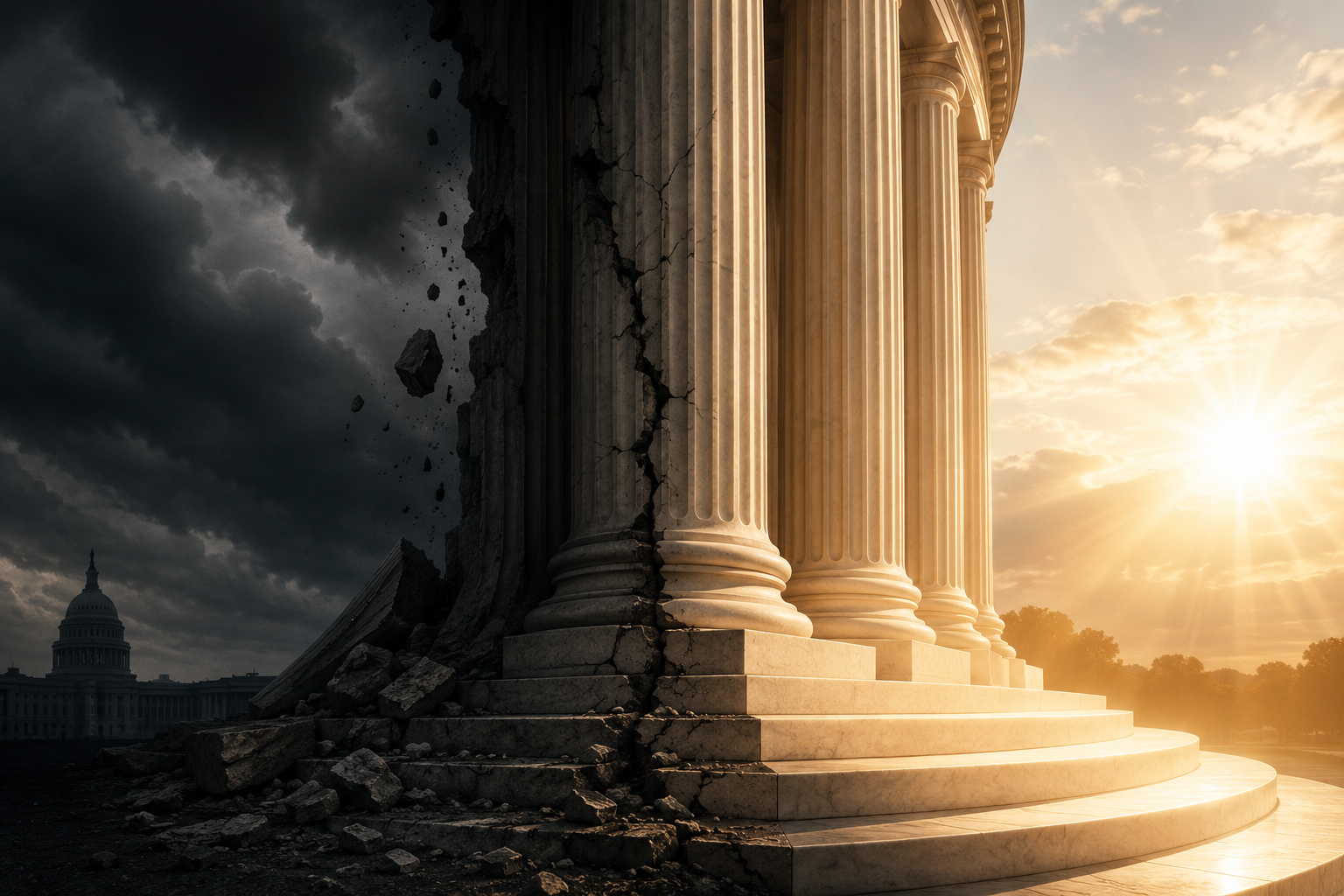
The system is not breaking down. It operates in accordance with its modern design. And that design no longer produces the balance the Founders envisioned.
The Constitution Endured. The System Changed.
The American constitutional system was built on a simple but powerful premise. Ambition would counteract ambition. Congress, closest to the people and most numerous in its membership, would be the dominant branch. The President, singular and constrained, would execute the laws, not define them. The courts would interpret disputes arising between the two. Formally, this architecture remains intact.
Congress still holds the power of the purse. It still legislates. It still possesses oversight authority. The President still executes laws passed by Congress. The Supreme Court still adjudicates constitutional questions. And yet, functionally, the system no longer operates as designed.
The President acts first. Congress reacts, if it reacts at all. The courts intervene only after delay.
The balance of power has not been erased; it has been reordered.
The critical insight is this: nothing in the constitutional text required this shift. But everything in modern political development has encouraged it.
The Presidency Expanded Because It Could
The growth of presidential power is often described in moral or political terms, but academic literature tells a more structural story.
Richard Neustadt famously argued that presidential power is not command, but persuasion – rooted in reputation, bargaining, and public standing. The President succeeds not by issuing orders, but by influencing other actors in a shared system.
That insight remains foundational. But later scholars extended it and, in some ways, corrected it. William Howell, for example, demonstrated that presidents do not merely persuade; they act unilaterally, particularly when Congress is unable or unwilling to respond. Executive orders, administrative actions, and national security decisions allow the President to move first and shape outcomes before opposition can coalesce.
Terry Moe pushed the argument further, suggesting that a strong executive is not an aberration, but a functional response to the coordination problems inherent in Congress. Where legislators are fragmented and divided, the President becomes the only actor capable of decisive action. And yet, this expansion carries risk. Arthur M. Schlesinger Jr. warned decades ago of an “imperial presidency,” in which the accumulation of executive authority, especially in foreign affairs, outpaces democratic accountability.
Taken together, these perspectives yield a clear conclusion. The presidency expanded not because it was seized, but because the system allowed, and in many cases required, it to expand.
Presidents act because they can. And increasingly, because no other institution can act as quickly.
Congress Did Not Collapse. It Adapted.
If the presidency has grown, it is tempting to assume Congress has weakened. But this, too, misdiagnoses the problem.
Congress has not collapsed. It has adapted – rationally – to the incentives facing its members.
David Mayhew famously argued that members of Congress are single-minded seekers of reelection.” Their behavior – legislation, oversight, public positioning – is shaped first and foremost by electoral considerations.
In that context, checking a president of one’s own party becomes politically hazardous. It risks alienating primary voters, party activists, and key donors. Even opposing a president of the other party may carry risks if it disrupts coalition messaging or distracts from electoral priorities.
Gary W. Cox showed how parties structure legislative behavior, coordinating members around shared goals. Frances E. Lee demonstrated that modern American politics operates in a state of permanent competition, where governing and campaigning are no longer distinct activities.
The result is not inactivity, but strategic restraint.
Congress does not fail to act. It chooses not to act when action threatens electoral survival.
This is not dysfunction. It is rational behavior within the system as it now exists.
Parties Replaced Institutions
Perhaps the most profound transformation in American governance is not the rise of the presidency, but the rise of the party as the primary organizing force.
Congress was designed as an institution. Its members now operate primarily as party actors.
E.E. Schattschneider observed that modern democracy is unthinkable without parties. John H. Aldrich later argued that parties are not organic expressions of public will but tools created by politicians to solve collective-action problems.
In the contemporary era, those tools have taken on new significance.
Nolan McCarty and his collaborators documented the rise of ideological polarization, which has sorted parties into increasingly distinct camps. Lilliana Mason extended this analysis, showing that party affiliation now functions as a form of social identity, shaping not just political preferences but personal and cultural alignment.
The implications are profound.
Members of Congress are no longer the primary defenders of their institution. They are defenders of their party – and, by extension, the identity of their voters.
The constitutional system was built on the separation of powers. The modern system operates on the separation of parties. And when party loyalty supersedes institutional loyalty, the incentive to check the executive, when that executive shares one’s party, diminishes dramatically.
The Judiciary Cannot Fully Restore Balance.
In theory, the courts provide a backstop. When Congress does not act, the judiciary can interpret the law and constrain executive overreach.
In practice, this mechanism is limited.
The courts are reactive. They rely on cases being brought before them. Their processes are deliberate and often slow. Decisions can take years to materialize, and enforcement ultimately depends on the executive branch itself.
This creates a structural asymmetry: The President acts in real time. The courts respond over time.
Congress, caught between electoral incentives and party pressures, often abstains.
The result is not judicial irrelevance, but judicial delay insufficient to counterbalance rapid executive action.
The Media Environment Rewards the Executive
Overlaying these institutional dynamics is a media environment that further amplifies presidential power.
Modern presidents operate in a system that rewards visibility, immediacy, and narrative dominance. They can speak directly to the public, frame issues, and shape national attention in ways Congress cannot easily match.
Legislative action is slow, fragmented, and often opaque. Executive action is immediate, centralized, and highly visible.
In such an environment, the most visible actor becomes the most powerful actor. And that actor is the President.
Secrecy, Strategy, and the Limits of Accountability
In foreign policy and national security, the imbalance becomes even more pronounced.
John Mearsheimer has argued that leaders may engage in strategic deception, not as a moral failing but as a calculated response to international pressures. Information is often incomplete, classified, or contested.
Congress, lacking timely access to full information, is constrained in its ability to respond. The public, receiving filtered or conflicting accounts, struggles to adjudicate competing claims.
When information itself becomes asymmetric, accountability becomes episodic at best and illusory at worst.
The System We Now Have
Taken together, these dynamics describe not a breakdown, but a transformation.
The United States now operates within an asymmetric governance system. A fast-moving executive, capable of unilateral action. A party-constrained legislature, guided by electoral incentives. A delayed judiciary, limited in its capacity for real-time intervention. A fragmented media environment amplifies executive visibility.
Power has not disappeared. It has been redistributed.
Action is centralized. Accountability is diffused.
A Structural Question, not a Partisan One
It is tempting to interpret these developments through a partisan lens, to attribute imbalance to the actions of a particular president or party. But academic literature suggests otherwise.
These patterns persist across administrations, across parties, and across decades. They are rooted in incentives, institutions, and structural evolution rather than in individual intent.
This does not mean the system is beyond reform. But it does mean that reform requires more than electoral change. It requires reconsidering the incentives that govern institutional behavior.
The Question Before Us
The Founders designed a system in which ambition could counteract ambition.
Modern political science suggests that ambition has shifted away from institutional defense toward electoral survival and party cohesion.
The result is a system that still retains the outward form of the separated powers but operates according to a different internal logic.
The question is no longer whether Congress will check the President. The question is whether the modern system still allows it to do so.