Not An Ordinary Midterm Correction
Image: Generated by AI for Thomas
The 2026 Midterms Repudiated Republican One-Party Rule, But Did They Restore America’s Confidence in Government?
The voters have spoken. Republicans have lost control of Congress. Democrats have been given another opportunity to govern. Yet the electorate's deeper message may be more troubling for both parties: Americans are tired of political promises that fail to deliver results.
The Verdict
Failure.
One word captures the central political consequence of the 2026 midterm elections. Not simply the failure of Republican candidates to retain their congressional majorities. Not merely the failure of President Donald Trump to persuade Americans to continue supporting his governing coalition.
But the failure of a political party that entered 2025 controlling the White House and both chambers of Congress to convince enough voters that its stewardship deserved to continue.
Republicans possessed substantial governing authority. They had opportunities to enact legislation, oversee federal agencies, shape national priorities, and demonstrate the effectiveness of their policies.
Less than two years later, voters have transferred control of both chambers of Congress to Democrats.
The reversal is remarkable, stunning, and historic.
Democrats captured Republican-held Senate seats in Texas, Kansas, Iowa, Ohio, Maine, North Carolina, and South Carolina. They also gained more than two dozen House districts, including constituencies that had supported Trump comfortably in 2024.
Some final races remain unresolved, but congressional control is settled.
Republicans have lost it. And the election was not simply an ordinary midterm correction.
The results reflected widespread voter dissatisfaction over economic conditions, the Iran war, and concerns about corruption. The electorate also wanted stronger congressional checks on presidential authority.
Americans were not simply changing the occupants of congressional seats. They were demanding a change in the way Washington governs.
That is the message Republicans must confront. Democrats must now accept that responsibility.
The Burden of One-Party Rule
When Donald Trump returned to the presidency in January 2025, Republicans enjoyed an advantage that few governing coalitions can reasonably complain about lacking.
They controlled the presidency. They controlled the House. They controlled the Senate. Republicans also held majorities in more state legislative chambers than Democrats.
Their governing authority was not unlimited. The Constitution preserved judicial review, federalism, individual rights, and Senate procedural constraints.
But the political opportunity was substantial.
Republicans could advance legislative priorities with relatively limited opposition from congressional leadership.
They could shape appropriations. They could influence federal administrative policy. They could conduct oversight. And they could present voters with a coherent account of what Republican governance was accomplishing.
The electorate’s subsequent judgment does not establish that every Republican policy failed. Nor does it prove that every economic difficulty originated with Trump.
Inflation, housing shortages, healthcare costs, and federal debt reflect forces and decisions extending across multiple administrations.
Nevertheless, the governing party bears responsibility for explaining what it has done, what consequences followed, and why citizens should continue trusting it.
The 2026 election suggests that the Republican explanation was not persuasive to enough Americans. This is the political cost of possessing power.
When a party controls government, it cannot indefinitely campaign as though someone else is responsible for governing.
The Economy: Americans Wanted Relief, Not Reassurance
The economy was central to the election.
In an Associated Press voter survey, roughly four in ten voters identified the economy as the country’s most important issue. About half considered the cost of living crucial to their decision on Congress.
Many voters connected their economic dissatisfaction to Trump administration policies, including tariffs and the consequences of the Iran war.
These perceptions matter politically even when economists may disagree about the precise contribution of individual policies to prices.
Americans experience the economy through their daily lives. Mortgage payments, rent, groceries, insurance premiums, healthcare expenses, fuel costs, education, and retirement security.
A president may point to stock market performance, industrial investment, employment statistics, or aggregate economic growth.
Those measures deserve consideration, but they cannot replace households' financial experiences.
An economy can expand while families remain financially strained. Inflation can moderate while the cumulative price increases of previous years remain painfully evident. And political promises of prosperity can lose credibility when voters see little improvement in their personal circumstances.
The 2026 election illustrates a recurring lesson of American politics. Economic statistics may describe national performance. Household budgets determine much of how citizens experience it.
For Republicans, the challenge was demonstrating that their policies were improving those household budgets. For Democrats, the challenge will be demonstrating that their alternatives can do better.
Neither party can responsibly claim victory over affordability simply by winning an election.
The Coalition That Brought Trump Back Began to Fracture
One consequential development was the apparent weakening of parts of Trump’s 2024 electoral coalition.
The Associated Press voter survey found substantial movement among younger voters and Hispanic voters.
Approximately seven in ten voters under 30 supported Democratic House candidates. Roughly six in ten Hispanic voters supported Democratic House candidates, while about one-third supported Republicans.
These figures should not be confused with a direct measurement of individual voters switching parties. Presidential and congressional electorates differ, and turnout changes can affect demographic comparisons.
Nonetheless, the movement is significant.
Trump’s 2024 victory benefited from gains among several groups that Republicans had previously struggled to attract. The 2026 results indicate that some of those gains did not translate into durable congressional support.
Younger Americans, in particular, expressed strong dissatisfaction.
Research from Tufts University’s Center for Information & Research on Civic Learning and Engagement found Democratic strength among young women, young men, and young voters across several educational and geographic categories.
Hispanic voters also moved away from Republican congressional candidates compared with their support for Trump in 2024.
Other constituencies, including seniors, Catholic voters, and previously disengaged citizens, deserve careful analysis as complete survey and turnout data become available. It would be premature to assign each group an identical motivation or claim that every group shifted by the same magnitude.
What is already evident is that the Republican coalition proved less secure than its 2024 presidential victory suggested.
A political party cannot assume that voters who once supported it have become permanent members of its coalition. It must renew that support through performance, credibility, and responsiveness.
The War, Immigration, and the Limits of Presidential Authority
The election also reflected public concern about how the president exercised power.
Foreign policy was an important part of that judgment.
The Iran war, its costs, its consequences for energy markets, and uncertainty about American objectives contributed to voter dissatisfaction.
Presidents possess substantial authority in foreign affairs and national security. But Congress retains constitutional responsibilities for declarations of war, appropriations, oversight, and authorizing military force.
Those responsibilities do not disappear because the executive branch considers its objectives urgent.
Americans deserve clear answers about military commitments.
What are the objectives? What legal authorities support the operations? What has been accomplished? What remains unfinished? What will success cost? And how will Congress evaluate the results?
Immigration presents a different but equally important constitutional challenge. The federal government has legitimate responsibilities to enforce immigration law and protect national security. But enforcement must operate within statutory and constitutional limits, including applicable due process protections.
The policy debate involves genuine differences over border security, lawful immigration, asylum removals, employment, and humanitarian obligations.
The 2026 election does not settle those questions.
It does, however, reinforce the importance of distinguishing effective enforcement from arbitrary or excessive government action.
The same principle applies to allegations of corruption and abuses of public authority.
Allegations require evidence. Investigations require due process.
Officials deserve neither automatic condemnation nor immunity from scrutiny. The constitutional standard must remain consistent regardless of party.
The Democrats Have Won Congress, But They Have Not Won a Blank Check
Democrats now face an important test of their own. The election delivered congressional majorities. It did not establish that Americans have developed unqualified confidence in the Democratic Party.
The Associated Press voter survey found that only about half of voters viewed Democrats favorably, compared with approximately four in ten who viewed Republicans favorably.
Many voters considered neither party particularly capable of addressing major issues.
About one in five voters supporting Democratic House candidates reportedly held an unfavorable view of the Democratic Party itself.
That distinction is essential.
Some Americans voted for Democratic candidates because they preferred Democratic policies. Others wanted stronger checks on President Trump. Still others were expressing dissatisfaction with the governing party.
These motivations overlap, but they are not identical.
A vote against Republican governance is not automatically a vote for every Democratic proposal. Democrats must now demonstrate whether they can translate electoral opportunity into responsible congressional leadership.
That means governing a Congress responsible for legislation, budgeting, oversight, confirmations, and public accountability. It means establishing priorities that extend beyond opposing Trump.
And it means addressing internal disagreements between progressive, moderate, and more explicitly democratic-socialist approaches without treating those philosophies as interchangeable.
Proposals for expanded public services, redistribution, greater government ownership, or increased regulation should be evaluated according to their specific design, fiscal consequences, constitutional authority, and measurable effect.
Labels alone cannot substitute for analysis.
The American people should expect Democrats to explain what they intend to accomplish, what their proposals will cost, and how they will measure success.
Winning control of Congress provides authority. It does not automatically establish credibility as a governing body.
“Lawyer Up” Meets “Mr. Veto”
The first signals from Washington are not especially reassuring.
Some congressional Democrats have discussed aggressive investigations into the Trump administration and the president’s family business interests.
Reporting following the election described anticipated subpoenas and inquiries into possible conflicts of interest and other matters involving public authority.
Meanwhile, President Trump has openly discussed using his veto power against Democratic legislation.
In an interview with CBS News before polls closed, he embraced the prospect of becoming “Mr. Veto” under divided government. He also acknowledged that confrontation could eventually lead to negotiated agreements.
That qualification matters. A presidential veto is a legitimate constitutional power. Congressional investigations are legitimate constitutional functions. Neither becomes improper simply because political opponents dislike their use. Both can be misused.
Oversight can become political theater when its principal purpose is humiliation rather than discovering facts, enforcing law, or improving government.
Vetoes can become instruments of obstruction when they substitute for substantive engagement with legislation.
The American people should insist upon a distinction. Accountability is not revenge. Constitutional opposition is not institutional paralysis.
Congress should investigate credible allegations of misconduct. It should protect witnesses' rights. It should use subpoena authority for legitimate legislative purposes. It should produce evidence-based findings. And when investigations reveal systemic weaknesses, Congress should consider appropriate statutory reforms.
The present, meanwhile, retains the authority to reject legislation. But he also retains responsibility for governing.
A presidency cannot become an extended exercise in vetoing proposals simply because they originate with the opposing party.
The challenge of divided government is not eliminating disagreement. It is ensuring that disagreement does not become an excuse for abandoning public responsibilities.
The Constitutional Opportunity Hidden Inside Divided Government
The Constitution divides power for a reason. The founders did not assume that every branch would agree. They expected institutional competition. They anticipated ambition. They understood that concentrated authority could threaten liberty. And they designed a system in which different institutions could check one another.
The 2026 election restores a more visible separation between the president’s political coalition and the congressional majority.
That creates opportunities for stronger oversight and independent legislative judgment.
Congress can examine executive decisions. It can investigate federal spending. It can review military commitments. It can demand explanations from administrative agencies. It can scrutinize executive compliance with the law. It can also exercise its constitutional authority over appropriations.
But Congress must do more than check the president. It must govern.
The Constitution did not establish the legislative branch merely to investigate the executive.
Article I grants Congress substantial lawmaking responsibilities. Those responsibilities include decisions affecting taxation, spending, commerce, national defense, and the structure of federal government.
A Congress that conducts investigations but cannot pass responsible budgets or address pressing national needs will have fulfilled only part of its constitutional purpose.
Divided government can encourage negotiation. It can restrain executive overreach. It can force competing parties to justify their positions publicly. But it can also produce shutdowns, delayed appropriations, stalled appointments, and policy uncertainty.
Which outcome emerges will depend upon choices made by political leaders.
The Constitution creates the opportunity for responsible government. It cannot compel elected officials to exercise good judgment.
Gerrymandering and the Rules of Political Competition
The 2026 election also exposed continuing concerns about congressional redistricting.
The National Conference of State Legislatures documented an unusual wave of mid-decade congressional map changes involving ten states, including Texas, Florida, North Carolina, Alabama, Louisiana, Missouri, Ohio, Tennessee, Utah, and California.
These efforts occurred in different political and legal circumstances.
Republicans initiated some. Others involved Democratic responses or different institutional processes.
The distinction matters, but the underlying concern is national.
When political organizations manipulate electoral boundaries primarily to protect or expand their own power, voters may reasonably question whether the electoral system is serving citizens or incumbents.
Not every redistricting decision is unlawful. Not every oddly shaped district is unconstitutional. And allegations of illegal discrimination require specific legal and factual analysis.
Nevertheless, partisan mapmaking can undermine competition and public confidence even when courts permit particular arrangements.
The appropriate response is not simply condemning redistricting when the opposing party benefits.
It is examining consistent standards for fair representation, transparency, public participation, and judicially enforceable protections.
Independent commissions, clear mapping criteria, public disclosure of proposed maps, and stronger safeguards against unlawful discrimination all deserve consideration.
The question should not be whether Republicans or Democrats can draw more advantageous districts.
It should be whether American voters are being represented through a process worthy of public confidence.
The Independent Opportunity and Its Limitations
Perhaps the most revealing feature of the election is that many Americans remain dissatisfied with both major parties.
That dissatisfaction creates political space. But political space is not the same as an organized political movement.
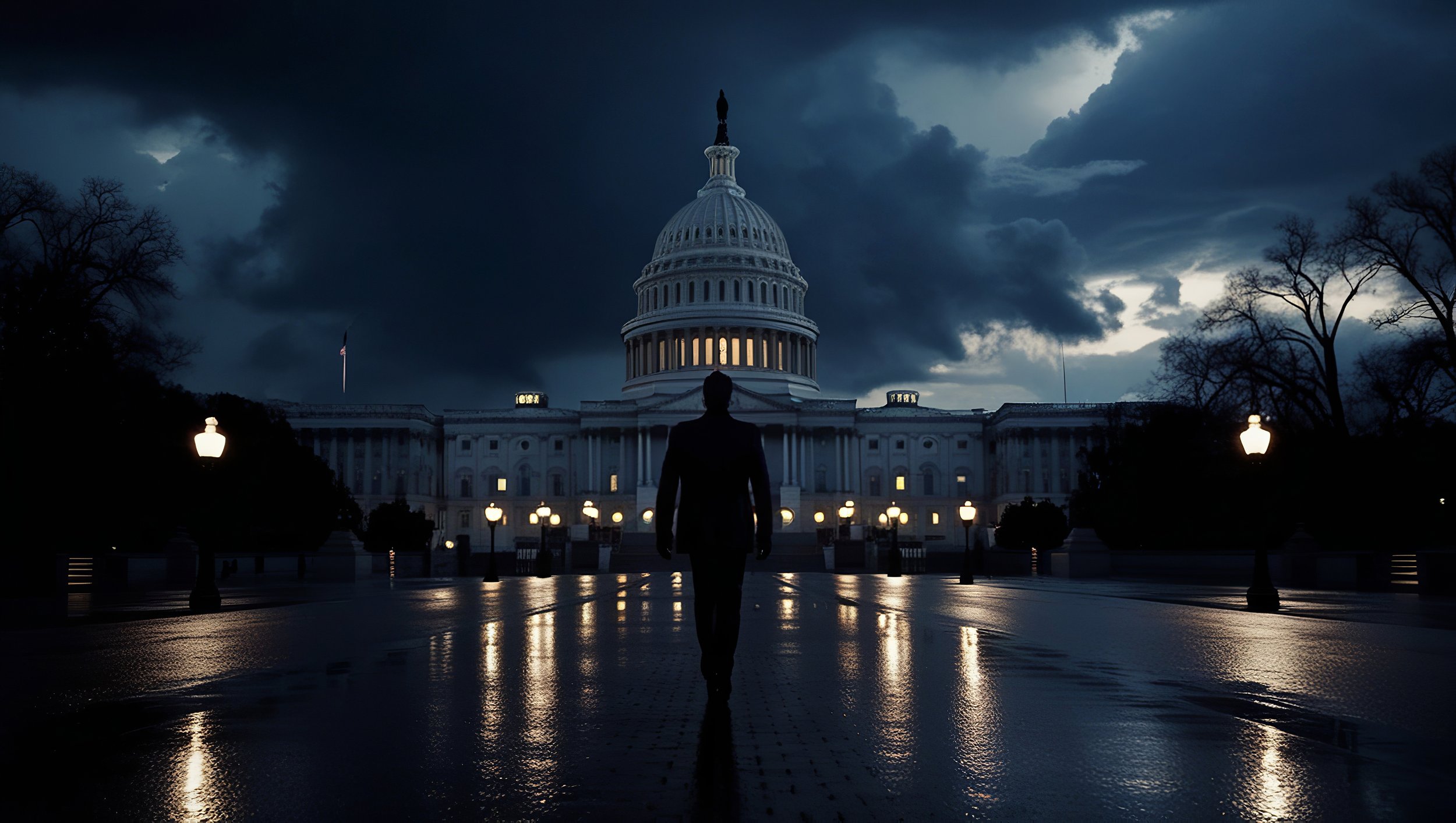
The image of independents walking through the political darkness with a lantern, searching for leadership, is memorable.
It captures something real: the frustration of citizens who feel neither party adequately represents their priorities. Yet the metaphor also exposes the challenge. A lantern does not establish an organization. Dissatisfaction does not produce ballot access, and independence does not automatically create a governing philosophy.
Unaffiliated and independent voters are not a single ideological constituency.
Some lean strongly Republican. Others lean Democratic. Some prefer limited government. Others support substantial public investment. Many combine positions that do not fit neatly into traditional party categories.
A meaningful independent alternative would therefore need to demonstrate more than frustration with the existing parties. It would need credible candidates. Transparent organization. A coherent understanding of constitutional government. Practical approaches to economic and national challenges. And the capacity to participate in elections under each state's laws.
It would also need to explain how independent officeholders could build coalitions and govern in a Congress organized around party leadership, committees, and legislative majorities.
These are substantial obstacles. They should not be underestimated.
Nor should the 2026 results be interpreted as proof that an independent presidential candidate or new political organizations will succeed in 2028.
What that election does reveal is a significant reservoir of public dissatisfaction with the current political system.
Whether that dissatisfaction eventually produces new political organizations, reforms within the major parties, or changes in voter participation remains an open question.
The future of political independence will depend less upon what independents reject than upon what they can credibly build.
What Americans Should Expect Between 2027 and 2029
The next two years will test both parties and the constitutional institution they now share.
Democrats will control Congress. Trump will remain president. Neither side will possess unlimited authority.
A Democratic Congress can pass legislation, exercise oversight, conduct investigations, and use its Senate majority in confirmation proceedings. But the president can veto legislation.
Overriding a veto requires a two-thirds vote in both chambers, a threshold Democrats do not presently possess on their own.
Many legislative proposals may also face procedural obstacles in the Senate.
Major policy changes will therefore require negotiation, procedural agreement, or political compromise.
Americans should expect significant conflict over federal spending, immigration, executive authority, foreign policy, and the direction of economic policy. Conflict, however, need not mean complete paralysis.
Both parties can examine practical areas of overlapping interests.
Reducing unnecessary healthcare costs. Improving housing supply. Modernizing infrastructure. Strengthening cybersecurity. Supporting American technological competitiveness. Improving governmental efficiency. Addressing waste and improper payments. And restoring more predictable federal budgeting.
Agreement on these subjects is not guaranteed. The parties may disagree sharply over methods, financing, regulation, and government's appropriate role. Responsible congressional leadership would identify areas in which negotiations could produce meaningful results.
The American people should also expect greater transparency about executive decisions, more rigorous scrutiny of federal spending, and serious examination of the country’s military commitments.
Above all, they should demand that political leaders explain their choices in terms citizens can evaluate.
What will the policy accomplish? What will it cost? What constitutional authority supports it? What tradeoffs are involved? When should results become visible? Who will be accountable if the policy fails.
Those questions distinguish governing from campaigning.
The 2028 Election Begins with a Warning
The 2026 midterms will inevitably influence the political environment approaching 2028.
Republicans must determine how to respond to the loss of congressional control and the weakening of portions of their electoral coalition.
Democrats must decide whether their new authority will produce effective oversight, practical legislation, and a more persuasive governing agenda.
Independents and emerging political organizations must confront the organizational and institutional barriers that limit alternatives to the two-party system.
But no party should assume that the 2026 electorate has delivered a permanent realignment. Midterm elections depend on turnout, candidate quality, national conditions, local circumstances, and reactions to the sitting president.
The results reveal what voters decided in November 2026. They do not determine what those voters will decide in November 2028. Nor should citizens assume that the future of American politics must be understood exclusively through presidential elections.
Congressional elections matter. State legislatures matter. Governors matter. Local government matters. The rules of political competition matter. And the habits of citizenship matter.
The most consequential result of 2026 may therefore be an opportunity to reconsider what Americans should expect from their government. Not simply which party should possess power. But what public power should accomplish.
The Election Was a Warning, not a Cure
There is a temptation following an election of this magnitude to declare that the American people have spoken with one voice. They have not.
Americans possess different philosophies, priorities, and expectations.
They disagreed before Election Day. They will disagree afterward.
But the results reveal a substantial common concern. Too many citizens believe government is failing to address the problems that matter most to them.
They are rightfully frustrated by economic insecurity. They rightfully question political accountability. They rightfully worry about foreign military commitments. They rightfully disagree about immigration and the proper exercise of federal authority. They are rightfully concerned about corruption and institutional integrity. They are rightfully weary of a political culture that rewards confrontation more consistently than accomplishment.
The 2026 election has imposed a substantial cost upon Republicans. That cost is real. But the Democratic Party should resist interpreting the results as an unconditional endorsement of its own agenda.
Voters have changed congressional leadership. They have not eliminated the problems that produced their dissatisfaction. Nor have they relieved either party of the responsibility to govern.
The next two years will reveal whether Washington understands the distinction.
President Trump retains substantial constitutional authority. But his political circumstances have changed. He is now a second-term president facing an opposition-controlled Congress and a constitutional prohibition on a third presidential term.
That is the conventional setting in which presidents are described as lame ducks. Yet the phrase should not obscure the continuing significance of presidential power.
Trump remains responsible for executing federal law, conducting foreign policy within constitutional limits, managing the executive branch, and engaging Congress on matters requiring legislation.
Democrats, meanwhile, will possess substantial legislative and oversight responsibilities. Their opportunity is equally consequential.
If they devote the next two years primarily to political retaliation, they risk reinforcing public frustration. If they conduct legitimate oversight while pursuing practical solutions, they can demonstrate what responsible divided government looks like. And if both parties choose permanent confrontation, Americans may once again conclude that changing congressional control has changed very little.
That would be another failure.
The republic deserves better. The American people should not have to choose between constitutional accountability and effective government. They should expect both. They should expect investigations grounded in evidence. Legislation grounded in constitutional authority. Budgets grounded in fiscal responsibility. Economic policy grounded in measurable outcomes. Political leadership grounded in the understanding that public office is a responsibility, not a personal possession.
For those Americans dissatisfied with both political parties, the election presents an opportunity to examine alternatives. But independence will acquire lasting significance only when it is accompanied by competence, organization, constitutional seriousness, and a credible capacity to govern.
The same standard applies to Republicans and Democrats. The nation cannot prosper indefinitely through a political cycle in which one party promises transformation, fails to satisfy the electorate, and is replaced by another party that eventually encounters the same judgment.
That cycle may produce political change. It does not necessarily produce American Renewal.
The question confronting the republic after November 3, 2026, is therefore larger than whether Republicans failed or Democrats prevailed.
It is whether American political institutions can rediscover the discipline of governing.
The founders did not establish a constitutional republic to guarantee the success of political parties. They established one in which citizens could hold government accountable and peacefully change its leadership.
That system has once again functioned. Now its elected officials must show they can do the same.
Republicans lost the election. Democrats won the responsibility. Neither party has yet won back the confidence of the American people.
And that may be the most important verdict of all.
Editor's note: This analysis reflects election results and voter surveys available on November 4, 2026. Some races, vote totals, and demographic estimates remain preliminary. Electoral interpretations are distinguished from reported results, and projections about the next Congress concern the period beginning in January 2027.