Constructed Resolve

When Presidents Practice Strategic Ambiguity Through Coercive Signaling
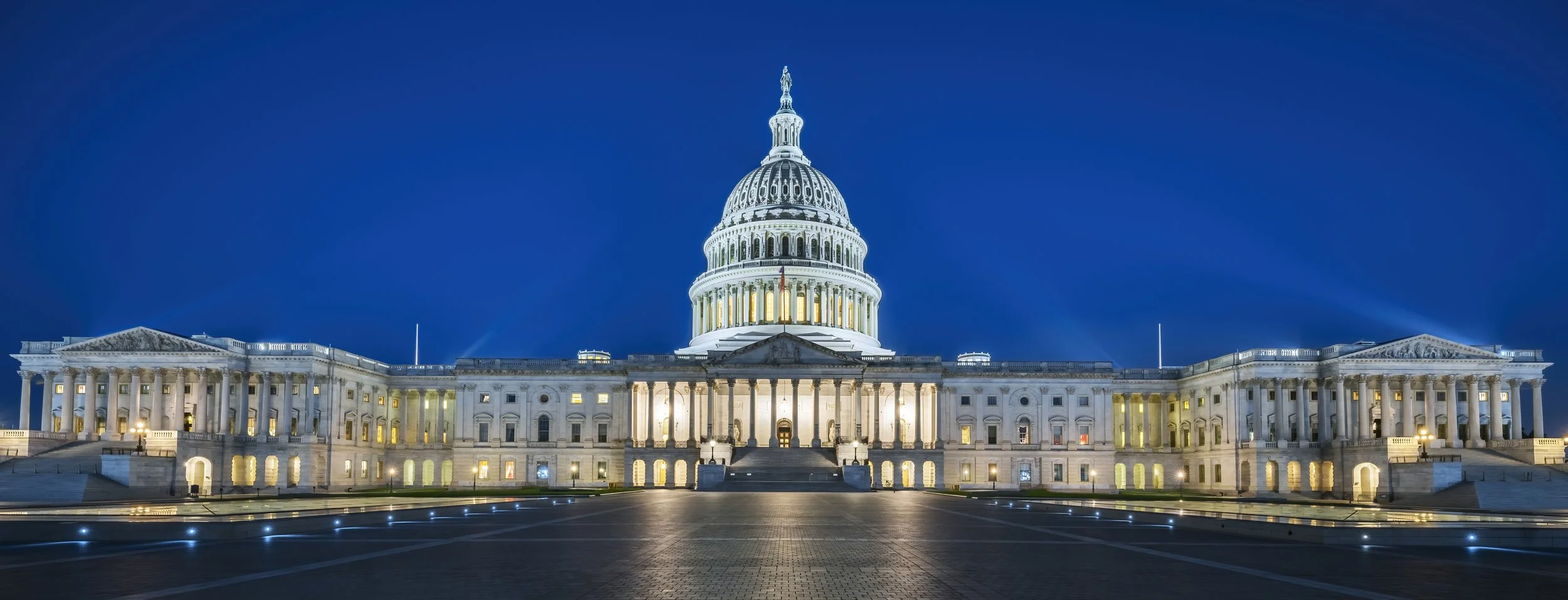
Image: Adobe Stock by your123
American foreign policy often turns on moments of presidential signaling – warnings, red lines, deadlines. Whether on the Korean Peninsula, in Southeast Asia, in the Persian Gulf, or in the Middle East, presidents have used time-bound coercive signals to compel behavior, reassure allies, and deter adversaries.
But a recurring question – one that spans administrations – is this: What happens when presidential signals are revised, delayed, bluffed, or contested by others or by the president himself?
Does this “constructed resolve,” as we will call it, work or do greater harm to American foreign and defense policy? Mere politics are not the only victim of hollow bluffing. So, too, are our national institutional, strategic, and economic interests.
Presidents of both major political parties have certainly engaged in constructed resolve as a strategic tool, but its effectiveness depends on congressional response, institutional capacity, and credibility over time.
A Pattern Across Presidencies
From Harry S Truman in Korea to Lyndon B. Johnson and Richard Nixon in Vietnam, from George H.W. Bush in the Gulf War to George W. Bush in Iraq, and more recently Joe Biden in Afghanistan, presidents have faced intense second-guessing at home and high uncertainty abroad.
These episodes differ in context and outcome, but they share a structural feature. Presidential decisions are made under incomplete information, while Congress, media, and the public evaluate them with competing incentives and, often, with delay.
Political science has long recognized this asymmetry. The presidency is unitary, fast-moving, and information-rich. Congress is collective, slower, and information-dependent. In crises, that asymmetry widens.
Deadlines as Signals, Not Guarantees
In international relations, deadlines are not merely calendars. They are signals of resolve. They tell adversaries we are prepared to act. They tell allies we are committed. They tell domestic audiences we are in control.
But the credibility of any signal depends on consistency between word and action.
When deadlines shift, whether because conditions change, new intelligence emerges, or political considerations intervene, two risks emerge:
External Risk | Adversaries may test the signal.
Internal Risk | Domestic audiences may question the signal.
Neither outcome is inevitable. But both are structurally possible.
The Congressional Constraint
From a congressional perspective, the challenge is different. Members operate under what David Mayhew described as electoral incentives. Taking a hard position against a president during a crisis can carry political risk; deferring can carry institutional costs.
The result is a familiar pattern:
Before decisions | Caution, ambiguity, limited challenge.
After outcomes | Investigation, critique, retrospective clarity.
This is not necessarily a failure of intent. It is often a function of incentives and timing.
The Credibility Question for Future President
The deeper issue is not any single deadline or decision. It is the accumulation of precedents.
If presidential signals are frequently revised, publicly contested, or inconsistently enforced, then future presidents may face a more difficult environment in which to signal resolve.
In strategic terms, this is sometimes described as a credibility problem – not of the individual, but of the office.
Future presidents may need to escalate more quickly to be believed, provide more evidence before acting, or rely less on deadlines and more on sustained posture.
Each of these has trade-offs.
Economic Consequences: From Signals to Prices
Foreign policy signaling is not abstract. It has direct economic implications.
When tensions rise around critical global chokepoints – such as the Strait of Hormuz – markets respond immediately:
Energy prices, as we have experienced, become volatile.
Shipping costs increase.
Insurance premiums rise.
Supply chains adjust.
These effects can translate into:
Higher fuel costs.
Increased transportation prices.
Broader inflationary pressure.
For American households, this is where foreign policy meets affordability.
The “Mission Accomplished” Problem
Across multiple conflicts, one observation recurs. Clear, decisive end states are rare. Whether in Korea, Vietnam, Iraq, or Afghanistan, outcomes have often been partial, contested, or evolving.
This does not mean that all actions were misguided or all outcomes unsuccessful. It suggests that modern conflict rarely yields clear conclusions.
In that environment, political narratives – whether optimistic or critical – can diverge sharply from strategic realities.
What This Means for Governance
Three implications follow:
Signals Must Be Used Carefully | Deadlines are powerful tools, but overuse or inconsistency can dilute their effect.
Oversight Must Be Timely | Congressional engagement is most valuable before decisions harden, not after outcomes emerge.
Public Understanding Matters | Citizens often evaluate decisions with incomplete information. Bridging that gap, without compromising security, is an ongoing challenge.
The Question
The question is not whether presidents should act decisively in crises. They must. The question is whether the system surrounding them – Congress, institutions, and public discourse – can evaluate signals in real time, distinguish uncertainty from misinterpretation, and respond in ways that strengthen, rather than weaken, institutional credibility.