Ethics is Not Optional

A Thomas Editorial on Congressional Integrity
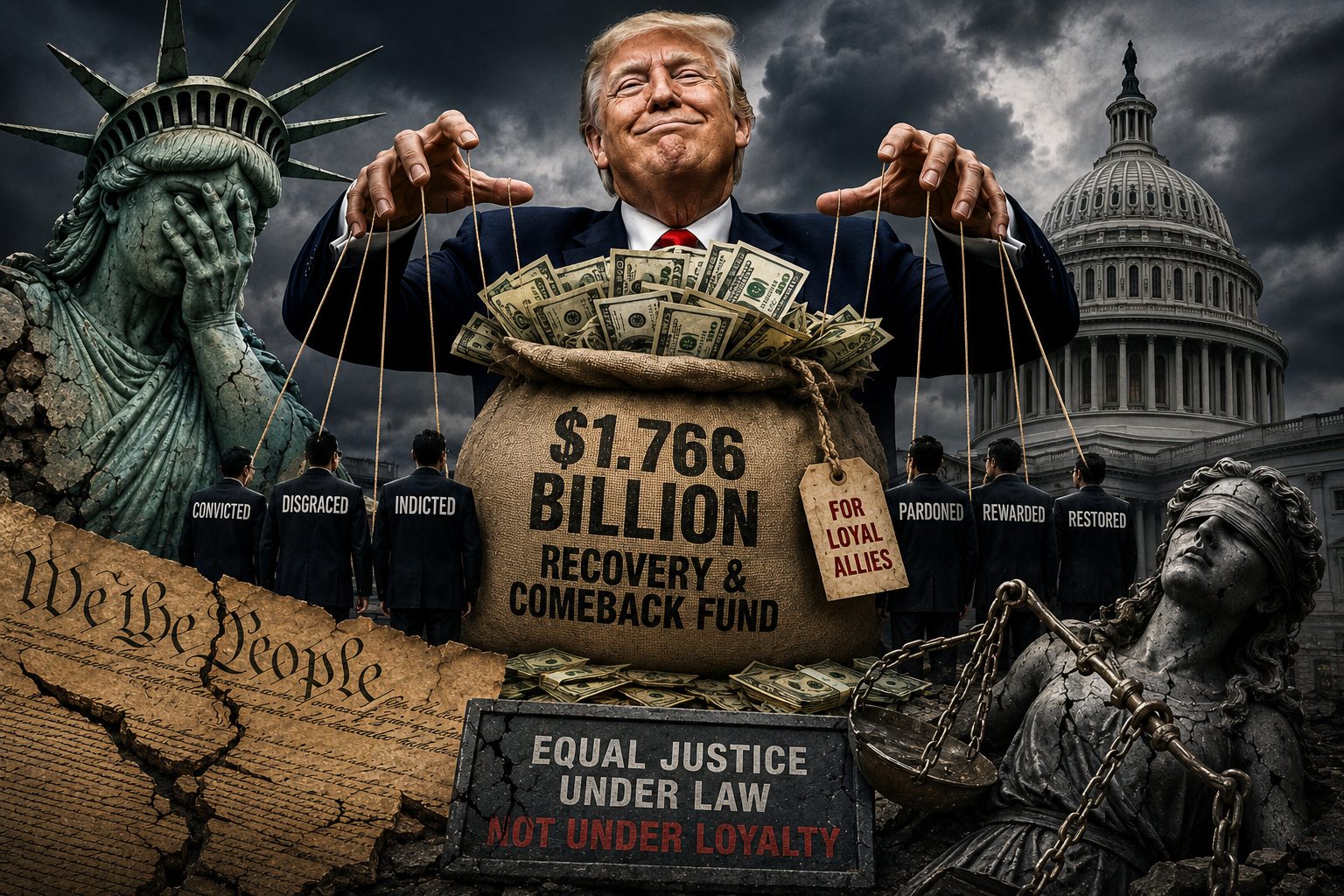
Image: Adobe Stock generated with AI by touchedbylight
This was the week that raised the question. The resignation of multiple members of Congress – among them Eric Swalwell of California, Robert Garcia of Texas, and Sheila Cherfilus-McCormick of Florida – has once again forced a difficult but necessary conversation:
What standard of ethics should Americans expect from those elected to represent them?
The answer should not depend on party, personality, or circumstance.
The Role of Ethics in a Republic
Representative democracy is not sustained by laws alone. It is sustained by trust.
Citizens do not see every vote cast, every meeting held, or every decision made.
They rely on something more fundamental – the belief that their representatives are acting with integrity.
When that belief weakens, the system itself begins to strain.
The Pattern, Not the Individual
It is easy to reduce moments like this to individual failure. But that misses the larger point.
Ethical lapses – real or perceived – have become more frequent, visible, and more normalized across both parties.
The issue is not isolated. It is systemic.
Why It Matters More Now
In an era already defined by declining trust in government, contested elections, and heightened political division, ethical failures carry amplified consequences.
They do not remain personal. They become institutional.
Every resignation, every investigation, every unanswered question contributes to a broader narrative that those in power operate or try to operate by different rules.
The Standard Must Be Higher
Public office is not a private privilege. It is a public trust.
That trust demands:
Transparency in conduct.
Accountability in decisions.
Consistency in standards.
Not the minimum required to avoid violation, but the maximum effort to uphold confidence.
The Responsibility of Congress
Members of Congress are not only lawmakers. They are standard-setters. Their behavior signals to the country what is acceptable, tolerated, and what is excused.
If ethical standards decline at the top, they do not remain there. They cascade.
A Bipartisan, Non-Partisan Obligation
Ethics cannot be partisan. It cannot be enforced selectively, defended conditionally, or ignored conveniently.
If misconduct is wrong, it is wrong regardless of party affiliation, political usefulness, or ideological alignment.
Anything less is not accountability. It is expediency.
The Thomas Take
At Thomas, we do not presume guilt in every case. But we insist on a principle: public trust must be earned – and re-earned – continuously.
Resignations may resolve immediate situations. They do not resolve the underlying problem.
What Must Change
If trust is to be preserved or restored, several steps are essential:
Clearer and more enforceable ethical standards.
Faster and more transparent investigative processes.
Consistent consequences across parties.
A renewed expectation of personal accountability.
These are not reforms of convenience. They are requirements of credibility.
The American people are not asking for perfection. They are asking for integrity.
In a system built on representation, that is not too much to expect.
In fact, it is the minimum necessary for the system to function.
Until that standard is restored and consistently upheld, confidence in Congress will remain fragile.
And the republic will feel it.