The Civic Comeback
Can America Rebuild a Culture of Participation?
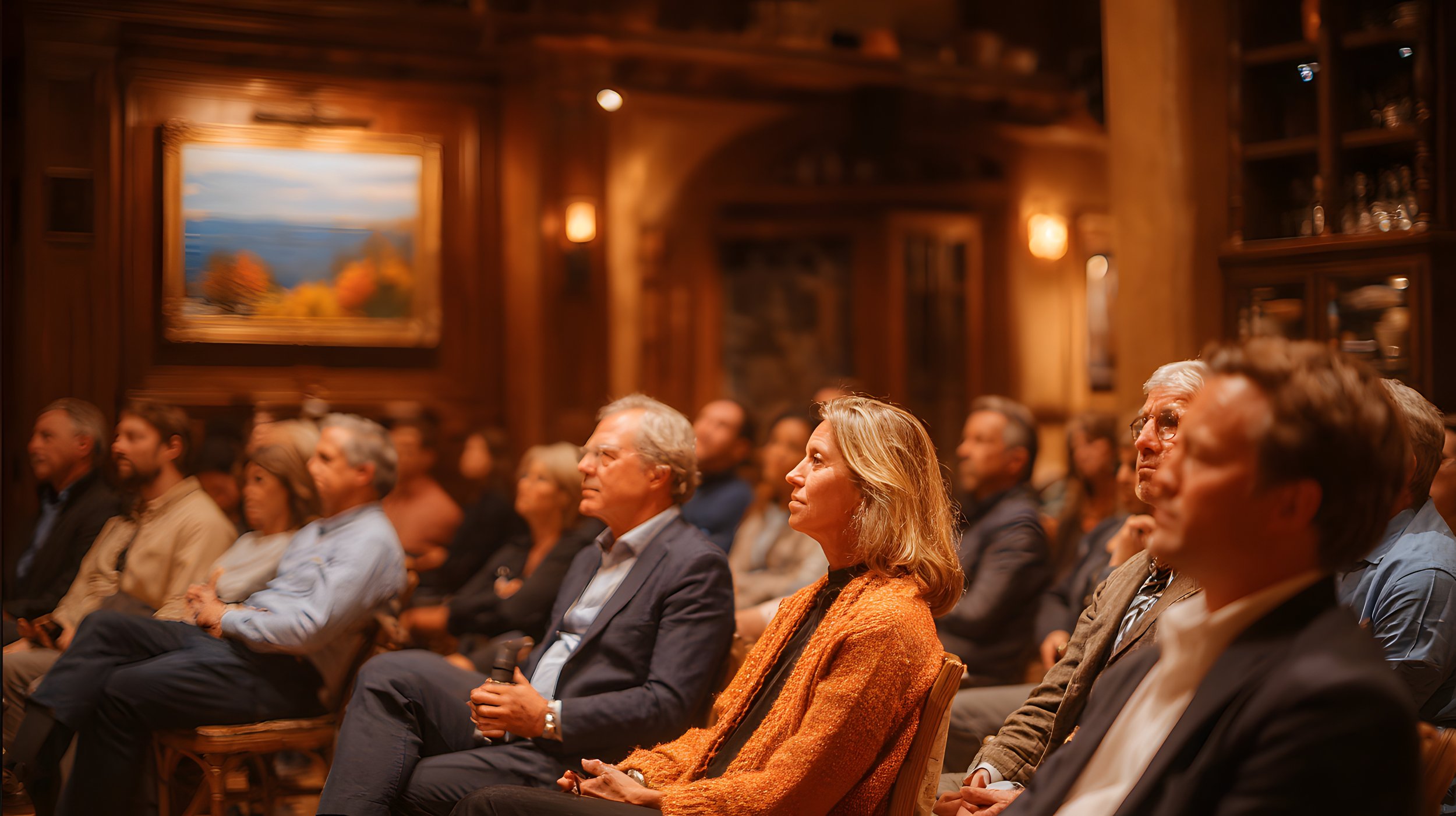
Image: Adobe Stock generate with AI by Jack
Editor’s Note: This article was adapted from our sister publication, The Independent Quill on Substack. The proposed solutions are specific to this article.
For all the discussion about decline – declining trust, declining participation, declining confidence – a quieter question is emerging beneath the surface. Can it come back?
Can a country that has grown skeptical, fragmented, and fatigued rediscover the habits of participation that once defined its civic life? Or has something more permanent shifted?
The answer is not obvious, but it is not predetermined either. Because while participation may be weakening in some places, in others, it is quietly evolving.
The Conditions for a Comeback
Civic culture does not disappear overnight. And it does not return overnight either.
It changes in response to incentives, experiences, and expectations.
For decades, participation in American democracy was anchored in a relatively stable model:
Vote in major elections.
Follow national news.
Trust institutions to operate between cycles.
This model is no longer holding, but its breakdown does not necessarily mean civic life is ending. It may mean it is being reconfigured.
The question is not whether Americans will participate. It is how and under what conditions.
From Passive Citizenship to Active Engagement
The old model of citizenship was largely passive. Participation was periodic. Influence was indirect. Engagement was limited to defined moments.
Today, that model feels insufficient. Citizens increasingly expect real-time information, direct channels of communication, and visible impact from their involvement.
When those expectations are not met, participation declines. But when they are met – even partially – participation can return, often in new forms:
Local issue-based organizing.
Digital-first civic communities.
Independent coalitions outside party structures.
Targeted advocacy rather than broad affiliation.
This is not disengagement. It is selective re-engagement.
The Trust Threshold
Participation follows trust, but not perfectly.
People do not require perfect trust to engage. They require enough trust to believe their effort matters.
This creates a threshold effect. Below a certain level of trust, you get disengagement. Above that level, participation resumes.
The challenge is that many institutions are operating just below that threshold.
Not entirely rejected, but not fully believed.
The civic comeback depends on whether that threshold can be crossed again.
What Must Change
A return to participation will not happen through appeals alone. It will happen when the structure of civic life changes in ways that make engagement meaningful again.
That means:
Visibility of Impact | People need to see that participation leads to outcomes. Not eventually. Not abstractly. But clearly and directly.
Accessibility of Process | Participation must feel possible within the constraints of modern life. Time, complexity, and access all matter. When engagement feels burdensome, it declines.
Relevance of Issues | Civic engagement increases when it connects to everyday experiences such as cost of living, education, healthcare, and local development. When politics feels disconnected from daily life, participation fades.
Credibility of Leadership | As explored in previous issues, leadership matters. Not as a symbolic force, but as a practical one. People re-engage when they believe someone is listening, acting, and accountable.
The Independent Opportunity
Independents are central to any civic comeback. Because they are not anchored to a fixed structure, they are more open to new forms of participation.
They are often the first to disengage from systems that feel rigid, but also among the first to re-engage when new pathways appear.
This creates an opportunity to build a civic culture that is less about affiliation and more about function. Less about identity and more about outcomes.
Signs of Movement
Even amid broad skepticism, there are signs that participation is not declining.
It is shifting through increased engagement in local ballot initiatives, growth of nonpartisan civic organizations, rising interest in independent and alternative candidates, and digital communities forming around specific issues rather than parties.
These are not yet dominant trends, but they are indicators, and indicators matter.
When …
A civic culture does not return because people are told to participate. It returns when participation feels worth it.
When effort leads somewhere. When voices are heard. When outcomes reflect involvement.
The civic comeback, if it comes, will not look exactly like what came before. It will be more fragmented. More selective. More direct.
But it may also be more intentional. And perhaps, in time, more resilient.
Toward a Civic Comeback:
Rebuilding the Conditions for Participation
At Thomas, we like to go beyond writing about an issue by proposing mainstream, politically independent, anchored solutions that might change the course.
The following are thoughts on how we might help encourage the civic comeback.
The Effort to Return
If a civic culture is to return, it will not be through appeals to nostalgia or obligation alone. It will require the deliberate reconstruction of the conditions under which participation becomes rational again.
This is not a question of enthusiasm. It is a question of design.
Citizens do not disengage randomly. They disengage when effort no longer appears to produce effect. Any meaningful civic comeback must therefore begin with restoring the connection between participation and outcome.
Several practical steps suggest themselves – not as abstractions, but as structural adjustments that can be pursued at multiple levels of governance.
Consequential Participation | Participation must become more visibly consequential. Too often, civic input is collected, acknowledged, and then absorbed into processes that produce little observable change. Institutions that wish to rebuild engagement must close this loop. When citizens contribute – whether through town halls, public comment, or local initiatives – the resulting decisions must clearly reflect that input or clearly explain why they do not. Visibility is not cosmetic. It is foundational.
Proportional Civic Processes | Civic processes must be made proportionate to modern life. The traditional model of participation – extended meetings, complex procedures, limited access points – assumes a level of time and flexibility that many citizens no longer possess. Streamlined engagement, digital access to proceedings, and clear pathways for input are not conveniences; they are prerequisites for broader involvement.
Shifting Participation | The Locus of participation must shift, at least in part, back to the local level. It is at the level of schools, neighborhoods, and municipalities that citizens can most directly observe the effects of governance. National politics will continue to command attention, but a sustainable civic culture depends on restoring engagement where outcomes are most tangible. The citizen who sees a direct result from local participation is more likely to re-engage at higher levels.
A Different Public Posture | Leadership must adopt a different posture toward the public. As explored in prior analysis, trust is rebuilt through patterns of behavior. Leaders who communicate trade-offs honestly, acknowledge uncertainty, and demonstrate responsiveness – even when constrained – create the conditions under which participation feels meaningful. Without this shift, structural reforms will have a limited effect.
Reframing Participation Itself | Participation itself must be reframed, not as a periodic obligation, but as a continuous, scalable practice. Not every citizen will engage at the same level, nor should they be expected to. But systems can be designed to accommodate varying degrees of involvement from basic awareness to occasional participation to sustained civic influence. The goal is not maximal engagement at all times, but accessible engagement at any time.
Recovering a Sense of Agency | Perhaps most importantly, citizens must recover a sense of agency. No institutional reform can substitute for the belief that participation matters. That belief cannot be manufactured, but it can be reinforced when individuals see, however incremental, evidence that their involvement contributes to real outcomes.
A More Intentional Civic Culture
The civic comeback, if it emerges, will not be a return to a prior era. The conditions that shaped earlier forms of participation – shared media, slower information cycles, institutional trust – no longer exist.
What replaces them will likely be more distributed, more selective, and more adaptive. But it need not be weaker.
A civic culture built on clearer expectations, more transparent processes, and a more active citizenry may prove, over time, to be more resilient than the one it replaces.
The question is not whether participation can be restored in its previous form. It is whether it can be rebuilt in a form suited to the present.
That work, unlike much of modern politics, will not be accomplished through rhetoric.
It will be accomplished through design, discipline, and the steady reestablishment of a simple but essential connection: That when citizens choose to participate, their participation has meaning.