Time Machines for Democracy
Why Presidential Libraries and Museums Still Matter to the Republic
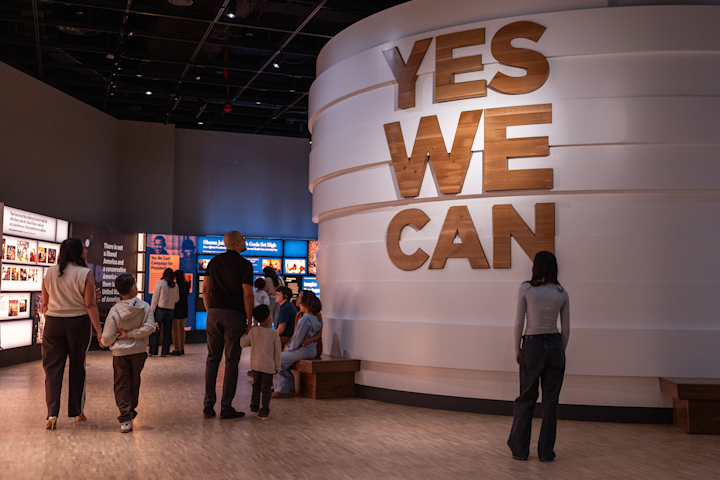
Image: The Obama Presidential Center
Next month’s dedication events surrounding the Obama Presidential Center on June 18th mark more than the opening of another presidential institution.
They represent the next evolution in how America remembers its presidents and how future generations understand the eras they shaped.
Unlike earlier presidential libraries, the Obama Center is designed not merely as an archive, but as a civic campus with a museum, public gathering space, educational environment, and a community engagement hub.
It reflects a modern understanding that presidential legacy is no longer confined to documents alone.
It is increasingly about public experience. And that raises a larger Thomas question: Why do presidential libraries still matter in the first place?
More Than Museums
At their best, presidential libraries are not monuments to personality. They are time machines for democracy.
They allow Americans, especially younger Americans, to step into crises, decisions, cultural transformations, and moments of national consequence through the lens of those who occupied the presidency.
The Kennedy Library: The Presidency Meets the Horizon
Few presidential libraries possess a more striking physical setting than the Kennedy Library. Located on the Boston waterfront, its dramatic modernist design overlooks Dorchester Bay, placing visitors at the edge of both history and possibility.
The architecture itself feels aspirational. Which is fitting.
The Kennedy presidency became deeply associated with the space race, public service, intellectual ambition, and generational optimism.
The library captures this spirit exceptionally well.
Its exhibits immerse visitors in Cold War tensions, the Cuban Missile Crisis, civil rights struggles, and the early space program while also presenting the youthful energy of the early 1960s.
The Kennedy Library successfully combines architecture, geography, storytelling, and emotional tone into a unified civic experience. It feels less like a museum and more like an encounter with a national moment.
The Reagan Library: Power, Patriotism, and Performance
The Reagan Library approaches presidential storytelling differently.
Located high above Southern California in Simi Valley, the facility projects scale, confidence, and national symbolism.
Its defining feature is undoubtedly the full-size Air Force One pavilion.
Visitors do not simply look at presidential history. They walk through it.
The Reagan Library excels at communicating the atmosphere of the Cold War, presidential ceremony, and the theatrical dimension of leadership.
Its exhibits emphasize optimism, anti-communism, economic transformation, and America’s global posture during the 1980s.
The Reagan Library understands that the presidency is not only governance. It is also symbolism and few modern presidents understood symbolism better than Reagan.
The FDR Library: The Presidency at Home
The FDR Library remains unique because it is deeply connected to Roosevelt’s actual home and personal environment in Hyde Park.
Unlike libraries built primarily as stand-alone civic monuments, the FDR experience feels rooted in place. That matters.
Visitors encounter the Great Depression, World War II, the New Deal, and Roosevelt himself within the setting where much of that history was lived.
The effect is unusually humanizing. It reminds visitors that transformational leadership often emerges not from abstract institutions but from individuals operating within very real historical pressures.
The FDR Library feels less curated and more inhabited. It gives the presidency texture.
Why These Institutions Matter to Younger Generations
One of the greatest strengths of presidential museums is educational immersion.
Textbooks explain events. Museums contextualize them.
Younger visitors especially benefit from experiencing original recordings, recreated settings, interactive exhibits, archival footage, and technological demonstrations.
The best libraries make history feel immediate. And importantly, they connect politics to lived reality.
The Science and Systems of Governance
What often goes underappreciated is how these facilities reveal the mechanics of government itself.
Visitors begin to understand how decisions are made, crises unfold, intelligence, diplomacy, economics, and military power interact.
The presidency becomes less mythological and more understandable.
That is healthy for democracy because informed citizens are harder to manipulate than uninformed ones.
The Challenge of Objectivity
Presidential libraries also face a modern challenge: How to balance legacy, scholarship, and historical honesty.
Every library naturally reflects the worldview of the president it represents.
But the strongest institutions allow room for complexity, criticism, and historical debate.
That is essential.
A republic does not preserve history by sanitizing it. It preserves history by examining it honestly.
The Obama Center and the Future of Presidential Memory
The Obama Presidential Center appears poised to push presidential institutions further toward civic engagement, digital interactivity, youth leadership, and community integration.
That evolution is likely inevitable.
Future generations consume history differently than previous ones.
The institutions that succeed will be those that preserve scholarship while creating immersive civic experiences.
The Thomas Take
At Thomas, we believe presidential libraries matter because they preserve something increasingly rare in modern politics – historical perspective.
They remind Americans that crises have happened before, leadership matters, institutions evolve, and democracy is always unfinished.
Most importantly, they help younger generations understand that history is not distant.
It is inherited.
America’s presidential libraries are more than archives. They are civic classrooms.
At their best, they help citizens think critically, understand context, and appreciate the immense responsibilities of democratic leadership.
That is not nostalgia. It is preparation because every generation eventually inherits the republic.
How it understands the past will shape how it governs the future.
The Complete List of America’s Presidential Libraries and Museums
The Official Presidential Library System and Associated Museums
The modern presidential library system is administered primarily through the National Archives and Records Administration (NARA), though some presidents have separate foundations, centers, or privately operated museums in addition to the official archives.
Below is the complete list of official presidential libraries and museums for modern U.S. presidents, along with several historically significant museum sites associated with earlier presidents.
Herbert Hoover Presidential Library and Museum
President: Herber Hoover
Opened: 1962
Location: West Branch, IA
Highlights: Great Depression, humanitarian relief work, Hoover birthplace cottage
Website: www.hoover.archives.gov
Franklin D. Roosevelt Presidential Library and Museum
President: Franklin Delano Roosevelt
Opened: 1941
Location: Hyde Park, NY
Highlights: New Deal, World War II, Hyde Park estate, first presidential library
Website: www.fdrlibrary.org
Harry S. Truman Presidential Library and Museum
President: Harry Truman
Opened: 1957
Location: Independence, MO
Highlights: World War II conclusion, atomic bomb decisions, Cold War origins
Website: www.trumanlibrary.gov
Dwight D. Eisenhower Presidential Library, Museum and Boyhood Home
President: Dwight D. Eisenhower
Opened: 1962
Location: Abilene, KS
Highlights: D-Day, Interstate Highway System, military leadership
Website: www.eisenhower.archives.gov
John F. Kennedy Presidential Library and Museum
President: John F. Kennedy
Opened: 1979
Location: Boston, MA
Highlights: Space race, Cuban Missile Crisis, waterfront architecture
Website: www.jfklibrary.org
Lyndon Baines Johnson Presidential Library
President: Lyndon Baines Johnson
Opened: 1971
Location: Austin, TX
Highlights: Civil Rights Act, Great Society, Vietnam era
Website: www.lbjlibrary.org
Richard Nixon Presidential Library and Museum
President: Richard Nixon
Opened: 1990 (joined NARA in 2007)
Location: Yorba Linda, CA
Highlights: Watergate, China opening, Cold War diplomacy
Website: www.nixonlibrary.gov
Gerald R. Ford Presidential Museum
President: Gerald R. Ford
Opened: 1981
Location: Ann Arbor, MI
Highlights: Post-Watergate healing, bicentennial era (Ford’s archives are separately housed in Ann Arbor)
Website: www.fordlibrarymuseum.gov
Jimmy Carter Presidential Library and Museum
President: Jimmy Carter
Opened: 1986
Location: Atlanta, GA
Highlights: Camp David Accords, human rights diplomacy, post-presidency humanitarian work
Website: www.jimmycarterlibrary.gov
Ronald Reagan Presidential Library
President: Ronald Reagan
Opened: 1991
Location: Simi Valley, CA
Highlights: Air Force One pavilion, Cold War, Berlin Wall section
Website: www.reaganlibrary.gov
George H.W. Bush Presidential Library and Museum
President: George Herbert Walker Bush
Opened: 1997
Location: College Station, TX
Highlights: Gulf War, end of Cold War, diplomacy emphasis
Website: www.bush41library.gov
William J. Clinton Presidential Center
President: Bill Clinton
Opened: 2004
Location: Little Rock, AR
Highlights: Economic boom of the 1990s, impeachment era, digital exhibits
Website: www.clintonlibrary.gov
George W. Bush Presidential Center
President: George W. Bush
Opened: 2013
Location: Dallas, TX
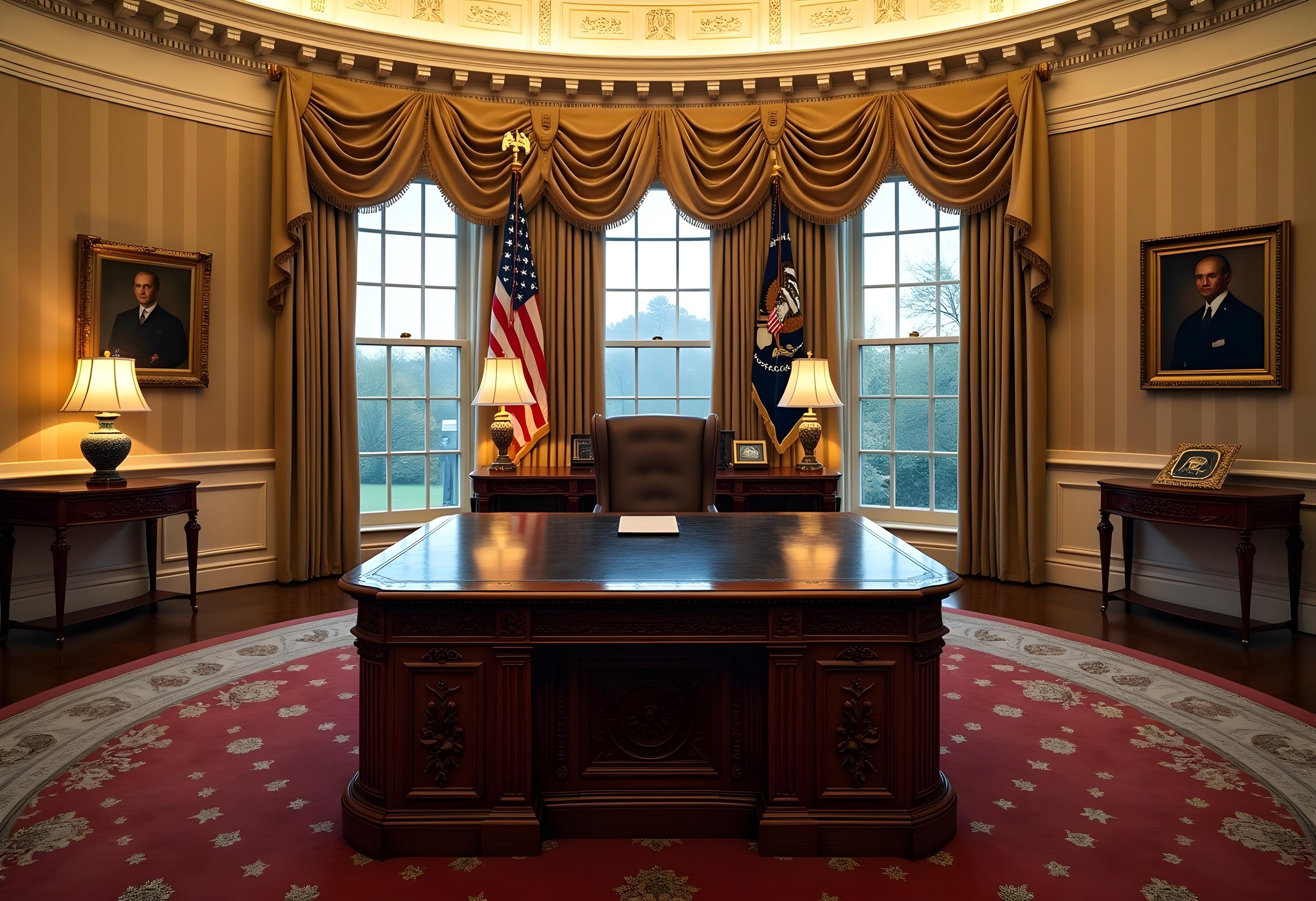
Highlights: 9/11. War on Terror, Oval Office replica, leadership institute
Website: www.bushcenter.org
Barack Obama Presidential Center
President: Barack Obama
Opening: Ongoing phased opening 2025-2026
Location: Chicago, IL
Highlights: Civic engagement model, community campus concept, digital-first approach
Website: www.obama.org
Presidents Without Official NARA Libraries but Significant Museums/Sites Exist
George Washington’s Mount Vernon
President: George Washington
Location: Mount Vernon, VA (Washington, DC area)
Highlights: Founding era, Revolutionary War leadership, original estate
Website: www.mountvernon.org
Thomas Jefferson’s Monticello
President: Thomas Jefferson
Location: Charlottesville, VA
Highlights: Declaration of Independence, architecture, Enlightenment philosophy
Website: www.monticello.org
James Madison’s Montpelier
President: James Madison
Location: Montpelier, VA
Highlights: Constitution, Bill of Rights, early republic
Website: www.montpelier.org
Andrew Jackson’s Hermitage
President: Andrew Jackson
Location: Nashville, TN
Highlights: Populism, expansion era, contested constitutional legacy
Website: www.thehermitage.com
Abraham Lincoln’s Presidential Library and Museum
President: Abraham Lincoln
Location: Springfield, IL
Highlights: Civil War, emancipation, immersive storytelling exhibits
Website: www.presidentlincoln.illinois.gov
Theodore Roosevelt Birthplace National Historic Site
President: Teddy Roosevelt
Location: Buffalo, NY
Highlights: Progressive Era, conservation movement, American expansionism
Website: www.trsite.org
Woodrow Wilson Presidential Library
President: Woodrow Wilson
Location: Staunton, VA
Highlights: World War I, League of Nations, progressive reforms
Website: www.woodrowwilson.org
Calvin Coolidge Presidential Library and Museum
President: Calvin Coolidge
Location: Northampton, MA
Highlights: Roaring Twenties, limited-government philosophy
Website: www.forbeslibrary.org/coolidge
The Thomas Take
Taken together, these institutions form something larger than tourism. They are a distributed civic memory system for the American republic.
Each reflects its president, its era, and the changing expectations Americans place on leadership itself. And increasingly, they reveal how every generation attempts to reinterpret the presidency through its own values and concerns.